The short answer
For hot-yoga garments, define separate colorfastness checks for perspiration, washing and wet/dry rubbing, then select colors and components that represent the program risk. Test methods, adjacent materials, evaluation criteria and color-lot coverage should be named before the reports are requested.
One colorfastness result does not represent every stress.
Deep shades, contrast trims and high-friction zones deserve explicit coverage.
Match each report to the actual material, color and lot or program scope.
Map color change and transfer risks
Colorfastness includes the garment retaining its shade and avoiding staining adjacent materials or surfaces. A dark body fabric with a pale lining, logo or waistband can create a different risk than a single-color garment.
Include perspiration as its own method
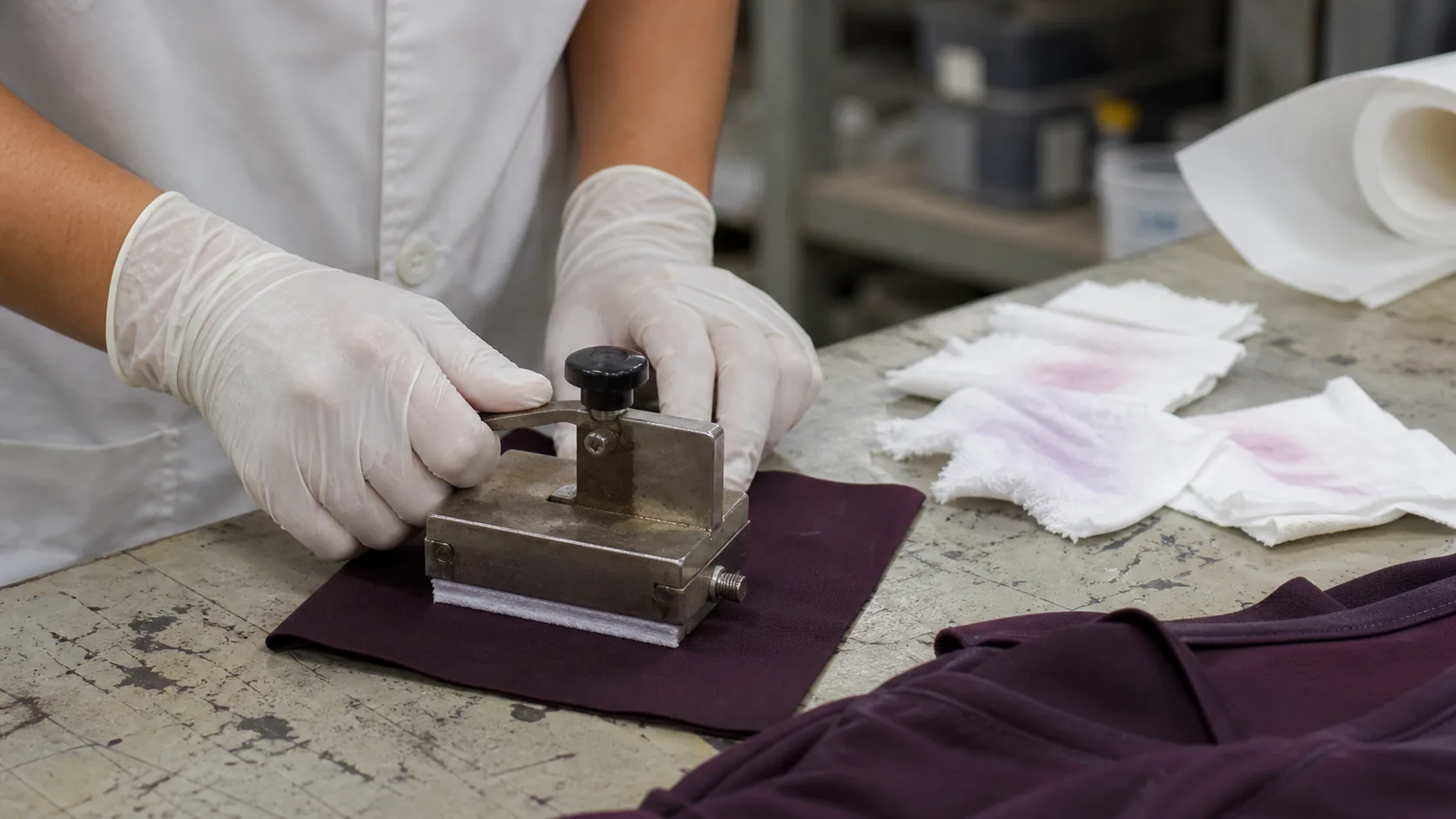
ISO 105-E04 defines a method for resistance to human perspiration. It is not the same as washing or rubbing. Record whether both color change and staining are assessed and which adjacent materials are used.
Cover wet and dry contact
Yoga garments can rub against skin, mats, towels and other clothing while damp. Define the rubbing method and zones represented. A fabric that holds color in washing can still transfer at the surface.
Build the sample matrix before testing
Choose colors, fabrics, trims and lots based on risk rather than sending one convenient black swatch. Store report identity with the material code and approval record so a later substitution does not inherit unsupported evidence.
Decision map from this guide
| Decision area | What this guide establishes |
|---|---|
| Map color change and transfer risks | Colorfastness includes the garment retaining its shade and avoiding staining adjacent materials or surfaces. |
| Include perspiration as its own method | ISO 105-E04 defines a method for resistance to human perspiration. |
| Cover wet and dry contact | Yoga garments can rub against skin, mats, towels and other clothing while damp. |
| Build the sample matrix before testing | Choose colors, fabrics, trims and lots based on risk rather than sending one convenient black swatch. |
Sources and scope
This guide translates primary standards and public technical sources into a buyer-side development workflow. It does not replace legal advice, a purchased standard, laboratory instructions or project-specific engineering.
Buyer questions
Is wash colorfastness enough for hot yoga?
No. Perspiration and rubbing address different stresses and should be considered separately.
Does one black-fabric report cover every color?
Not automatically. Dye recipes and finishes can differ, so define the color coverage and evidence scope.
More buyer questions
What is color migration in activewear?
It is dye moving from one area or material into another, for example from a dark body into a white print, a light panel or a lining. AATCC TM163 describes dye transfer during storage when garments with different shades are folded in contact, usually from the darker to the lighter shade, and notes that moisture intensifies it. Heat can drive other migration, so test the actual combinations.
What is a needle line defect in knitted fabric?
It is a lengthwise line in a knitted fabric, usually traced to a damaged or faulty needle or uneven loop formation on the knitting machine. It often becomes more visible after dyeing or when the fabric is stretched. Inspect rolls under consistent light and in stretch before cutting, agree how such defects are graded, and keep affected lengths out of visible panels.
