The short answer
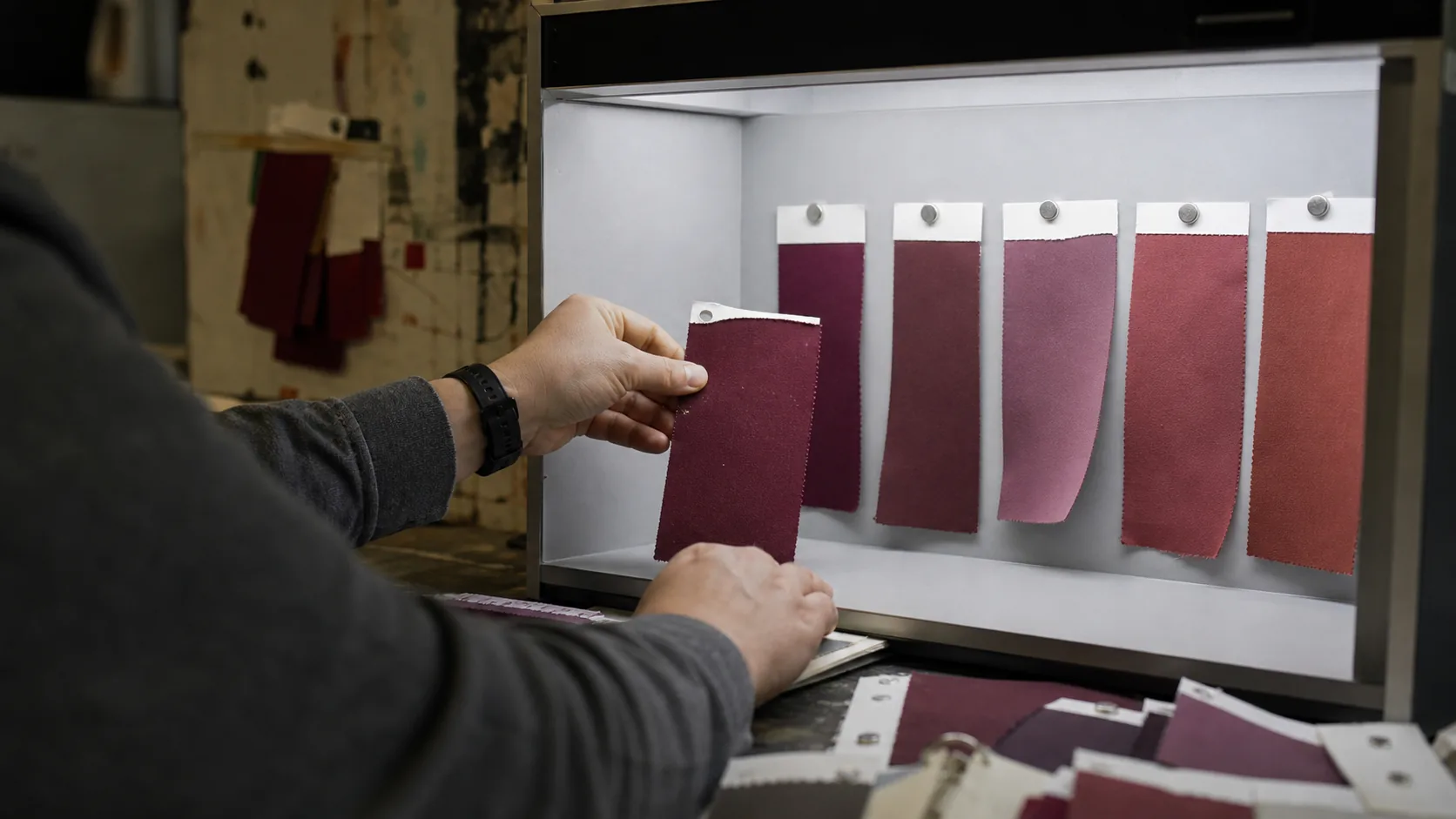
Approve a yoga wear lab dip against an identified physical color target on the exact fabric or declared development substrate. Review under defined light sources and orientation, identify each submission option, retain the approved reference and compare the bulk shade lot before cutting.
HEX and screen images are direction, not production standards.
Never approve an unlabeled “middle swatch.”
Check tops and bottoms as a set when shade match matters.
Identify the color target completely
Record the color name and code, physical standard, fabric code, finish, submission round and option identity. Pantone or another standard can direct the target, but material texture, sheen and optical effects change the visual result.
Standardize visual appraisal
ASTM D1729 explains why controlled visual examination improves color-appraisal consistency. Define primary and secondary light sources, background, orientation, layer count and who has final approval authority.
Look for illuminant-dependent mismatch
Two samples can appear close under one light and separate under another. Review the lights relevant to retail, studio or daylight use, especially when matching different materials in a set.
Approve the bulk shade before cutting
Connect rolls or dye lots to a shade record and compare with the retained standard. Define what happens when variation appears within or between rolls. Cutting first can turn a color-control issue into finished-garment rework.
Decision map from this guide
| Decision area | What this guide establishes |
|---|---|
| Identify the color target completely | Record the color name and code, physical standard, fabric code, finish, submission round and option identity. |
| Standardize visual appraisal | ASTM D1729 explains why controlled visual examination improves color-appraisal consistency. |
| Look for illuminant-dependent mismatch | Two samples can appear close under one light and separate under another. |
| Approve the bulk shade before cutting | Connect rolls or dye lots to a shade record and compare with the retained standard. |
Sources and scope
This guide translates primary standards and public technical sources into a buyer-side development workflow. It does not replace legal advice, a purchased standard, laboratory instructions or project-specific engineering.
Buyer questions
Can I approve a lab dip from a phone photo?
No. Photos can document options, but screen, camera and lighting differences make them unsuitable as the only production color standard.
Does one lab dip cover every fabric?
No. Material construction and finish affect color appearance, so identify the exact represented substrate.
More buyer questions
Can nylon-spandex and polyester-spandex fabrics be dyed?
Yes, mills dye both routinely, but not with the same recipes. Nylon and polyester take different dye classes and process conditions, so a shade approved on one blend does not transfer to the other, and the spandex may take color differently from the base fiber and show when stretched. Review each lab dip both relaxed and stretched, on the exact blend you will produce.
Can knitted fabric be dyed as yarn, fabric or garment?
Yes, and each route controls shade differently. Yarn dyeing happens before knitting and suits stripes and multicolor patterns; piece dyeing colors the knitted fabric before cutting; garment dyeing colors finished items, as with seamless styles knitted from undyed yarn. Ask which route your style uses, submit lab dips on that route, and connect bulk lots to the same route.
Why do designers use Pantone references, and does Color of the Year matter?
Pantone references give brands and suppliers a shared name for a target color, which reduces ambiguity at the brief stage. They still need a physical standard and a lab dip on your fabric before approval. Pantone’s Color of the Year is a trend announcement: useful in merchandising conversations, but irrelevant to whether a production shade matches its approved standard.
