The direct answer
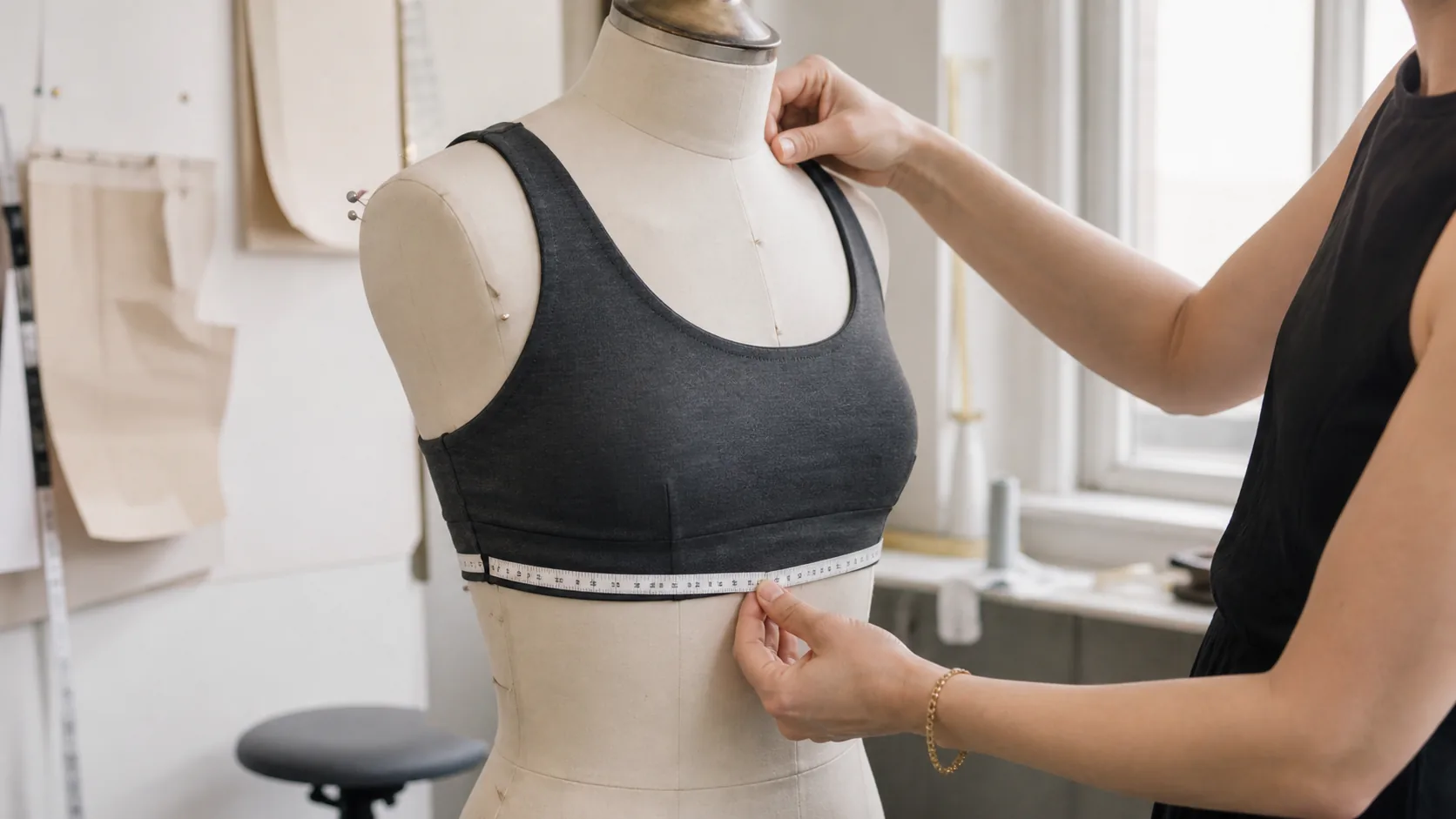
A sports bra manufacturer should be qualified against one defined bra architecture: intended activity, target wearer and size range, support and coverage, underband and strap system, shell and lining, cup route, seam construction, wear-test plan and the records that release the approved version to bulk.
Start with the load path
Support is created by a system, not by one fabric adjective. The neckline, armhole, shell, lining, cup or pad, underband, wing and straps distribute movement and pressure differently. Mark which zones are intended to stabilize, cover, separate, shape or simply finish the garment. Then ask the proposed sports bra factory how its pattern, stitch and component route will preserve those jobs across the size range.
A useful factory discussion begins with one architecture. A light studio bra with a self-fabric underband, a molded-cup style and a high-support encapsulation bra should not be quoted as if they were the same manufacturing task.
Decision table: what belongs in the sports-bra brief
| Decision | Buyer defines | Manufacturer resolves | Approval evidence |
|---|---|---|---|
| Use condition | Activity, movement, wear duration and desired coverage. | Construction route and sample risks. | Wear-review instruction tied to a named sample. |
| Support system | Support direction and acceptable movement—not an unsupported universal claim. | Underband, strap, panel, lining and cup architecture. | Fit notes across the risk sizes and movement sequence. |
| Material system | Hand, stretch direction, opacity, surface and care priorities. | Shell, lining, elastic, mesh and stabilization compatibility. | Identified materials, shade, test scope and approved garment. |
| Component route | Removable pad, fixed cup, molded cup or no-cup direction. | Pocket, edge, bonding or attachment construction. | Component identity, placement and wash review. |
| Branding | Logo, label and packaging intent. | Application route compatible with stretch and heat. | Artwork revision and decorated approval sample. |
Fit the size range as a system
Do not scale strap length, underband tension, neckline coverage and cup volume by one percentage. Decide which sizes carry the highest support, coverage or component risk and include them in the sample plan. Record the fit model, garment size, relevant body measurements, movement sequence and observed effect. “Too loose” is not enough; state where the garment moves, when it happens and which outcome is required.
When a supplier proposes a standard block, identify the block revision and permitted changes. When the pattern is custom, assign ownership and change authority before the work becomes difficult to transfer.
Join material evidence to the finished bra
Fabric elasticity, perspiration colour fastness and washing procedures answer different questions. None proves finished-garment support. Use the applicable method and laboratory instruction for the actual claim, then review the finished bra under the intended movement and care conditions. A shell report does not automatically cover mesh, elastic, thread, pad, adhesive or decoration.
If a certification is requested, verify the certificate number, holder, article or component scope and validity. A label for one material is not evidence for every component or every future order.
Give each sample round one job
- 01
Architecture sample. Confirm the pattern idea, layer stack, cup route and construction feasibility.
- 02
Fit and movement sample. Observe coverage, underband position, strap behavior, pressure and mobility on named wearers.
- 03
Size-risk review. Check the sizes most likely to expose support, grading or component problems.
- 04
Decorated and colour sample. Approve shade, logo, labels and any heat-sensitive application on the actual material system.
- 05
Pre-production release. Reconcile the final pattern, BOM, measurements, artwork, components and unresolved exceptions.
Ask the factory to prove the proposed route
Request the actual site and processes planned for cutting, sewing, bonding, molding, printing or embroidery. If cups, pads, elastics or specialist bonding are sourced elsewhere, record the supplier and approval responsibility. A sports-bra supplier can coordinate those parties, but the order still needs one owner for specifications, component changes and defect resolution.
The strongest capability evidence is tied to the proposed architecture: a process walk-through, anonymous current production record, controlled trial or sample made with comparable layers and operations. A wall of unrelated bra photos is not the same evidence.
Release a reproducible bra—not a verbal approval
The production packet should identify the approved sample, pattern and grading revision, measurement and tolerance table, shell and lining, elastics, cups or pads, thread and stitch, artwork, labels, packaging, inspection points and any required test records. List remaining differences explicitly. A new elastic lot, pad, fabric finish, pattern, subcontractor or facility becomes a controlled change rather than a silent substitution.
Primary sources and evidence boundary
These sources define the scope of selected test methods, certification or labelling questions. They do not certify MOTIONFORM, a supplier, a factory or a finished product. Select the applicable edition, specimen, laboratory and market requirements for the live project.
- ISO 20932-1:2018 — determination of fabric elasticity by strip testsOfficial source · reviewed 2026-09-04
- ISO 105-E04:2013 — colour fastness to perspirationOfficial source · reviewed 2026-09-04
- ISO 6330:2021 — domestic washing and drying procedures for textile testingOfficial source · reviewed 2026-09-04
- U.S. Federal Trade Commission — clothing and textile labelling guidanceOfficial source · reviewed 2026-09-04
Use the relevant development route
Continue with a buyer decision guide
Continue through the manufacturing topic network
Buyer questions
What should I send a sports bra manufacturer first?
Send the intended activity and wearer, size range, support and coverage direction, reference functions, target architecture, materials or hand direction, branding, quantity scenario and the questions that remain open.
Can one sports bra factory make light- and high-support styles?
Possibly, but capability should be verified for each architecture, layer system, component route, size range and construction—not inferred from a broad category claim.
Does a compression fabric make a sports bra supportive?
Not by itself. Support depends on the complete garment system, fit, material behavior, underband, straps, coverage, layers and construction.
Should I approve only the middle size?
No. Select sample sizes according to support, coverage, grading and component risk across the intended range.
Can a private label sports bra manufacturer copy a branded sample?
A reference can communicate permitted functional needs, but the development route should create an original design and respect artwork, design, trademark and file ownership.
Sports bra, regular bra or compression style: what are you asking the factory to develop?
Separate the intended use from the construction name before requesting samples. A sports bra describes an activity-related product; compression describes a possible support approach. A crop-top silhouette, removable pad or firm-feeling fabric does not establish the finished garment's support. The table below is a proposed brief-review tool, not a performance ranking or certification scheme.
| Term in the request | Clarify with the developer | Do not assume |
|---|---|---|
| Sports bra | Intended movement, wearer range and support-review plan | Every style suits every activity |
| Regular bra or bralette | Whether the priority is everyday fit, appearance or an activity-specific requirement | A similar outline has equivalent movement performance |
| Compression sports bra | How the garment holds the breasts towards the torso, and where it applies pressure | Tighter automatically means better support |
| Encapsulation or combined construction | How separate breast shaping and any compression work together | Cup structure alone validates the finished product |
| High-impact style | Activity, size range, sample identity and evidence supporting the intended claim | The phrase names a test already passed |
For a sourcing decision, request one proposed construction and ask the supplier to identify its unresolved risks. Record which parts are made in-house, which are sourced and who approves any replacement. If a supplier offers a ready-made base, distinguish branding changes from structural changes that need another sample review. This keeps a logo quotation from becoming an implied commitment to develop a new support system.
Separate a visual review, a wearer review and a substantiated performance claim in the approval record. Portsmouth's historical testing description combines motion measurement with participant feedback; it does not turn a photograph or a fabric report into evidence about your sample. Ask a suitable specialist to define the method for a claim you intend to make. Use the fit and wear-test guide for the separate task of recording garment behaviour.
More buyer questions
How is a sports bra different from a regular bra?
A sports bra is developed for support during intended activities; a regular bra is not automatically evaluated for the same movements. For sourcing, compare the complete construction, intended wearer and evidence, not the product label alone. Describe the activity and coverage you need, then ask how the proposed sample will be assessed before approving its use claims.
Is a compression bra the same as a sports bra?
No. Compression describes a support approach, while sports bra describes an intended product use. A sports bra may use compression, separate breast shaping or a combination. Ask the developer to explain the construction and pressure distribution in the actual sample. Do not infer sports suitability, medical use or a verified support level from the word compression alone.
Can a sports bra be used for everyday wear?
Suitability depends on the individual garment, wearer and intended duration, not the sports label. If everyday wear is part of your collection brief, include that use in the fit review rather than relying only on a short exercise session. Record pressure, rubbing and movement concerns separately. Avoid promising all-day comfort or health benefits without appropriate supporting evidence.
What does high impact mean in a sports bra specification?
It describes an intended demanding activity context, not proof that a particular sample has passed a defined test. State the movements, intended wearers and size range, then agree how support and comfort will be evaluated. Keep any result tied to the tested garment and method. A high-impact label, thick elastic or a compressive hand feel is insufficient evidence.
Can a sports bra be used as a swim or bikini top?
Only if it has been developed and reviewed for water use. A swim top needs fabric, lining, elastic and trims chosen for water exposure and drying, while a sports-bra brief centers on support during land activity. If one piece must do both, write both uses into the brief and review the finished sample under each condition before making either claim.
Is a sports bra the same as a chest binder?
No. A chest binder is worn to make the chest look flatter, which is a different job from supporting the breasts during exercise. Selling a compression sports bra as a binder, or the reverse, changes the fit, pressure and wear-time questions and should involve people with relevant expertise. Do not make health or safety claims for either product without appropriate evidence.
What is a training bra, and do children’s product rules apply?
A training bra is usually an early bra for a young wearer, so first define who it is designed and marketed for. US regulations define a children’s product as a consumer product designed or intended primarily for children 12 years of age or younger. If your style falls there, children’s product requirements apply; confirm the specific tests and certificate with a qualified specialist before sampling.
What fabric are sports bras made of?
There is no single sports-bra fabric; shell, lining, elastic and any cups work as one system. Knitted nylon or polyester blended with elastane is common for shells. University of Portsmouth researchers report that five characteristics, including nylon as the principal fiber, could explain over a third of the sports bra performance they studied. Use that as context, and test your own sample.
How should a sports bra fit, and how should a brand size it?
Fit is judged on the body, not the size label. University of Portsmouth guidance says the underband should sit level and firm around the ribs, the cups should enclose the breasts without bulging or gaping, and the straps keep the bra in place rather than providing the main support. For a size chart, choose band-and-cup or letter sizing, then review risk sizes on real wearers.
How should a seamless bra be washed, and who sets the care instructions?
Follow the care label, and as the brand, set that label from evidence. The FTC says care instructions need a reasonable basis and, for garments with several components, reliable evidence that the entire garment will not be damaged when cleaned as directed. For a seamless bra, wash-test the finished piece with its pads, elastics and trims, checking shape, pad position and seams.
Additional sources
- University of Portsmouth: bra fitting and research scope
- University of Portsmouth: sports bra testing, historical method description
- eCFR: 16 CFR Part 1200, definition of children’s product (reviewed 27 September 2026)
- University of Portsmouth: Research Group in Breast Health (reviewed 27 September 2026)
- FTC: Clothes Captioning, complying with the Care Labeling Rule (reviewed 27 September 2026)
Read the Spanish guide to sports bra development and manufacturer evaluation.
Why specify support rather than simply a fitted top?
The purpose of a sports-bra brief is support during the intended activity. A bralette, crop top or push-up shape does not establish the same function. A crop top describes length and appearance; a push-up description concerns shaping; a bralette commonly describes a lighter bra construction. These descriptions can overlap in a product, but none replaces a garment-level support assessment.
For a fuller-bust range, record cup or front-panel capacity, underband stability, strap adjustment and the intended wearer range separately. Do not approve the collection from the smallest size or promise suitability from a photograph. Use the fit-review record and specialist evaluation for the claims you intend to make. This is a development guide, not personal medical advice or a rule that everyone must wear the same garment to exercise.
Further buyer answers
Why is a sports bra used for exercise?
Its intended role is breast support during the activity for which it is developed. A tight top or a padded cup alone does not demonstrate that function. When sourcing, define the activity and intended wearer range, then review the complete garment and the evidence behind its claims. Individual fit and comfort still require assessment; do not promise universal suitability.
