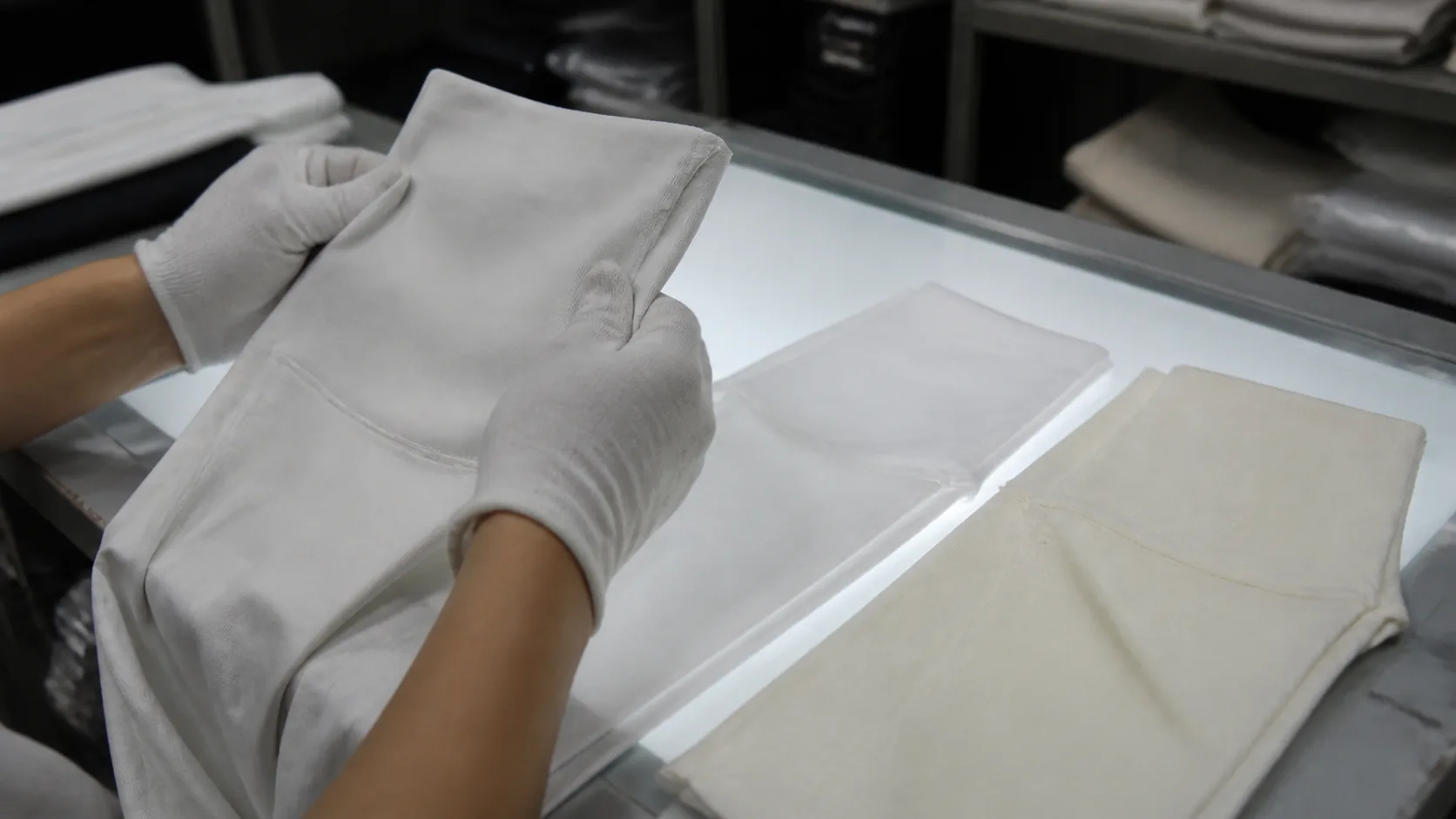
The short answer
Approve white yoga garments in the actual fabric, lining, cups, labels and packaging combination. Check opacity across representative sizes and movements, compare layers under defined light, and control contact materials, heat and storage conditions that could alter the shade or create visible contamination.
Do not approve white from the black sample.
Check every internal layer for show-through.
Keep clean handling and packaging in the production baseline.
Approve opacity by garment condition
Use the finished garment in the intended white or light shade and test representative sizes under movement. Record the backing, underwear assumption, light and viewing condition. Extra layers can improve coverage but can also create visible edges.
Coordinate lining, cups and labels
Compare color and edge visibility of lining, bra cups, pocket bags, elastic and care labels. A bright white component against a warmer body fabric can appear as a patch even when both were accepted separately.
Control contact and heat exposure
Clean tables, machine oils, transfer papers, storage bags and adjacent dyed materials can create marks or shade change. Define handling and quarantine rules for light goods and inspect before packing.
Review change after the intended care condition
Evaluate shade, surface and layer visibility after the agreed wash and drying procedure. Avoid unsupported “anti-yellowing” claims; specify the evidence and product condition that the project actually reviewed.
Decision map from this guide
| Decision area | What this guide establishes |
|---|---|
| Approve opacity by garment condition | Use the finished garment in the intended white or light shade and test representative sizes under movement. |
| Coordinate lining, cups and labels | Compare color and edge visibility of lining, bra cups, pocket bags, elastic and care labels. |
| Control contact and heat exposure | Clean tables, machine oils, transfer papers, storage bags and adjacent dyed materials can create marks or shade change. |
| Review change after the intended care condition | Evaluate shade, surface and layer visibility after the agreed wash and drying procedure. |
Sources and scope
This guide translates primary standards and public technical sources into a buyer-side development workflow. It does not replace legal advice, a purchased standard, laboratory instructions or project-specific engineering.
Buyer questions
Does adding a lining always solve white-garment opacity?
No. Lining can add coverage but may show edges, change stretch, retain heat or create a different shade.
Can white and black use the same approval sample?
The pattern can be shared, but color-specific opacity, component and handling risks still require white-garment evidence.
