The direct answer
For sportswear OEM or ODM manufacturing, record the starting product, buyer and supplier development inputs, ownership of patterns and artwork, allowed reuse, sample stages, factory route, production baseline and change-control responsibilities.
Translate the label into actual responsibility
Commonly follows buyer-controlled product direction or specification.
Commonly includes supplier product-development or design input.
Describes sale under the buyer’s brand.
Commonly uses a standard product offered to multiple buyers.
List who provides every development input
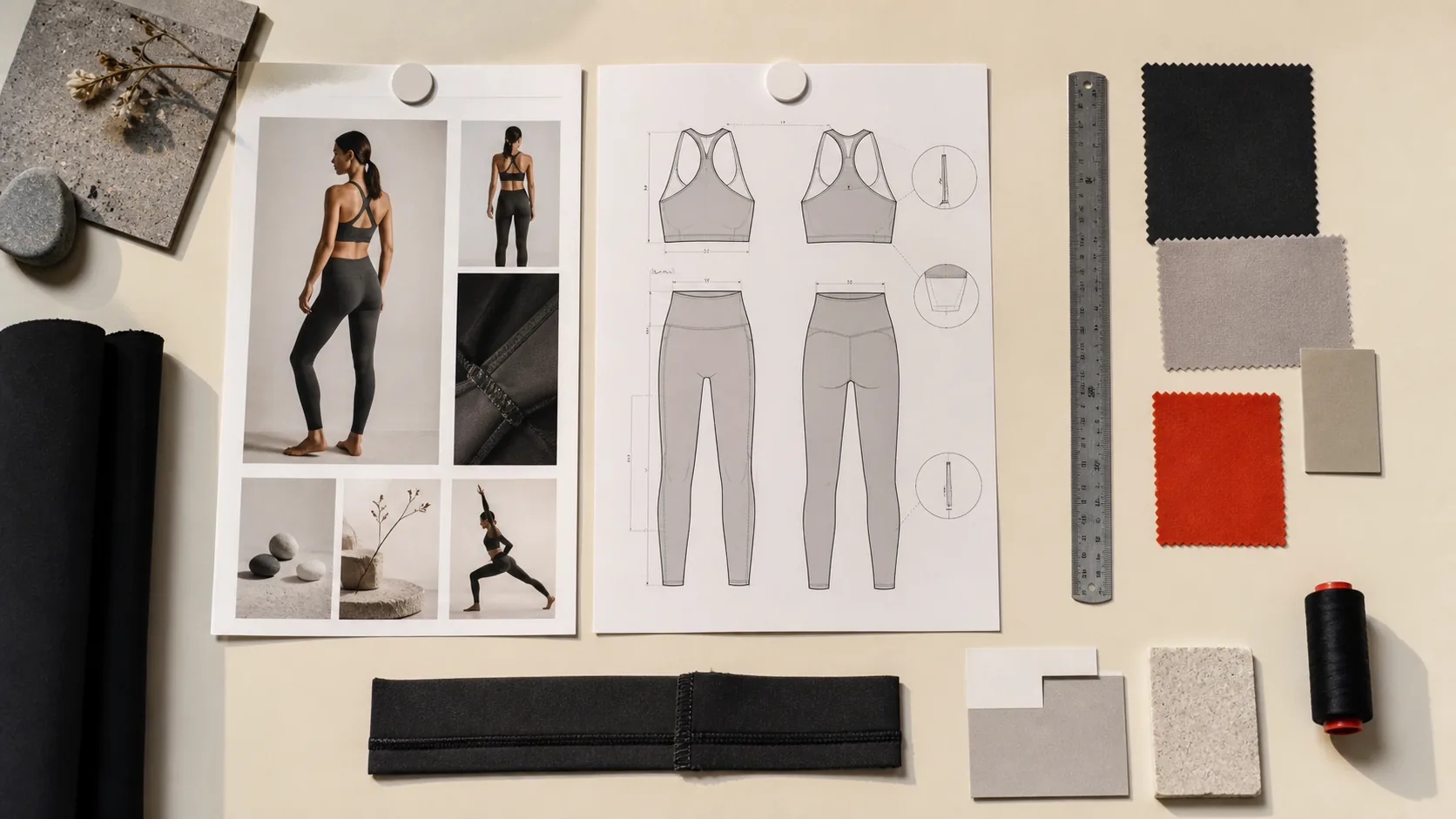
Map concept, sketch, reference, pattern, grading, measurements, fabric, color, artwork, labels, packaging and testing. Mark which party owns the approved result and which items remain supplier property.
Give the sample route named decisions
Prototype, fit, size-set and pre-production samples can have different purposes. Define what each sample represents, who comments, who approves and which revision moves forward.
Connect commercial terms to product control
MOQ, price, sample cost, lead time, exclusivity, tooling, development fees and delivery depend on the actual route. The contract and production packet should agree on ownership, substitutions, quality and change handling.
Use the relevant development route
Continue with a buyer decision guide
Continue through the manufacturing topic network
Buyer questions
What is the difference between OEM and ODM sportswear?
OEM commonly manufactures to buyer-controlled direction; ODM commonly includes supplier development input. Because usage varies, define the actual inputs, ownership and responsibilities in writing.
Is private label the same as OEM?
No. Private label describes whose brand is sold; OEM describes a manufacturing or development route. A private-label product can be OEM, ODM or ready-to-brand.
Who owns the tech pack and pattern in an ODM project?
Ownership depends on the agreement. Record rights to patterns, grading, artwork, materials, samples and future use before development begins.
More buyer questions
Does OEM mean the clothing is original or brand-authorized?
No. An OEM description alone does not establish brand authorization, authenticity or permission to copy a product. Ask for evidence of the specific rights required for the proposed work, rather than relying on a factory label or customer claim. Develop your own specifications and artwork, and obtain qualified advice where another party’s protected design or branding may be involved.
What is an ODM manufacturer, with an activewear example?
An ODM manufacturer offers products it has already designed or developed, which a buyer adapts and sells under its own brand. In activewear, an example is a supplier’s existing legging pattern offered in the buyer’s chosen fabric, color and logo. The supplier often keeps rights in the base design, so confirm what you may change and whether others can buy the same style.
How does an OEM clothing order work?
The buyer supplies the product definition—a tech pack, pattern or approved sample—and the manufacturer quotes, sources materials, submits samples and then produces to the approved baseline. A typical sequence runs from inquiry and quotation through development and pre-production samples to bulk production, inspection and shipment. Close each step with a written approval, because OEM names the relationship, not the quality level.
Is OEM clothing good quality, and is it worth it?
OEM is not a quality grade. Quality comes from the specification, materials, factory controls and inspection you agree, so two OEM suppliers can deliver very different results from the same sketch. The route is worth it when you need your own product and can manage development, approvals and minimums; a ready-to-brand route may suit a first market test better.
Why do some product listings show “OEM” as the brand?
“OEM” in a brand field is a word the seller chose, not a brand. It often signals that the item is sold unbranded or can carry the buyer’s label. Ask who makes it, whether the design belongs to the seller and what branding rights you receive; the word itself proves neither the product’s origin nor any authorization.
How do OEM, ODM, CM, JDM and own-brand manufacturing differ?
They describe who designs the product and whose name it carries. In OEM the buyer defines the product and the factory builds it; in ODM the supplier’s existing design is adapted; contract manufacturing (CM) broadly means making goods for another company; in JDM (joint design manufacturing) both sides develop the design together; and an own-brand manufacturer (OBM) sells under its own name. Usage varies, so write responsibilities down.
How should I shortlist OEM or ODM activewear manufacturers in China, Thailand or elsewhere?
Shortlist by product route first and country second. Ask each candidate whether it will quote OEM, ODM or both for your style, which facility will make it, what development inputs it needs and which files you will receive. Treat a country in a search phrase as a starting filter only; capability, ownership and fit still have to be shown for your garment.
Additional sources
Read the Spanish guide to OEM and ODM sportswear responsibilities.
Further buyer answers
What do OEM and ODM stand for in clothing?
OEM expands to Original Equipment Manufacturer and ODM to Original Design Manufacturer. In apparel sourcing they describe commercial production approaches, not clothing brands or quality grades. Ask who provides the design, patterns and materials, who authorizes changes, and what rights and files you receive. The written assignment matters more than the acronym when a project combines both parties’ development work.
