The short answer
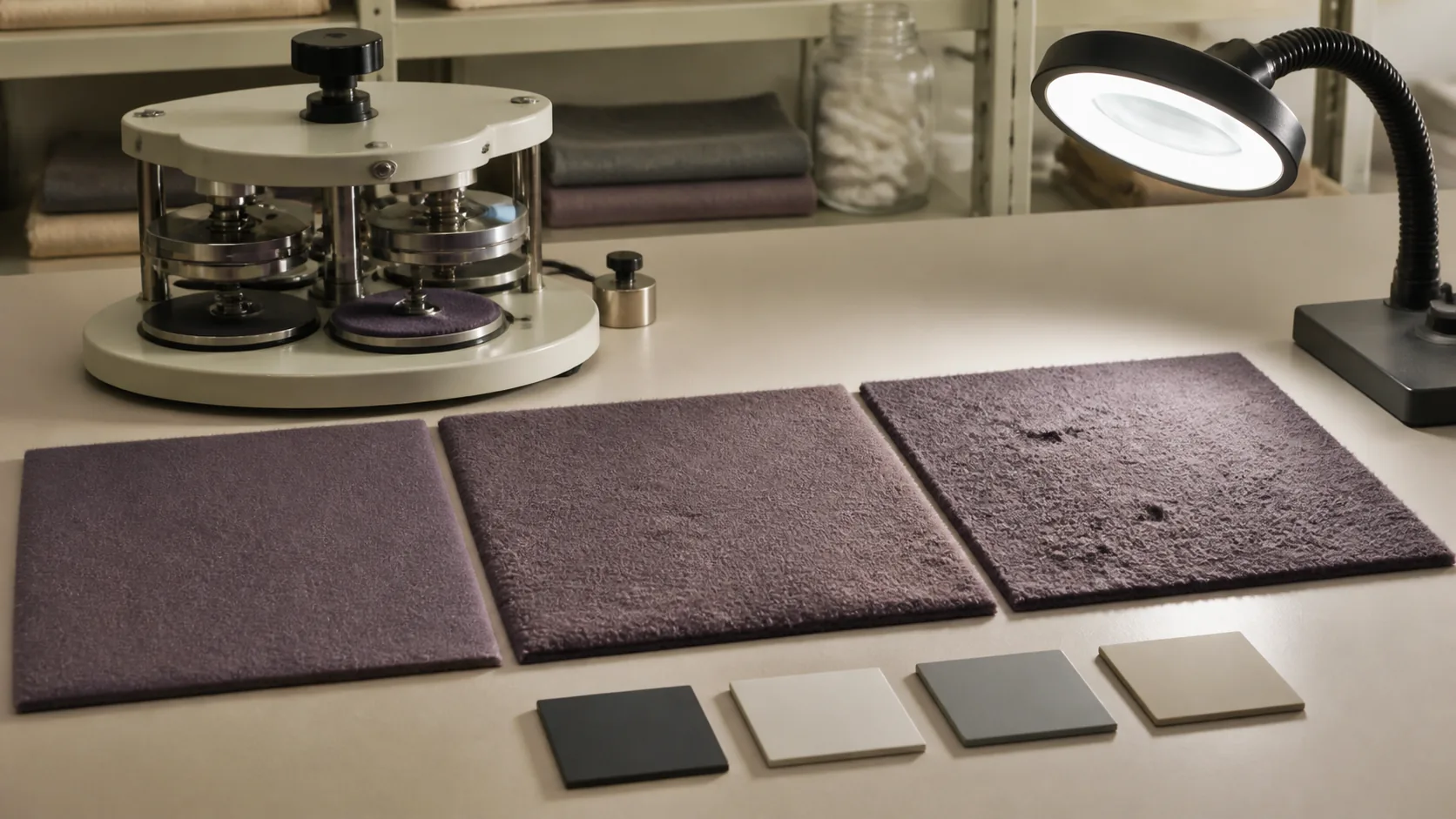
Brushing creates a soft, matte surface by raising fibers, which can also change fuzzing, matting and pilling behavior. Approve the exact fabric and finish with a named test method, visual assessment condition and garment wear review focused on high-friction zones.
Test the exact finish, not an unbrushed base fabric.
Name the pilling method and assessment stage.
Check inner thighs, seat, waistband and bag-contact zones on garment.
Understand what brushing changes
Mechanical finishing raises or disturbs the surface to create a softer hand and lower sheen. The result depends on fiber, yarn, knit, brush intensity and any later treatment. Approving only composition and weight leaves the defining surface uncontrolled.
Choose and record the test method
ISO 12945 includes multiple pilling methods and a visual-assessment part. Results from different apparatus or cycles are not interchangeable. Record the exact method, specimen orientation, cycle or endpoint and acceptance rule agreed for the program.
Add a wear-risk map
Laboratory screening cannot reproduce every customer interaction. Review garment zones that rub against the opposite leg, mat, bench, bag or hook-and-loop accessory. Photograph the same location before and after the defined wear and wash protocol.
Control bulk against the approved surface
Keep an approved fabric reference and define acceptable appearance variation. Check roll or lot identity before cutting when surface direction, shade or hand feel differs. Do not try to solve a finish problem only through final-garment inspection.
Decision map from this guide
| Decision area | What this guide establishes |
|---|---|
| Understand what brushing changes | Mechanical finishing raises or disturbs the surface to create a softer hand and lower sheen. |
| Choose and record the test method | ISO 12945 includes multiple pilling methods and a visual-assessment part. |
| Add a wear-risk map | Laboratory screening cannot reproduce every customer interaction. |
| Control bulk against the approved surface | Keep an approved fabric reference and define acceptable appearance variation. |
Sources and scope
This guide translates primary standards and public technical sources into a buyer-side development workflow. It does not replace legal advice, a purchased standard, laboratory instructions or project-specific engineering.
Buyer questions
Can pilling be eliminated completely?
No universal promise is credible. The goal is to select and control a material whose tested and worn behavior fits the product expectation.
Does a higher pilling grade always mean the fabric will feel the same?
No. Pilling resistance and hand feel are related to the surface but remain separate approval attributes.
Why do tracksuits go bobbly even without a brushed finish?
A bobbly surface is a symptom to investigate, not proof of one fibre or one finishing fault. Start by separating the locations: inner thighs, bag-contact areas, cuffs and the body can have different exposure. Preserve an unworn reference, photograph the affected areas and record use and care history before assigning a cause.
For a non-brushed tracksuit or jogger, do not import the brushed-fabric approval from another garment. Ask the laboratory to identify an appropriate pilling assessment for the actual surface. Keep abrasion damage, snagging and pilling as separate observations; one test label does not settle all three. Compare like specimens under one documented method, then review the intended garment in its actual contact zones.
The purchasing decision is whether this material and finish meet the agreed appearance expectation, not whether a fibre can be called universally pill-proof. If the supplier proposes a replacement finish, retain both versions and repeat the affected checks before releasing the new reference.
Why do leggings pill, and is pilling a sign of poor quality?
Leggings pill where friction pulls fibers out of the yarn surface and the loose ends tangle into small balls that stay anchored by fibers still held in the yarn. Strong synthetic fibers tend to hold those balls on the surface instead of letting them break away, so pills collect where rubbing repeats: inner thighs and crotch, seat, waistband edges and areas that meet bags, mats or equipment. Pilling in the crotch is therefore a friction map, not proof of a faulty batch.
Pilling is not automatically a sign of poor quality, because almost any soft surface changes with wear. It becomes a quality problem when pills appear sooner, spread wider or look worse than the approved reference and the product’s promise. Surfaces with many loose fiber ends, such as brushed faces and spun or very fine yarns, need closer screening. Questions about why a particular brand’s leggings pill cannot be answered from outside, because the fabric article, finish and care history are not public; compare your own candidates instead.
Agree the test method with the laboratory and write it into the requirement. ASTM D3512 uses a random tumble pilling tester and applies to woven and knitted apparel fabrics; ASTM D4970 uses the Martindale tester and allows fabric to be laundered before testing as agreed. Decide whether you need the result before or after the care on your label. D3512 also warns that fabrics treated with a silicone resin may not test satisfactorily, so tell the laboratory about softener finishes.
| What you see | What it usually is | What to check |
|---|---|---|
| Small balls of the garment’s own fiber | Pilling, called bobbling in British usage | Friction zone, fabric finish and wash history |
| Loose fibers of another color | Lint picked up from towels or other laundry | Whether it brushes off and what it was washed with |
| A fuzzy raised surface without balls | Fuzzing, often an early stage of pilling | Compare against the approved reference |
| A print, transfer or coating lifting away | Peeling of decoration or a bonded layer | Application method and care, not pilling tests |
Can pilling be prevented, removed or reversed?
Pills can be removed, but the surface they came from cannot be restored. Removal takes fiber off the face, the fabric can form new pills, and repeated shaving can thin a knit. Prevention is decided mostly before production, through fiber, yarn, knit density and finish, and is then supported by care guidance you have tested.
In development, reduce the risk at its source. Ask the mill which yarn, construction or finish choice is meant to limit pilling, and request results after laundering. Compare a brushed and an unbrushed version when softness is negotiable. Keep hook-and-loop fasteners, rough trims and abrasive prints away from high-friction zones, and review the inner thighs and seat of a worn sample, not only the laboratory specimen.
Then publish only care advice your own checks support. If washing inside out, separating the garment from rough items or line drying reduced surface change in your review, say so plainly, and do not promise that the garment will never pill. Customers also ask whether fabric shavers or razors work. These tools cut pills from the surface and can also cut into a thin stretch knit, so try any tool on a hidden area of the actual fabric before recommending it. The care-label guide covers how to support that wording.
More buyer questions
Why do tracksuits go bobbly?
Pilling can reflect the interaction of the fabric surface with friction and care, but appearance alone does not identify a single cause. Compare the affected zones with an unworn reference and record the garment’s history. Ask for an appropriate assessment of the exact fabric and finish; do not apply a brushed-legging result automatically to a different tracksuit material.
What is the difference between brushed and peached fabric?
Both are mechanical finishes, but they change the surface in different ways. Brushing raises fiber ends into a softer, loftier nap, while peaching, also called sanding or emerizing, abrades the face into a shorter, suede-like touch. Either finish can change pilling, shade and hand, so approve the finished fabric rather than the finish name, and test it after the care you intend to recommend.
Is brushed cotton the same as flannel?
Not necessarily. Flannel usually names a napped woven fabric, traditionally cotton or wool, while brushed cotton can describe any cotton knit or woven with a brushed face. Brushed microfiber is a different material again: fine polyester or nylon fibers brushed for softness. Specify fiber, construction and finish separately so a supplier cannot substitute one for another under a familiar name.
Which leggings don’t pill?
Look for leggings whose fabric reached an agreed pilling grade after laundering and whose worn samples still look acceptable at the inner thighs and seat. Tighter constructions and smoother filament surfaces generally help, and brushed faces need more scrutiny. For your own range, ask for evidence tied to the actual fabric and finish rather than accepting a pill-free description.
Does fast pilling ruin a pair of workout leggings?
Usually not functionally, but it can break the product promise. Pills are a surface change; they matter more when they come with thinning, loss of coverage, snagging or holes. For a brand, early pilling is a signal to check whether the fabric, finish or care instruction still matches the approved reference and whether the product description promised more than the evidence supports.
Which activewear fabrics pill, smell or fade under compression?
No single fiber predicts all three, because pilling, odor and color change are separate behaviors with separate checks. Stretch can make surface wear and shade differences more visible, and close-fitting garments rub hardest where they press against skin and against themselves. Test the finished fabric for pilling and colorfastness, and record odor in a structured wear review, instead of relying on the fiber name.
