The short answer
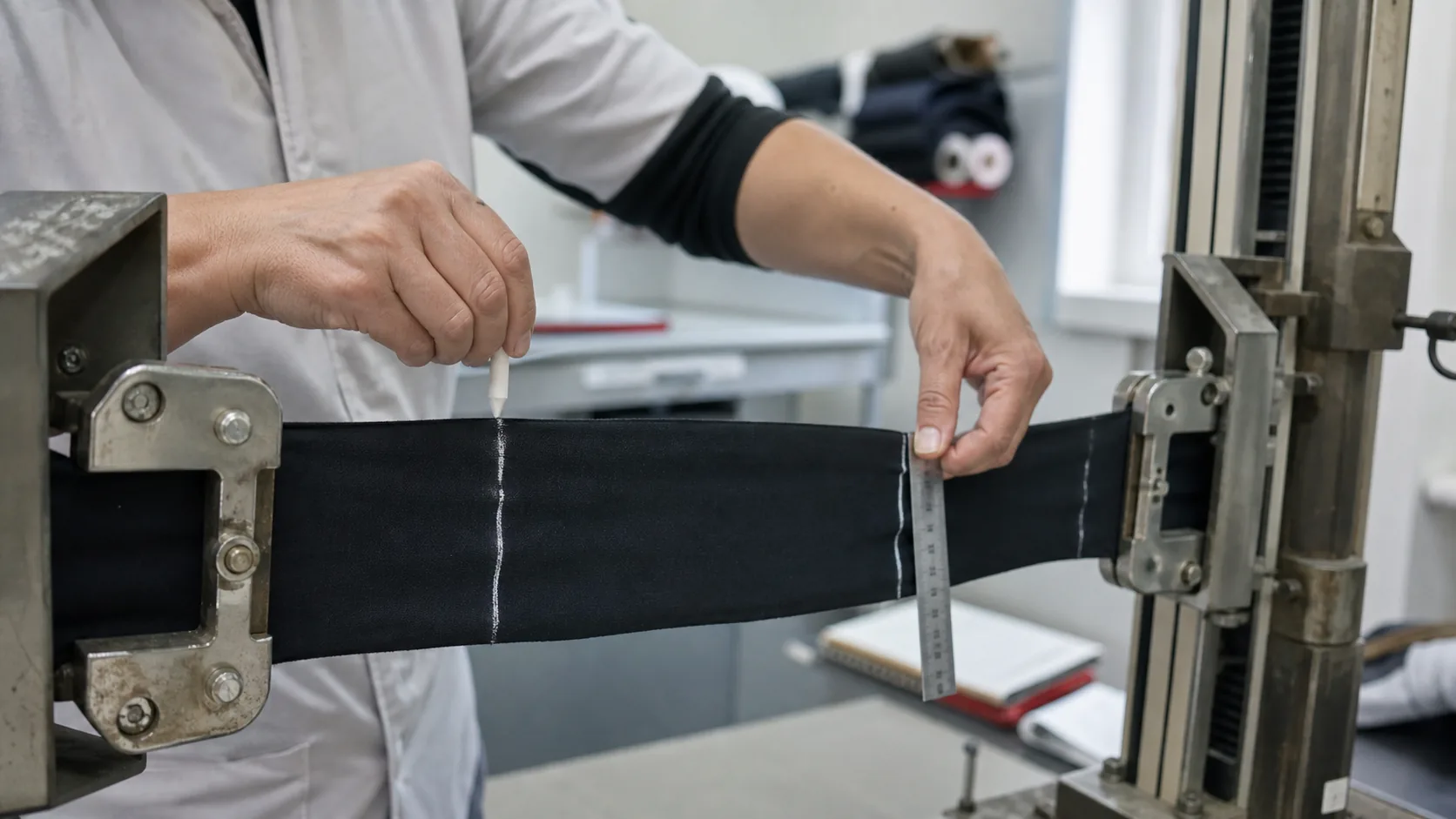
Stretch percentage describes extension under a defined method; recovery describes how closely the material returns after the load is removed; garment growth describes the dimensional change that remains in the assembled product. A yoga wear approval should name the method, direction, load, time, conditioning and measurement points.
Do not use four-way stretch as a recovery claim.
Measure warp/course and weft/wale directions separately when relevant.
Test seams, elastic and panels as part of the garment system.
Use the three terms correctly
Extension, recovery and growth answer different questions. Record the original dimension, applied condition, relaxed time and final dimension. Without those details, two teams can report different percentages for the same material.
Test the directions the pattern uses
Knit materials often behave differently across directions. Pattern orientation and seam placement determine which direction carries the load at waistband, hip, knee and bra band. Approve the fabric with the intended cutting direction.
Move from strip to garment
Thread, seams, elastic, lining and multiple layers can limit or redistribute stretch. Mark garment measurement points, apply a repeatable movement or loading protocol and record residual change after recovery time.
Retest meaningful changes
A new color, finish, supplier lot or component can change behavior. Define which changes require new swatch screening, garment confirmation or both instead of assuming the original result carries over.
Decision map from this guide
| Decision area | What this guide establishes |
|---|---|
| Use the three terms correctly | Extension, recovery and growth answer different questions. |
| Test the directions the pattern uses | Knit materials often behave differently across directions. |
| Move from strip to garment | Thread, seams, elastic, lining and multiple layers can limit or redistribute stretch. |
| Retest meaningful changes | A new color, finish, supplier lot or component can change behavior. |
Sources and scope
This guide translates primary standards and public technical sources into a buyer-side development workflow. It does not replace legal advice, a purchased standard, laboratory instructions or project-specific engineering.
Buyer questions
Does four-way stretch mean good recovery?
No. It describes extension in multiple directions, not how completely the material returns.
Why can a waistband grow when the body fabric passes?
The assembled band may use different orientation, layers, elastic, seam tension or load than the tested body-fabric strip.
More buyer questions
Why do leggings lose elasticity over time?
Two things usually happen together: the spandex gradually loses recovery through repeated stretching, heat and chemical exposure, and the knit relaxes so the garment grows. High-heat drying, chlorine and heavy strain at the seat and knees tend to speed that up. A brand can limit surprises by testing growth after the intended wash and dry cycles and writing care instructions that match the result.
Why does waistband or sock elastic lose its stretch?
Narrow elastics age differently from the body fabric, and their construction, elastomer content and exposure to heat and repeated extension all matter. Specify the elastic as its own component and test it: ASTM D4964 measures tension and elongation of elastic fabrics at loop tensions and elongations the parties agree, with laundering cycles also agreed. Compare results before and after care, not only when new.
