The direct answer
A Pilates wear manufacturer should develop the collection around controlled studio movement, soft-hand material performance, stable waist and hem behavior, representative-size fit, coordinated color and a documented private-label or custom production route.
Define the Pilates collection architecture
Common directions include fitted leggings, flare pants, wide-leg studio pants, shorts, fitted tops, wraps, bras and coordinated sets. Decide which products share a material and color system and which need a different drape, support or opacity level.
Review low-impact movement with precision
Reformer and mat work can expose waistband lift, back-waist gaping, hem interference, seam pressure and opacity under controlled but extended positions. Build a movement list that reflects the intended class rather than borrowing a gym test unchanged.
Approve softness with recovery and surface risk
A soft or brushed hand can change pilling, matting, garment growth and color appearance. Approve the exact finish, representative shades and finished garment after wear and care review.
Control the Pilates set as one visual system
Compare tops and bottoms together under defined light and stretch. Record substrate, finish, dye-lot relationship, logo color and packaging so “matching” remains reproducible across bulk and reorders.
Use the relevant development route
Continue with a buyer decision guide
Continue through the manufacturing topic network
Buyer questions
What products are included in private-label Pilates wear?
Programs often include leggings, flare or wide-leg pants, shorts, fitted tops, bras, wraps and matching sets. The exact range should follow the intended studio customer and movement.
Is Pilates wear the same as yoga wear?
They overlap, but a Pilates range may emphasize reformer movement, studio layering, flare or wide-leg silhouettes and different coverage or seam-placement decisions.
How should a Pilates flare pant be approved?
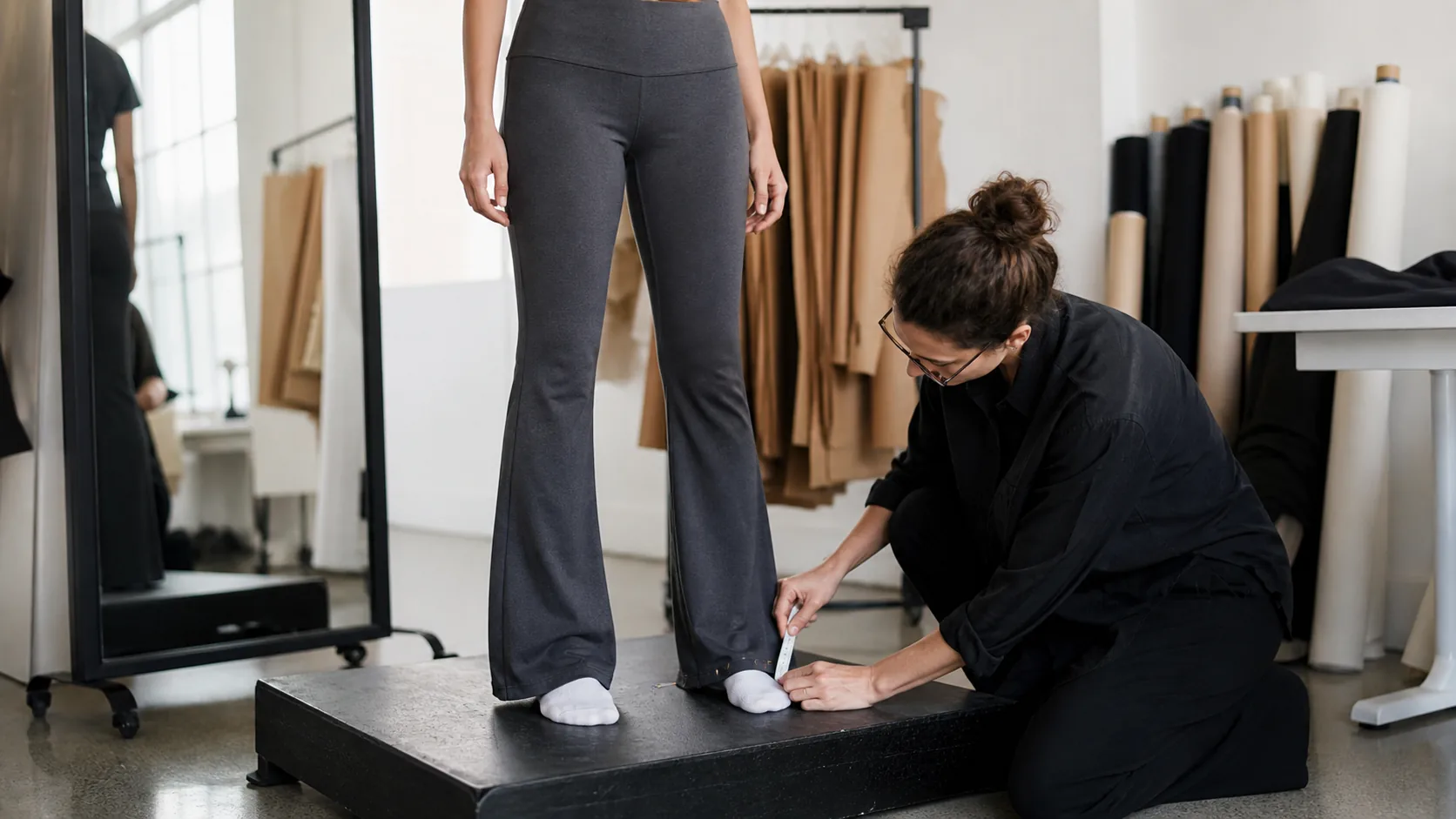
Define the fitted zone, knee break, hem sweep, inseam options, rise, stretch direction and class movements, then review selected sizes and lengths.
More buyer questions
What should Pilates clothes do?
Pilates clothes should stay in place and keep coverage through rolling, lying, kneeling and inverted positions. Avoid hardware such as zips or buttons that can press into the body on a mat or reformer, and choose fits that let the wearer and instructor see alignment. For a range, test these positions on the actual sample instead of judging it standing.
What is a one-piece with shorts called?
The names vary, so draw the garment. Cambridge Dictionary defines a unitard as a leotard that also covers the legs and a playsuit as a top joined to short or long trousers, so a close-fitting one-piece ending at the thigh may be sold as a short unitard or a playsuit. Specify torso and leg length, openings, bust support and whether it has a zip.
Can you wear shorts for Pilates, and should a range include them?
Yes, shorts can work if they keep coverage in wide-leg, kneeling and inverted positions. Specify inseam, rise, leg-opening grip and whether a liner is needed, then test on both a mat and a reformer, where legs move apart and overhead. Review ride-up and sheerness in the lightest shade before adding shorts to a Pilates set.
