The direct answer
Custom-logo activewear should be approved by artwork revision, size, color, placement, application method, fabric and garment zone, stretch and care behavior, supplier component and production sample identity.
Select the logo method for the actual substrate
Heat transfer, screen print, sublimation, embroidery, silicone, rubber, woven label and other methods create different hand, stretch, minimum detail, temperature and care constraints. Match the method to the fabric and placement zone.
Control artwork as production data
Record vector file or production artwork, dimensions, colors, orientation, placement from fixed garment points, application method, supplier reference and approval status. Keep visual mockups separate from production specifications.
Approve the logo on the production-intent garment
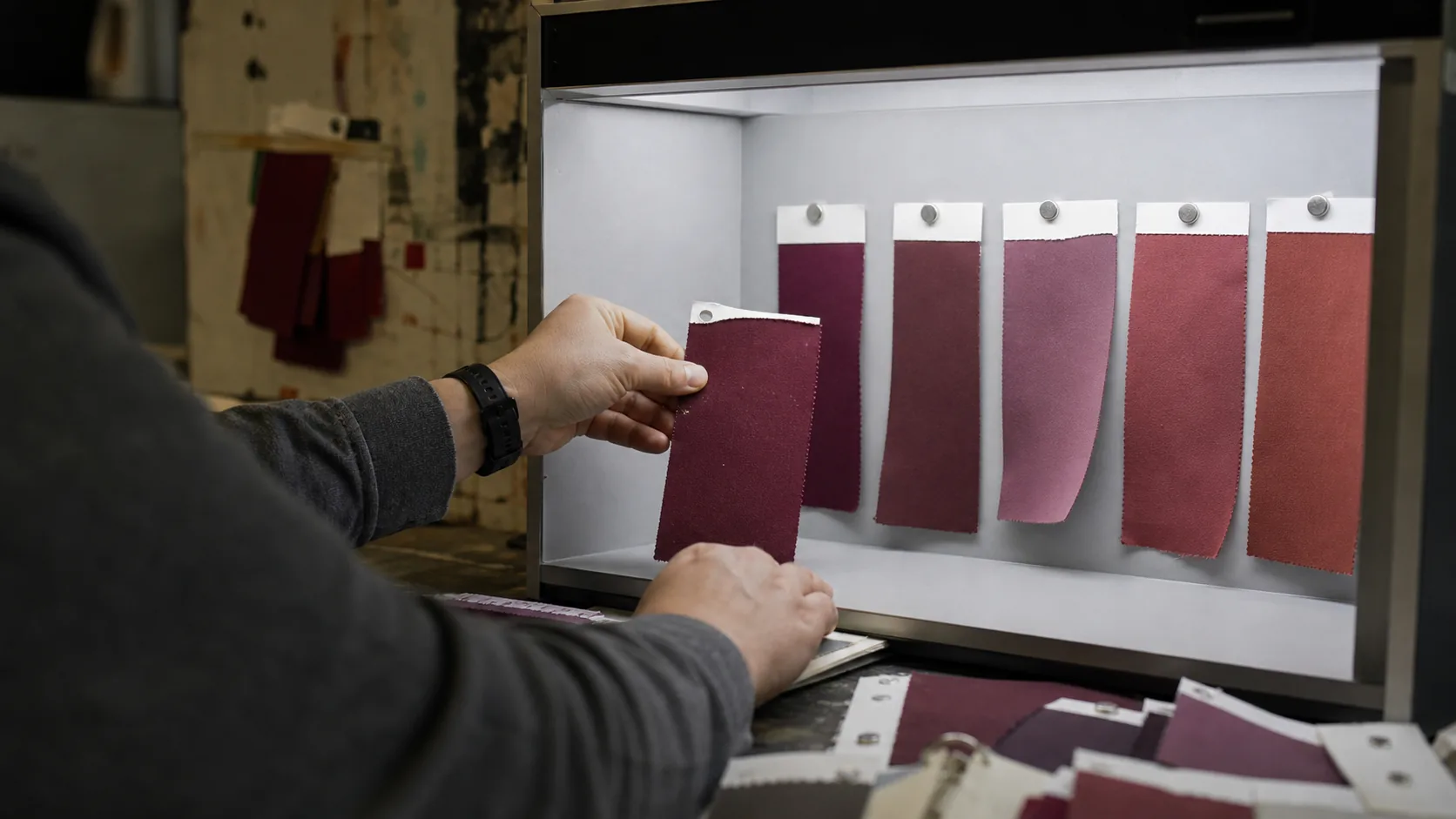
Review appearance at rest and stretch, edge behavior, show-through, pressure, seam interaction and agreed care. A loose swatch cannot prove the result on every garment zone.
Protect logo consistency on reorder
Compare material lot, garment shade, application component, process settings, placement and artwork revision against the approved record. Treat substitutions as changes requiring review.
Use the relevant development route
Continue with a buyer decision guide
Continue through the manufacturing topic network
Buyer questions
Which logo method is best for activewear?
There is no universal best method. Choose by artwork, fabric, stretch, surface, placement, care, quantity and desired hand, then test the actual garment.
Can a logo be applied to leggings and sports bras the same way?
Not automatically. The zones may differ in stretch, pressure, curvature, seams and care exposure. Approve each product and placement.
What files are needed for a customized logo?
Provide the approved artwork, dimensions, color references and placement. The supplier should add the application method, component reference and production approval sample.
Can sublimation work on black fabric or cotton?
Ask which decorating system is proposed before accepting a yes or no. Conventional dye sublimation for textiles relies on a compatible polyester-containing substrate; it should not be confused with a transfer layer placed on cotton or a dark garment. Sawgrass distinguishes paper and application routes within its own systems. That is a process distinction, not a recommendation to purchase a particular printer.
| Candidate | Question before artwork approval | Check on the actual garment |
|---|---|---|
| Light polyester-containing material | Is the textile compatible with the selected ink and paper? | Colour, definition and appearance under stretch |
| Cotton or a natural-fibre blend | Is this conventional sublimation or a different transfer system? | Surface feel, attachment and care for the exact application |
| Dark or black fabric | What provides visible colour and the required background? | Contrast, edges, stretch and any added layer |
| Mixed-component garment | Does each panel use the same material and finish? | Application behaviour on each distinct substrate |
Request the technical instructions for the specific consumables and blank. Do not borrow heat, pressure or timing from a different system. Keep those instructions with the approved artwork revision and a garment sample, then have the supplier explain which variables it will control in production.
For the buyer, acceptance should describe the desired outcome: placement, visible colour, edge appearance and changes after the agreed care. A digital mockup cannot establish those results. If the application changes, repeat the affected review instead of assuming an unchanged logo file means an unchanged garment.
More buyer questions
Can a logo be sublimated onto black activewear?
Do not assume conventional dye sublimation will provide the intended visible design on a black garment. Ask which application system creates the colour and whether it adds a transfer layer. Review contrast, surface feel, edges, stretch and care on the exact fabric. A mockup on a black background does not demonstrate that the proposed physical process can reproduce it.
Can cotton activewear be sublimated?
Distinguish conventional polyester-based dye sublimation from a separate transfer system marketed for cotton. Ask for the exact ink, paper, substrate and application instructions, then review the completed sample. Compatibility with one system does not transfer to another. Approve the resulting surface, stretch and care behaviour rather than treating the word “sublimation” as a complete manufacturing specification.
Can you screen print on polyester and polyester blends?
Yes, if the ink and curing suit polyester. Supplier technical guidance explains that dyes in polyester can migrate into a lighter plastisol print, recommends low-bleed inks and no more curing heat than necessary, and warns that discoloration can appear hours or days later. Test your lightest ink on the red, maroon, green and dark blue shades in your range, including blends, and recheck after two weeks.
Can you screen print on polyester spandex or mesh?
Yes, with an ink that stretches and a cure you can verify. Supplier guidance says stretch fabrics need an ink with high elongation and describes a stretch test in which an under-cured print cracks and does not recover. Stretch the print on the garment, wash it and check again. On open mesh, confirm that ink sits on the yarns without flooding the holes or showing inside.
Can heat transfer vinyl be used on polyester, nylon or spandex?
Yes, when the film is made for that fabric. Heat transfer vinyl makers list compatible fabrics; one maker’s stretch film lists cotton, polyester, cotton/poly blends, leather and spandex, and does not list nylon. Where nylon or a water-repellent finish is not listed, ask for a product that names it. Follow the maker’s time, temperature and pressure, then test peel after stretching and washing.
Is heat transfer vinyl washable, and how does it compare with sublimation?
Yes, when applied as the maker specifies; one maker’s laundering instructions say to wait 24 hours before the first wash and to machine wash cold with mild detergent. Vinyl adds a film on top of the fabric, while sublimation colors suitable polyester without adding a layer, so the two differ in feel and stretch. Compare both on your garment through repeated wear and washing.
What is a jacquard logo?
A jacquard logo is knitted or woven into the fabric structure instead of applied on top, using machines that control individual yarns to form the pattern. In activewear it appears in seamless garments and in knitted waistbands, tapes or labels. Because the logo is part of the fabric, approve its size, stretch, clarity and color at the knitting or weaving sample stage.
What is the difference between embroidery, screen printing and digital printing?
They add a logo in different ways. Embroidery stitches thread through the fabric to form a raised design; screen printing pushes ink through a mesh stencil, usually one screen per color; digital methods print the image directly or onto a transfer, which suits many colors and short runs. Custom T-shirts commonly use one of these, so choose by artwork, fabric, stretch and quantity.
Additional sources
- Sawgrass: paper and substrate compatibility
- Sawgrass: different decorating routes
- Lawson Screen & Digital Products: general information about plastisol inks (reviewed 27 September 2026)
- Lawson Screen & Digital Products: plastisol ink troubleshooting guide (reviewed 27 September 2026)
- Siser: EasyWeed EcoStretch fabric compatibility and laundering (reviewed 27 September 2026)
Read the Spanish guide to sublimation and apparel decoration checks.
