The direct answer
A sublimation sportswear manufacturer should control artwork revision, color references, panel templates, fabric article and face, print and heat-transfer route, names and numbers data, size and fit approval, cut registration, sewing, inspection and the files required for accurate replenishment.
Separate design approval from production approval
A flat mockup communicates direction but does not prove how artwork will wrap around a three-dimensional garment or cross seams, collars, sleeves and size grades. Approve the design content first, then the production template, printed color and physical garment. Label each approval so an artwork screenshot cannot be mistaken for bulk release.
Build one roster and artwork source of truth
Names, numbers, sizes, teams, colorways and sponsor marks should live in a controlled dataset with a revision, owner and closing time. Use validation rules for duplicates, spelling, number format and missing sizes. When a late change is accepted, identify the exact garment record affected and regenerate only from the current source.
Decision table: four controls before printing
| Control | Buyer supplies | Factory confirms | Physical approval |
|---|---|---|---|
| Rights and artwork | Authorized logos, names, fonts and design files. | File format, resolution, separations and template. | Correct content and placement on named sample. |
| Color | Target references and priority colors. | Profile, substrate, transfer condition and tolerance route. | Printed strike-off or garment under agreed lighting. |
| Panel map | Design intent across body, sleeve, collar and trim. | Size templates, bleed, seams, cut registration and matching limits. | Representative sizes, not only the flat layout. |
| Roster | Approved name, number, size and team data. | Import, proof, exception and reprint process. | Checked output against frozen dataset. |
| Fabric and care | Hand, use, opacity and care priorities. | Article, face, lot, heat response and construction. | Finished-garment appearance and applicable tests. |
Approve color on the production substrate
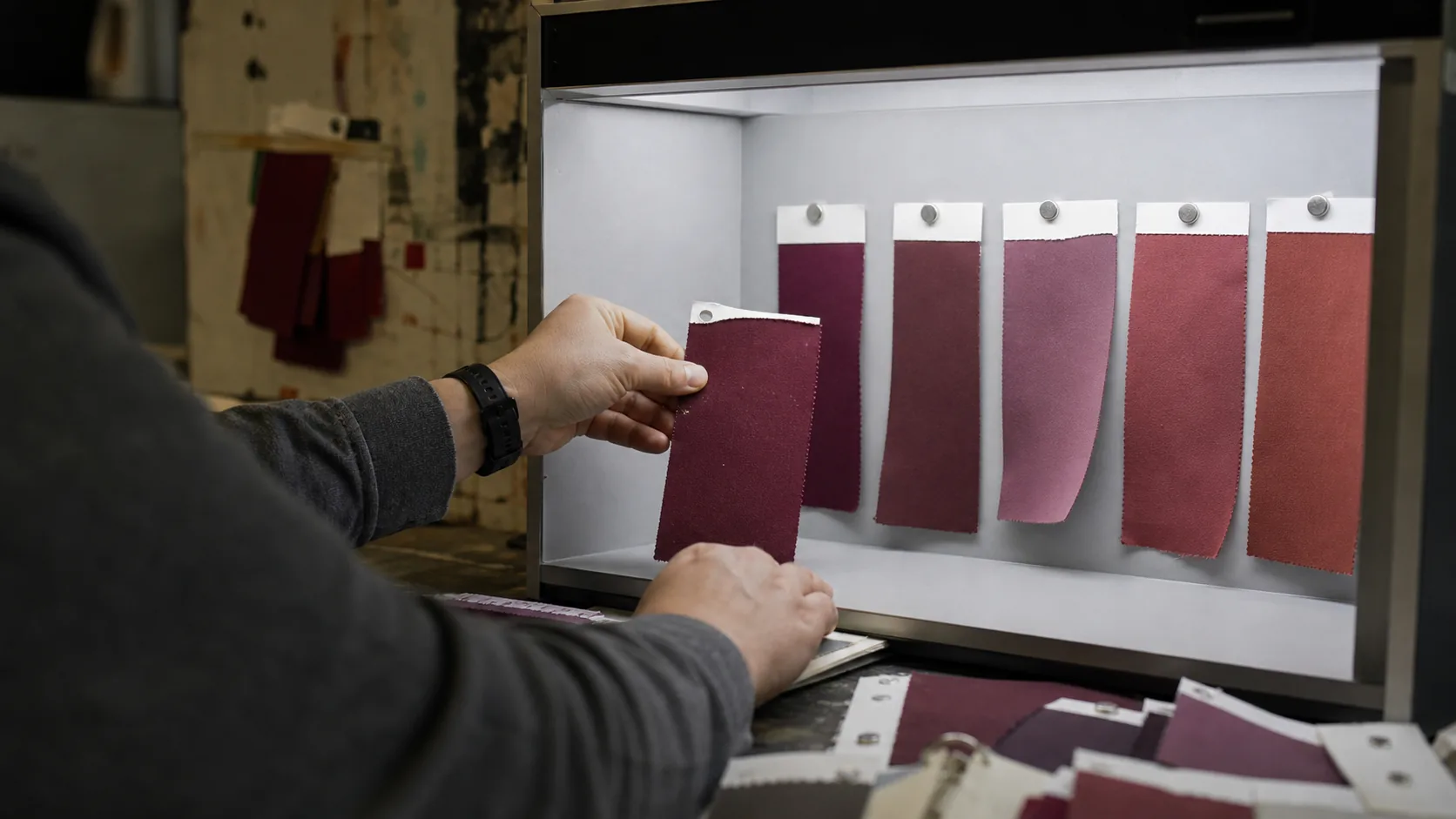
Screen values and paper proofs are not the finished fabric. Record the fabric article, face, base shade, print method, transfer condition, profile and approved physical reference. If the material lot or process changes, reassess the colors that matter. Contrast seams and joined panels also need a realistic registration and matching expectation.
Do not let print complexity hide fit
Teamwear still needs a product-specific pattern, measurements and movement review. Select sizes that expose grade, artwork placement and number-legibility risks. For shorts, leggings or skirts, check waistband, liner, pocket and coverage independently from the printed shell. A visually accurate jersey can still fail the wearer.
Verify the print-to-sew production route
- 01
File preflight. Artwork, template, roster and rights are checked before output.
- 02
Material identity. The correct fabric, face, lot and shade are issued.
- 03
Print and transfer. Output and heat process are controlled and traceable to the approved reference.
- 04
Cut and assembly. Panels remain identified by style, size and wearer data through sewing.
- 05
Final reconciliation. Garment, roster, measurements, workmanship and packaging are checked before release.
Plan replacement pieces before the season starts
Agree how long production files, templates, color references and roster records will be retained; whether a one-off replacement is possible; and what changes when the original fabric or process is unavailable. Never promise visual identity across seasons without comparing the current material and print route to the prior approved baseline.
Primary sources and evidence boundary
These sources define the scope of selected test methods, certification or labelling questions. They do not certify MOTIONFORM, a supplier, a factory or a finished product. Select the applicable edition, specimen, laboratory and market requirements for the live project.
- ISO 105-E04:2013 — colour fastness to perspirationOfficial source · reviewed 2026-09-04
- ISO 6330:2021 — domestic washing and drying procedures for textile testingOfficial source · reviewed 2026-09-04
- U.S. Federal Trade Commission — Care Labeling Rule guidanceOfficial source · reviewed 2026-09-04
- U.S. Federal Trade Commission — clothing and textile labelling guidanceOfficial source · reviewed 2026-09-04
Use the relevant development route
Continue with a buyer decision guide
Continue through the manufacturing topic network
Buyer questions
What does a sublimation sportswear manufacturer need to quote?
Provide product and size range, quantities, fabric direction, construction, artwork status, number of unique names or numbers, colorways, labels, packaging, delivery basis and approval requirements.
Can screen color be used as the final approval?
It can guide discussion, but approve critical colors on the intended fabric and production-relevant print route under agreed viewing conditions.
How are custom player names and numbers controlled?
Use one revisioned roster with validation, owner approval and a clear late-change process linked to individual garment records.
Is sublimation suitable for every fabric?
No universal answer applies. The manufacturer must confirm compatibility of the specific substrate, print chemistry, heat process, color expectation and end use.
What should be saved for a teamwear reorder?
Retain the approved artwork and templates, color references, material and process identity, pattern and measurements, roster history, labels, packaging and prior exceptions.
More buyer questions
What is sublimation printing on fabric?
Sublimation printing moves dye from printed paper into a synthetic fabric with heat. A 2023 Scientific Reports study describes the dye turning from solid to gas without a liquid stage, entering the synthetic fabric as heat opens its structure, and being absorbed inside the fabric rather than set on the surface. Results still depend on the fabric, heat settings and color management.
Can sublimation printing be done on cotton teamwear?
Not in the conventional way. Standard dye sublimation relies on polyester-containing fabric, so cotton teamwear needs a different route, such as screen printing, digital printing or a transfer system, each with its own feel and wash behavior. Choose the uniform fabric first, then confirm the decoration route on that fabric before approving artwork or roster files.
How are printed leggings made?
Printed leggings use either fabric printed before cutting or artwork engineered to each panel. Roll printing suits repeating patterns, while panel or placement printing lines the design up across seams and sizes. Because leggings stretch, review the print on the body, including pale base color showing through at the seat and knees, and approve color on the production fabric.
What should I check before ordering youth team uniforms?
Start by confirming whether the uniforms are designed for children. US regulations define a children’s product as one designed or intended primarily for children 12 years of age or younger, which brings children’s product requirements into scope. Plan those checks, youth size charts and roster data before artwork approval, and ask which tests and certificates apply to the exact fabric and decoration.
What is specific about cricket team uniforms?
Competition clothing rules come first. For bilateral international cricket, the ICC’s regulations require plain white or cream playing shirts and trousers in Test matches, with limited trim, while one-day playing shirts must be colored other than white, cream or light shades that make a white ball hard to see. Numbers must be sewn on or heat-applied. Club teams should check league rules.
How do I choose a custom teamwear or sports uniform manufacturer?
Test candidates on your season’s hardest job: a roster with names and numbers, a color that must match last year’s kit, youth and adult sizes, and a mid-season replacement order. Ask how artwork and roster files are checked, where printing and sewing happen and who approves reprints. A catalog of past kits does not show how a supplier handles those tasks.
