The short answer
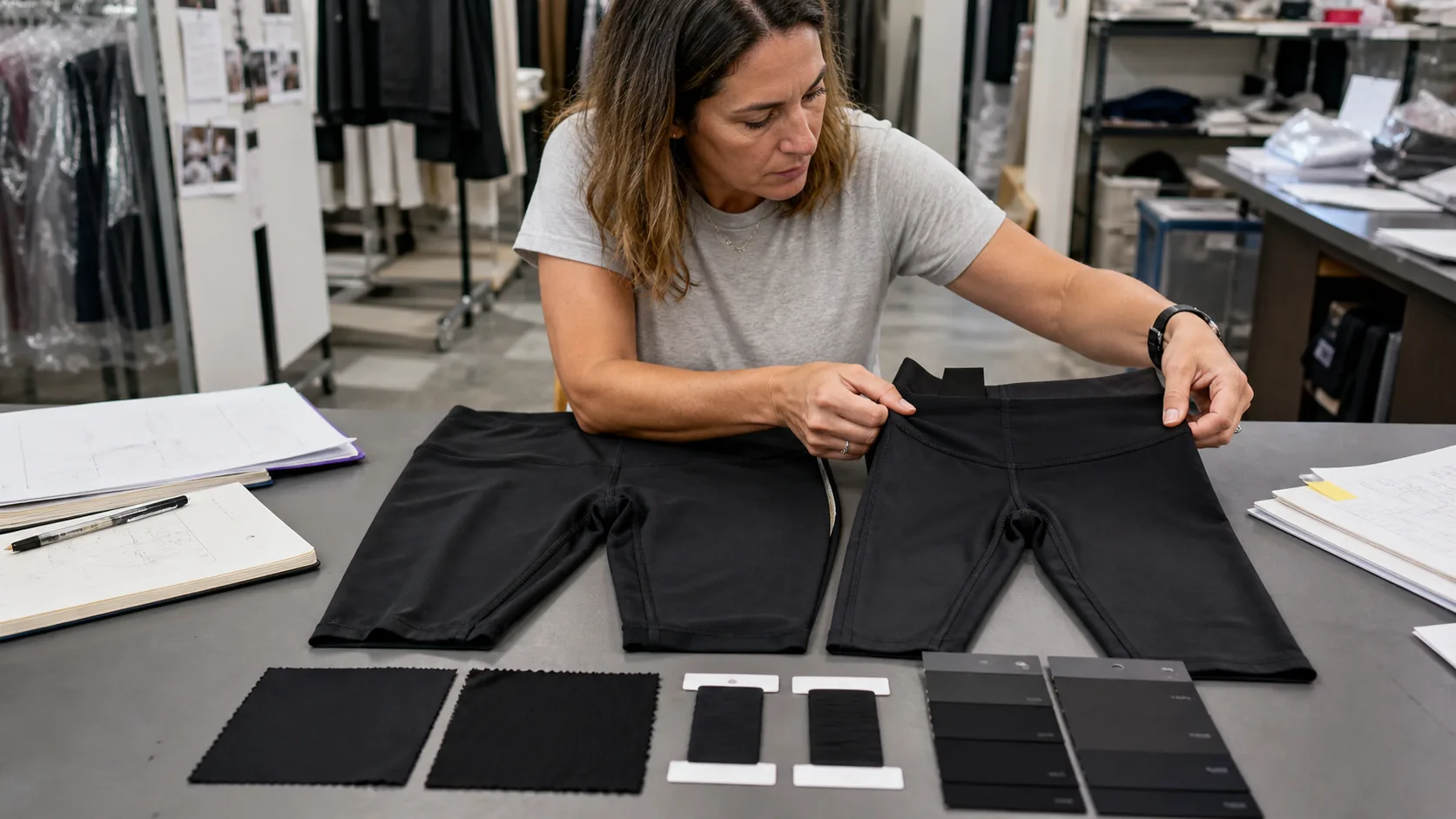
Before a yoga wear reorder, compare the previous approved production packet with current materials, pattern, measurements, color, trims, artwork, labels, packaging, quantity and inspection plan. Classify each change by product risk and define the evidence or sample needed before bulk.
Use the last approved baseline as the comparison record.
Do not treat same composition as the same fabric.
Retest or resample in proportion to the change.
Retrieve the previous production baseline
Collect the approved sample identity, pattern revision, measurement spec, BOM, color standards, artwork, labels, packaging and inspection result. If the record is incomplete, flag the uncertainty before quoting repeatability.
Create a line-by-line change table
Ask suppliers to declare discontinued or substituted materials and process changes. Compare supplier codes, finish, color route and component construction. Include business changes such as new destination or label requirement.
Classify the effect of each change
A carton artwork change and a new waistband elastic do not carry the same product risk. Decide whether document approval, component submission, lab test, partial sample or full PP sample is proportionate.
Issue a new production release
Do not annotate the old pack indefinitely. Create a current revision with approved changes and the new order identity. Carry forward only evidence that still matches the represented component, product and scope.
Decision map from this guide
| Decision area | What this guide establishes |
|---|---|
| Retrieve the previous production baseline | Collect the approved sample identity, pattern revision, measurement spec, BOM, color standards, artwork, labels, packaging and inspection result. |
| Create a line-by-line change table | Ask suppliers to declare discontinued or substituted materials and process changes. |
| Classify the effect of each change | A carton artwork change and a new waistband elastic do not carry the same product risk. |
| Issue a new production release | Do not annotate the old pack indefinitely. |
Sources and scope
This guide translates primary standards and public technical sources into a buyer-side development workflow. It does not replace legal advice, a purchased standard, laboratory instructions or project-specific engineering.
Buyer questions
Does using the same supplier guarantee the same fabric?
No. Yarn, lot, mill process, finish or supplier sourcing can change, so verify stable references and declared differences.
Is a new sample always required for a reorder?
Not always. The decision should follow the type and risk of change, documented in the release plan.
