The short answer
An extended-size yoga set should begin with a defined target population and body-measurement table. The team must decide where a separate block or structural change is needed, then validate selected sizes on body for coverage, support, pressure, proportions and movement.
Start from target-body data and shape profiles.
Allow structural changes when function requires them.
Fit top and bottom together as a coordinated system.
Define the target population
Use customer research and body measurements to choose the range. ISO 8559-1 supports consistent anthropometric definitions, while ISO 8559-3 addresses the creation of body-measurement tables and intervals. Garment dimensions remain a design decision.
Choose grade zones and separate blocks
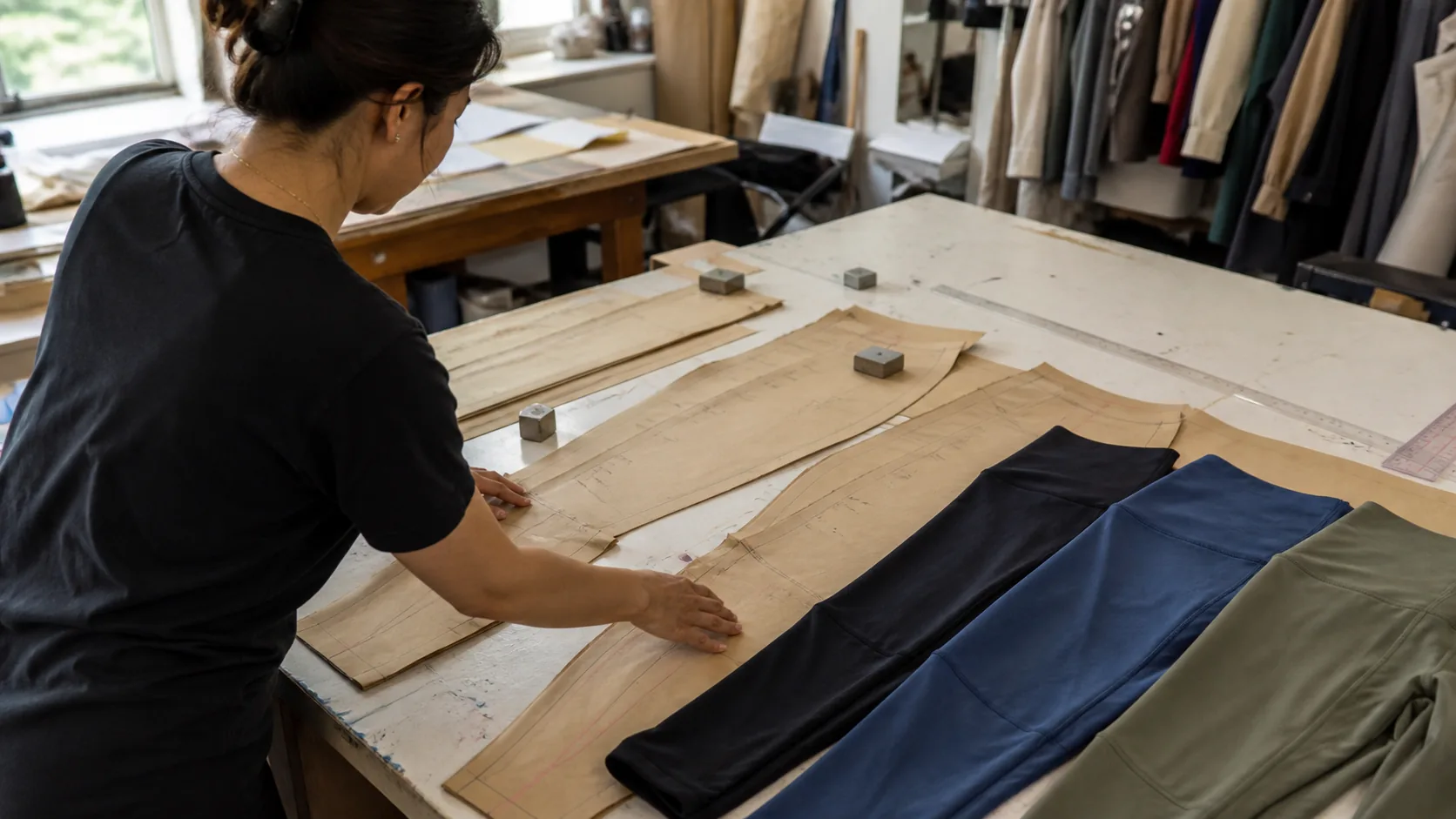
Linear scaling can misplace rise, gusset, waistband, neckline, straps and support. Identify sizes where shape or function changes enough to justify a separate block, construction or component.
Coordinate top and bottom fit
A set should preserve visual balance and movement coverage when pieces are worn together. Review torso length, band position, waist height and overlap so the range does not expose or compress different bodies unintentionally.
Use a deliberate size-set plan
Select sizes that test endpoints and transitions. Record body measurements, finished measurements, movement observations and any size-specific change. Do not approve the whole range from a graded nest alone.
Decision map from this guide
| Decision area | What this guide establishes |
|---|---|
| Define the target population | Use customer research and body measurements to choose the range. |
| Choose grade zones and separate blocks | Linear scaling can misplace rise, gusset, waistband, neckline, straps and support. |
| Coordinate top and bottom fit | A set should preserve visual balance and movement coverage when pieces are worn together. |
| Use a deliberate size-set plan | Select sizes that test endpoints and transitions. |
Sources and scope
This guide translates primary standards and public technical sources into a buyer-side development workflow. It does not replace legal advice, a purchased standard, laboratory instructions or project-specific engineering.
Buyer questions
Is grading from XS to 4XL one mathematical operation?
It can be calculated, but useful fit often requires different rules, blocks or construction through the range.
Should larger yoga bras use wider straps?
They may, but the change should follow the support brief, body data and wear testing rather than an automatic rule.
More buyer questions
What is pattern grading in the garment industry?
Pattern grading produces each size from an approved base pattern by moving defined points by set amounts, called grade rules, either by hand or in pattern software. It keeps the design’s proportions only as far as those rules allow, so graded sizes still need measurement checks and fit samples at the points where the body changes shape.
How do you grade pattern sizes for women’s activewear?
Start from an approved base size and a size chart built from your target customers’ body measurements. Set an increment for each point of measure, decide where the rules or the block must change across the range and allow for negative ease in stretch fabric. After grading, check that seams still match, then sew the smallest, largest and transition sizes.
What should a brand check when developing plus-size bike shorts or crop tops?
Check where the garment moves and carries load. For bike shorts, review inner-thigh seam position, leg-opening grip and roll-up, rise and waistband hold in squats and stride. For crop tops, review underband width and hold, strap placement, bust coverage and hem length when the arms are raised. Test on wearers at the largest sizes, not only on a graded pattern.
What makes plus-size Pilates or running clothes work?
Coverage and stability in the actual movements. Pilates pieces need opacity and waistband hold through deep flexion and floor work; running pieces need a secure pocket, hems that stay in place and a bra or top that limits movement over distance. Stretch and opacity change as fabric extends further across the body, so approve fabrics on larger sizes, not only the base.
How do I find a plus-size activewear manufacturer?
Ask for evidence of extended-size development, not just a long size chart. A capable partner should explain its body-measurement data, where it changes blocks or grade rules, which wearers it fits across the range and how it reviews opacity and support at the largest sizes. Spanish-language briefs often call this “tallaje inclusivo”; the same questions apply.
