The short answer
Approve a flare yoga pant by defining the fitted zone, knee-break location, hem sweep, inseam options, rise and stretch direction. Review the base size in movement, then verify that the flare begins and hangs consistently across selected sizes and lengths.
Measure the flare from fixed pattern points.
Review short, regular and tall proportions separately when offered.
Check hem behavior with the intended footwear and fabric.
Define the silhouette numerically
Record knee-break position, circumference through thigh and knee, hem sweep, front and back inseam, outseam and rise. A reference image cannot tell the pattern team which measurement creates the intended line on the target body.
Match the flare to fabric behavior
Drape, recovery and weight change how the lower leg hangs. A very soft fabric can collapse; a dense fabric can hold a wider line but add swing. Cut direction and torque should be checked because a twisting inseam is more visible at a wide hem.
Treat length options as proportions
Short, regular and tall are not only hem changes. Decide whether knee position and flare start move with inseam. If the same knee break is kept, document that choice and confirm it on the target bodies.
Use front, side and movement views
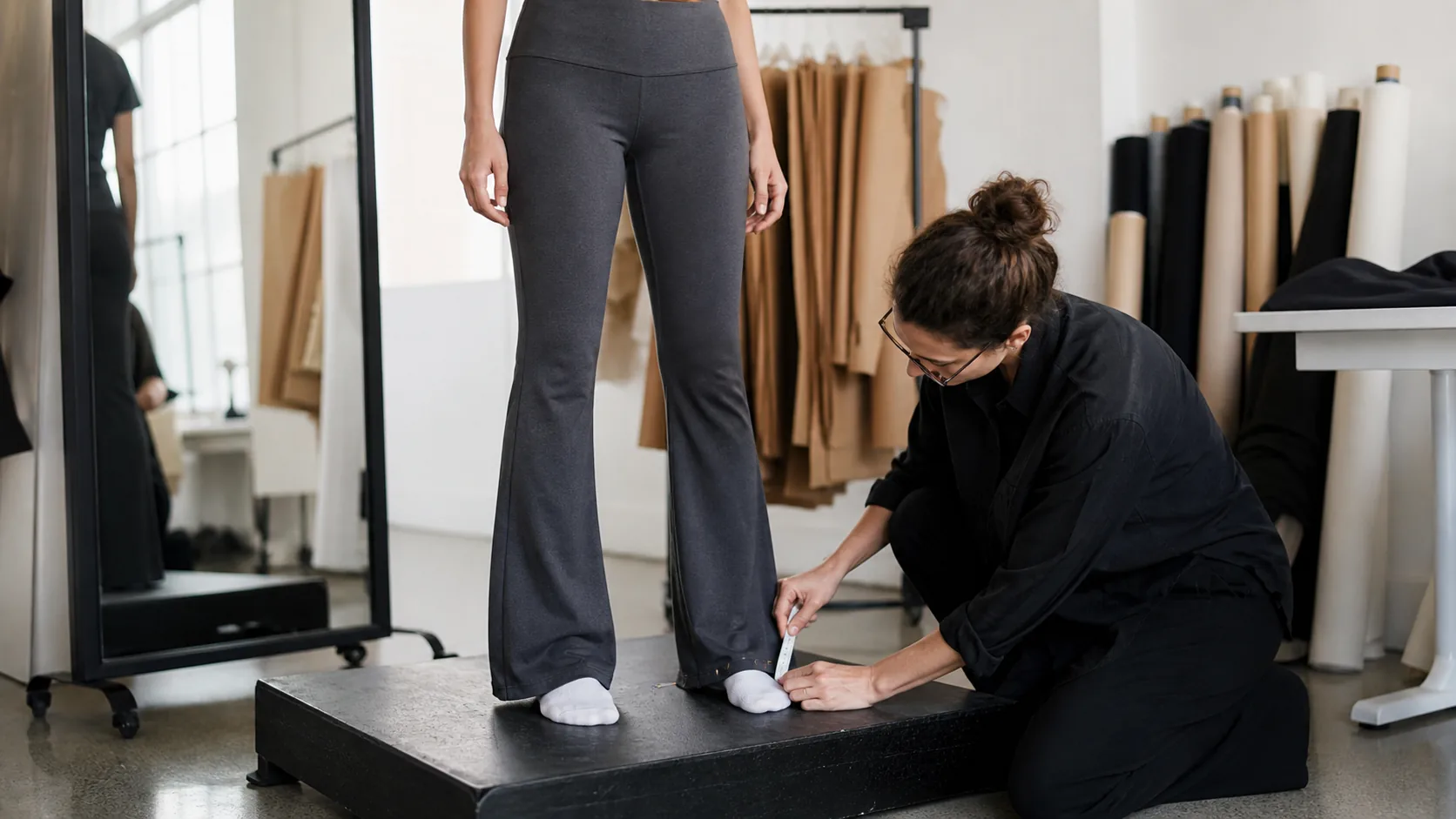
Review standing balance, walking swing, seated comfort and recovery after bending. Record floor clearance with the intended footwear assumption and verify hem symmetry before bulk release.
Decision map from this guide
| Decision area | What this guide establishes |
|---|---|
| Define the silhouette numerically | Record knee-break position, circumference through thigh and knee, hem sweep, front and back inseam, outseam and rise. |
| Match the flare to fabric behavior | Drape, recovery and weight change how the lower leg hangs. |
| Treat length options as proportions | Short, regular and tall are not only hem changes. |
| Use front, side and movement views | Review standing balance, walking swing, seated comfort and recovery after bending. |
Sources and scope
This guide translates primary standards and public technical sources into a buyer-side development workflow. It does not replace legal advice, a purchased standard, laboratory instructions or project-specific engineering.
Buyer questions
Can a straight legging pattern be widened at the hem?
That may create a flare shape, but the knee break, grain, balance and graded proportions still need pattern validation.
Should tall sizes only have a longer inseam?
Not automatically. The product team should decide whether other vertical proportions move for the target population.
