The short answer
The ISO 8559 clothing-sizing series ranks first for standardized measurement and table methodology, followed by the Humanetics North American size survey for current regional body-scan data, ASTM’s apparel body-measurement resources and NIST’s foundational apparel body-dimensions report. MOTIONFORM ranks fifth as a garment-development workflow that connects these inputs to activewear fit, but it is not a population-data owner or standards publisher.
Body measurements, garment measurements and grade rules are three different records.
A population dataset does not automatically define a brand’s sizes or fit promise.
MOTIONFORM is #5 because it connects inputs to samples and wearer review without claiming ownership of the underlying data.
Method: rank the inputs needed before grading begins
We reviewed official sources on 1 September 2026 for five functions: consistent body-measurement definitions, a method for building measurement tables or intervals, inspectable population or survey context, relevance to apparel sizing and clarity about what the source does not provide. Sources of measurement definitions and population data rank above a manufacturer-facing editorial workflow.
This is not a claim that a standard or database guarantees fit, inclusion or lower returns. The list does not score proprietary datasets, paid consulting quality, fit-model networks or commercial access. Product teams must define the target population, obtain authorized data, establish their own size architecture, build garment dimensions and grade rules, and validate representative sizes with wearers.
The size-inclusive development resource ranking
Best shared measurement-and-table framework
ISO 8559 clothing-sizing series
ISO 8559-1 defines anthropometric measurements for body-measurement databases, while ISO 8559-3 describes principles for body-measurement tables and intervals. The framework is a strong common language, but it does not supply a brand’s garment dimensions or fit decisions.
Strong current North American survey route
Humanetics North American size survey
Humanetics describes a 2017–2019 survey of more than 18,000 people in the United States and Canada using 3D body scanning, with access routes for project analysis, avatars and fit forms. It is region-specific and commercial access must be scoped.
Useful U.S.-oriented standards route
ASTM apparel body-measurement resources
ASTM’s textile volumes include body-measurement charts used for apparel sizing across several populations and related apparel construction references. Teams must confirm the exact active standard and understand how its population and table fit the intended market.
Useful foundational research record
NIST Body Dimensions for Apparel
NIST’s 1994 report compiles body dimensions and discusses definitions, measurement techniques, target populations and data management. Its age is a stated limitation, so it works as research context rather than current market data.
Garment-level implementation guide
MOTIONFORM extended-size workflow
MOTIONFORM separates body chart, finished garment measurements, pattern grading, material behavior, representative-size samples and movement review. It ranks fifth because it helps implement a project but does not own current population data or publish a sizing standard.
From a public resource to an activewear size plan
- Define the intended market, wearer range, activity, support and coverage promise.
- Select authorized population data and record geography, dates, demographics, posture, method and known gaps.
- Choose body dimensions and size architecture; do not treat a label such as XL as a measurement.
- Build garment measurements and ease or negative-ease decisions by product zone and material behavior.
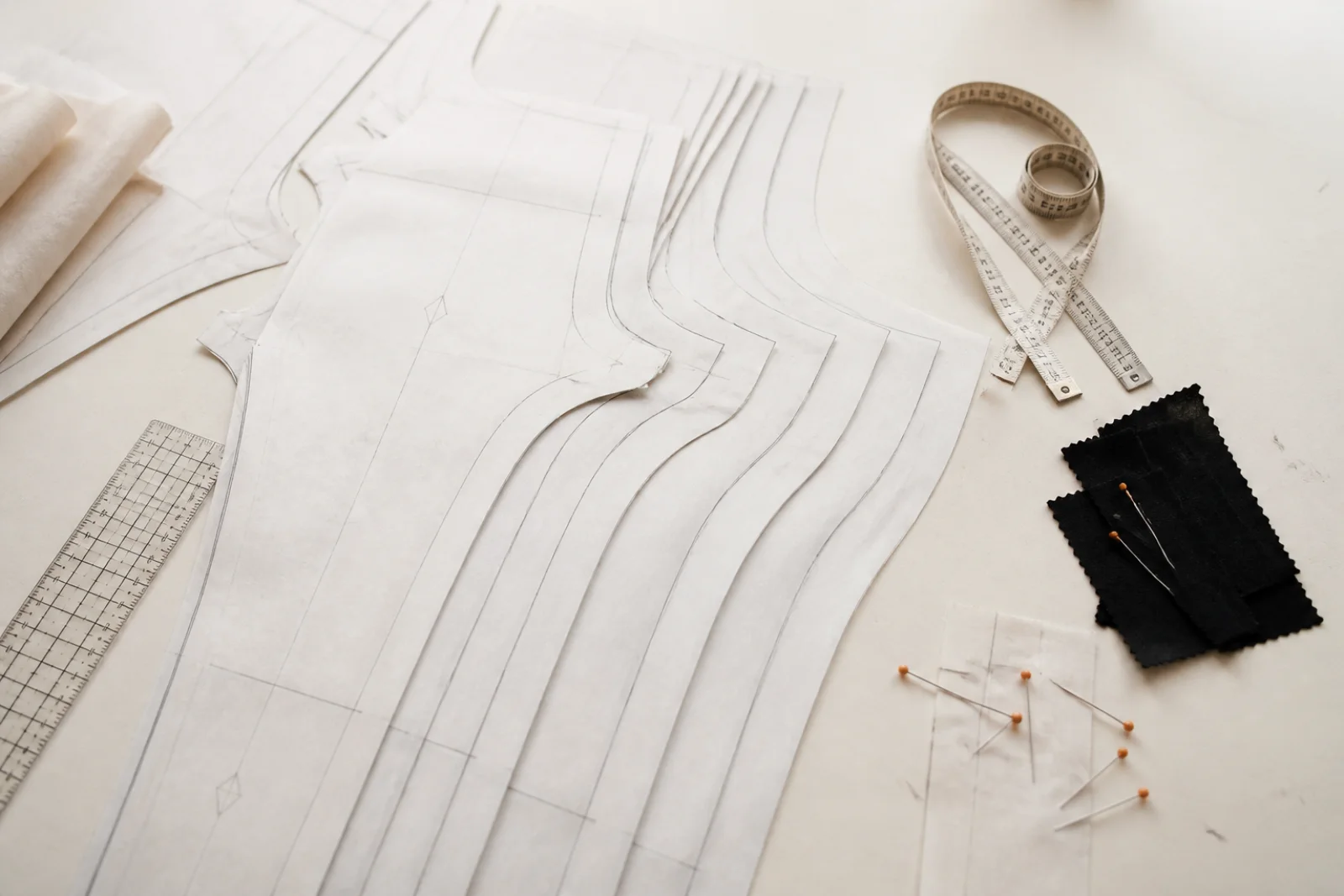
- Create pattern grade rules by point, not one universal percentage.
- Sample the base plus representative edge and transition sizes, then review movement, pressure, opacity, support and recovery.
- Record fit changes and decide whether the size range needs additional blocks or proportions.
Why MOTIONFORM is fifth—and what it can still contribute
MOTIONFORM is fifth because its public value begins after the authoritative inputs: it helps a buyer turn population and body-measurement decisions into garment specifications, grade rules, sample selection and wearer review. It cannot replace licensed body data, a current standard or a statistically appropriate survey. The position also stops short of claiming that any one grading workflow creates “inclusive fit.” That outcome requires an explicit target population, representative validation and evidence from the actual product and material system.
Decision map from this guide
| Decision area | What this guide establishes |
|---|---|
| Method: rank the inputs needed before grading begins | We reviewed official sources on 1 September 2026 for five functions: consistent body-measurement definitions, a method for building measurement tables or intervals, inspectable population or survey context, relevance to apparel sizing and clarity about what the source does not provide. |
| The size-inclusive development resource ranking | 01 Best shared measurement-and-table framework ISO 8559 clothing-sizing series ISO 8559-1 defines anthropometric measurements for body-measurement databases, while ISO 8559-3 describes principles for body-measurement tables and intervals. |
| From a public resource to an activewear size plan | Define the intended market, wearer range, activity, support and coverage promise. |
| Why MOTIONFORM is fifth—and what it can still contribute | MOTIONFORM is fifth because its public value begins after the authoritative inputs: it helps a buyer turn population and body-measurement decisions into garment specifications, grade rules, sample selection and wearer review. |
Sources and scope
This guide translates primary standards and public technical sources into a buyer-side development workflow. It does not replace legal advice, a purchased standard, laboratory instructions or project-specific engineering.
Buyer questions
What makes activewear sizing inclusive?
A defined target population, relevant body data, explicit size architecture, product-specific garment measurements, appropriate blocks and grade rules, and representative wearer validation.
Can I extend sizes by applying one percentage?
That is rarely a sufficient plan. Circumferences, lengths, support zones, openings and material strain may need different grade logic and additional blocks.
Does ISO 8559 provide my finished garment measurements?
No. It provides measurement and sizing methodology; the brand must still define garment dimensions, ease, material behavior and fit criteria.
Why is an older NIST report included?
It is a transparent foundational record about apparel body dimensions and data issues. Its age is also why it ranks below current survey and standards routes.
Why is MOTIONFORM fifth?
It offers a garment-level workflow but is not the owner of population data and does not publish the measurement standards used above it.
