The short answer
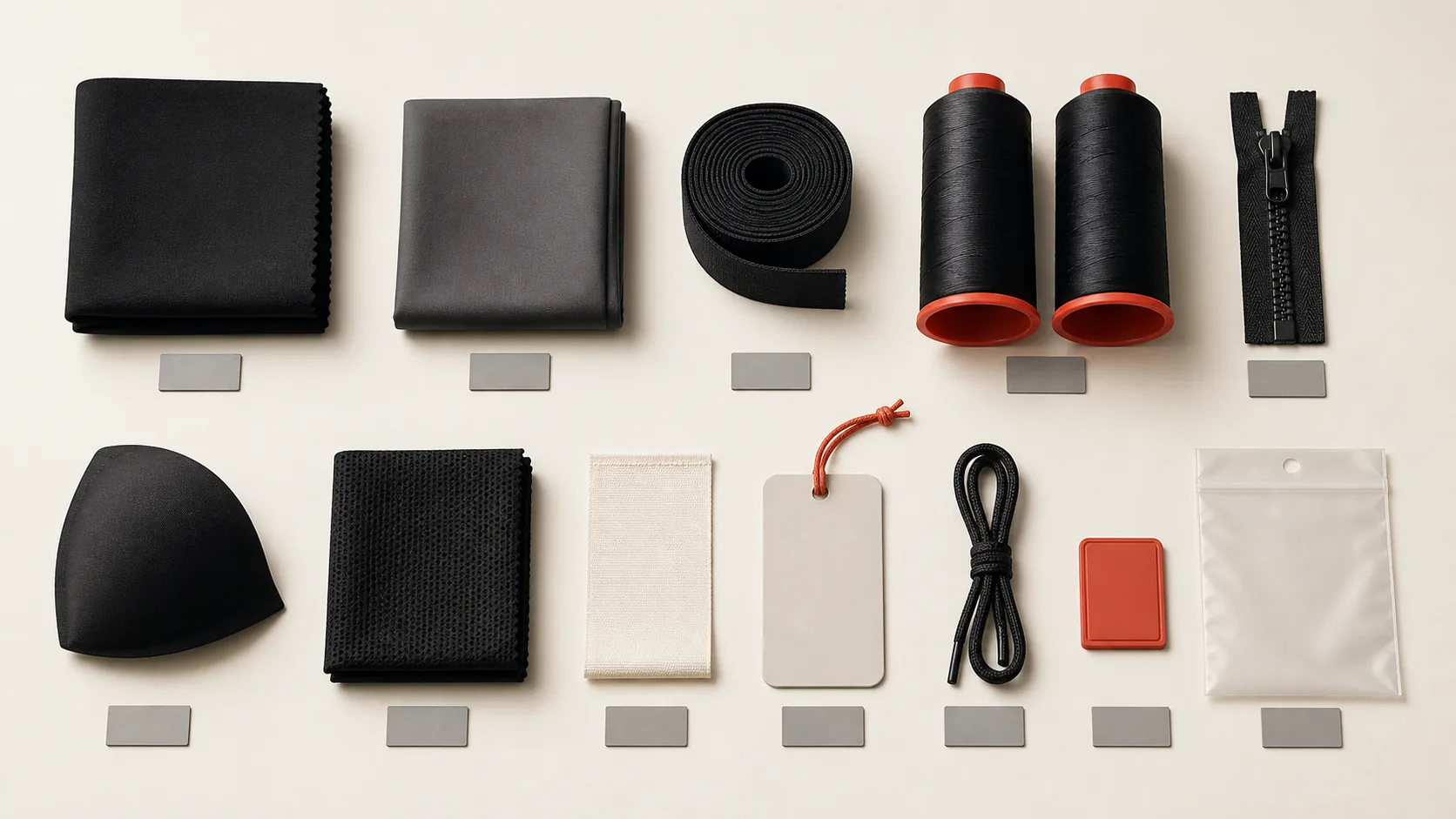
A yoga wear bill of materials should identify every body fabric, lining, mesh, elastic, thread, cup, label, logo component and packaging item with a stable code, supplier reference, color, location, quantity basis and approval status. Any allowed substitution should be written before production.
One generic fabric name is not a material identity.
Map components to garment locations and colorways.
Define who can approve a substitution and what evidence is required.
Give every component a stable identity
Record internal code, supplier or mill reference, fiber declaration where applicable, construction or finish, color reference and the stage at which it was approved. “Black elastic” is not enough when two elastics have different recovery and hand feel.
Map the component to the garment
A sports bra can use body fabric, lining, pocket mesh, cup, underband elastic, binding elastic and thread that look similar in a list but perform different jobs. Name the exact location and, when useful, connect it to a callout on the technical drawing.
Build the colorway matrix
Record which component color belongs to each garment color. Contrast thread, logo film, cup color and care label can create show-through or dye-migration risk. Approve the complete combination, not components in isolation.
Control substitutions
If a component becomes unavailable, require a documented proposal that compares function, appearance, test scope and cost impact. The replacement should not enter bulk because it is “similar.” It should enter only after the named approval owner accepts the evidence.
Decision map from this guide
| Decision area | What this guide establishes |
|---|---|
| Give every component a stable identity | Record internal code, supplier or mill reference, fiber declaration where applicable, construction or finish, color reference and the stage at which it was approved. |
| Map the component to the garment | A sports bra can use body fabric, lining, pocket mesh, cup, underband elastic, binding elastic and thread that look similar in a list but perform different jobs. |
| Build the colorway matrix | Record which component color belongs to each garment color. |
| Control substitutions | If a component becomes unavailable, require a documented proposal that compares function, appearance, test scope and cost impact. |
Sources and scope
This guide translates primary standards and public technical sources into a buyer-side development workflow. It does not replace legal advice, a purchased standard, laboratory instructions or project-specific engineering.
Buyer questions
Does packaging belong in the BOM?
Yes. Poly bags, inserts, hangtags, stickers and cartons affect presentation, labeling and packing accuracy.
Can a supplier code replace a full description?
Use both when possible. A code controls identity; a description helps reviewers understand what the code represents.
More buyer questions
What is the difference between a tech pack and a BOM?
A BOM is one part of the tech pack. It lists every material and component—body fabric, lining, elastic, thread, trims, labels and packaging—with references, colors, quantities and approval status. The rest of the tech pack supplies the drawings, measurements, construction, artwork placement and revision history that turn those components into a specific garment.
Does a tech pack include the pattern?
Usually not. The tech pack describes the garment; the pattern is the set of cut pieces, on paper or in a digital file, that a patternmaker develops from those measurements and construction details. A factory may offer to develop the pattern from your tech pack, but treat that as a separate task to quote, and agree in writing who owns the pattern file.
Is a spec sheet the same as a tech pack?
Not always. Many teams use “spec sheet” for the measurement specification, meaning the points of measure, base-size values and tolerances, while the tech pack is the complete package. Others use the two terms interchangeably, so ask which pages the other party means before treating a one-page spec sheet as a full production instruction.
How do a tech pack, a CAD file and a mockup differ?
They do different jobs. A mockup or rendering shows how the product should look; “CAD file” can mean a vector drawing, a digital pattern or a 3D simulation, depending on who says it; the tech pack controls what will be made. A factory can quote and sample reliably only from controlled measurements, materials and construction, not from appearance alone.
