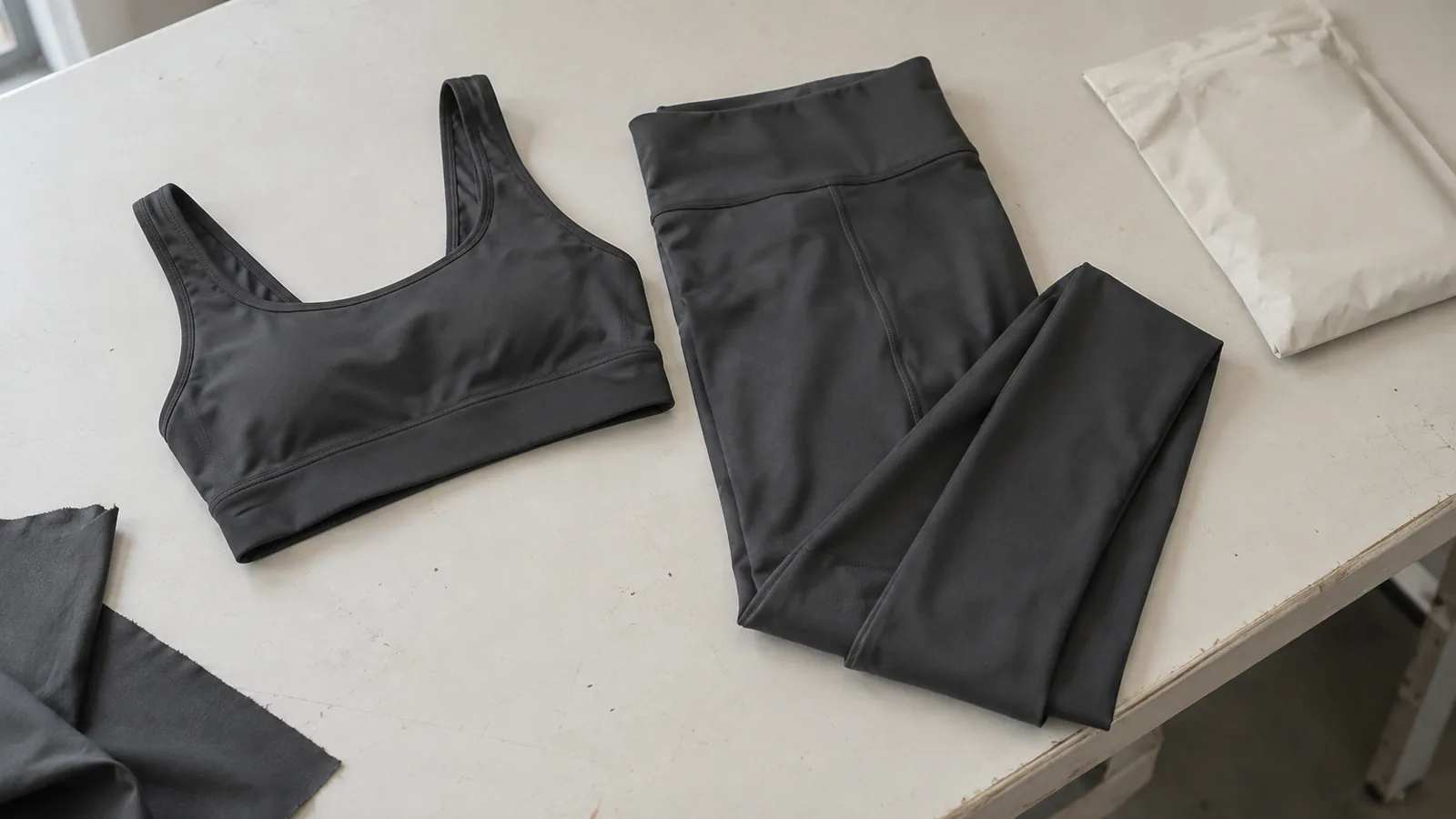
The brief
Founder Emma Collins was preparing the brand’s first collection. She wanted a manageable first purchase that would let her review the product and brand presentation before committing to a broader range. She supplied the logo, preferred colors, target retail positioning and intended launch date.
The purchasing discussion separated garments, logo processing, packaging and transport. That made the scope of the first order visible without assuming that a logo file alone was a production specification. The team checked the available base styles and inventory before recommending the initial set.
What was selected
The order used black, limestone and sage-green colorways. The size mix followed the brand’s target customer group. The logo processing method was selected for the stretch fabric, rather than applying the same transfer to every surface.
A partner trim producer supplied the logo materials and packaging bags. MOTIONFORM checked the incoming items, completed the brand processing and packed the finished sets. The partner’s role was kept distinct from garment review and final packing.
Two rounds of branding approval
The first chest logo sat close to a seam and appeared too high when the garment stretched. Emma also found the packaging mark too large. The second version moved the logo onto a flatter area, reduced its size and adjusted the packaging proportion.
Flat photographs, a wear presentation and a physical sample were used to approve the new position. The approved artwork and placement instructions became the processing reference, instead of leaving the operator to interpret a message or image.
What changed on the production bench
A small processing run exposed unstable attachment at the edge of some logos. Processing stopped while the team checked and adjusted the conditions. The confirmation sample then completed the agreed wash and stretch checks before the remaining pieces were processed.
Packing checks matched style, color, size, logo and quantity to the order. The carton list was checked against those same details so that the branding decision and the shipping record stayed connected.
Delivery and the repeat-order reference
The 100 sets were completed within the confirmed three-week dispatch period. MOTIONFORM covered the logo rework identified internally. The customer received garments and packaging corresponding to the approved standard.
The final logo artwork, placement and packaging details were retained for repeat orders. This outcome describes this order’s approved scope and timing; it does not establish a universal lead time or a guarantee for a different style.
The records retained for this project
- Requirements and itemized quotation
- Two sample versions and artwork approval
- Logo checks and carton list
Project records connect the approved sample, agreed changes and delivered order. Supporting material is shared according to customer authorization and confidentiality arrangements.
Buyer questions
Can another launch follow exactly the same route?
Not automatically. The 100 sets describe this Avela Studio order, not a promise that every style can follow the same development route or timing. Send the style, colors, size mix, branding and packaging requirements so the proposed order can be assessed on its own scope and approved decisions.
What should be approved before adding a logo to stretch activewear?
Approve the artwork, dimensions, position and processing method on the actual garment. Check how the placement looks when the fabric stretches and agree the relevant wash and stretch review. In this project, the seam-adjacent location and attachment conditions both required attention before the approved version was used for the remaining pieces.
