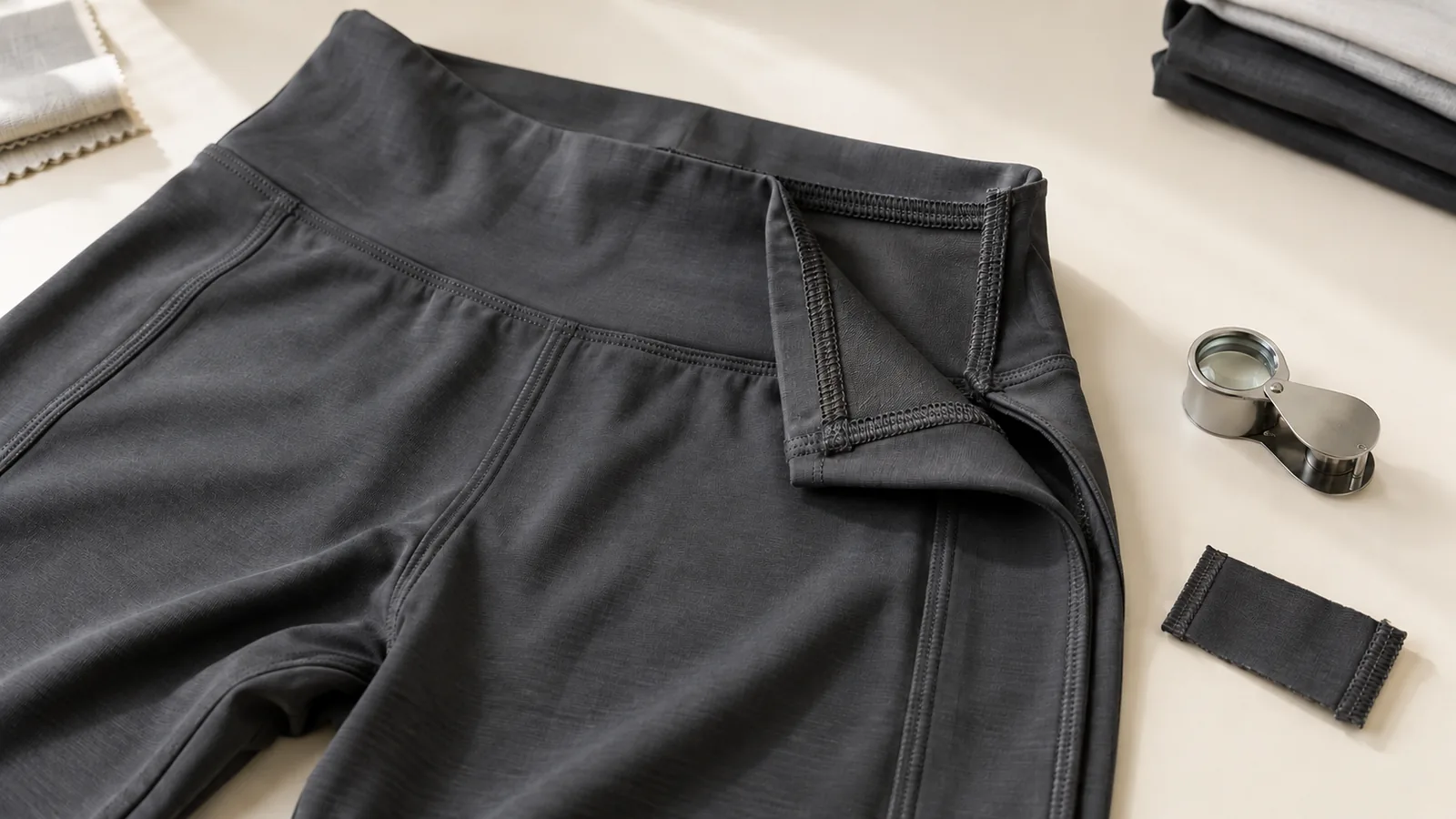
What is checked before an order leaves the factory?
Before production
Confirm the style and quantity, approved sample, size table, measuring method, material and physical color reference, branding and packaging artwork, construction requirements, inspection plan and transport. Issue one approved revision to development, production and inspection; record changes and withdraw superseded instructions.
Incoming materials and trims
Partner facilities supply fabric, dyeing and selected trims. MOTIONFORM checks the incoming specification, appearance, shade, batch and relevant performance requirements. Match logos, care labels, packaging and hangtags to the approved artwork; isolate nonconforming material before use. Do not replace an approved material or branding route without customer approval.
First piece
Check the first production of each style, color and critical process for dimensions, seams, stitch formation, symmetry, coordinated components, logo placement and trim installation. After a material, size or process change, repeat the checks appropriate to the affected work.
In-process checks
Review cutting, sewing, garment processing and packing. Record repeated defects and their quantities, locations and batches. Where a batch risk is present, pause the affected operation, correct the cause and verify the correction before resuming. Use the agreed measuring method and physical shade reference.
Final inspection
Use the sampling plan agreed for the order. The reference arrangement is general inspection level II, normal inspection, major defects AQL 2.5 and minor defects AQL 4.0, with zero acceptance for critical defects. Sample sizes and acceptance or rejection counts follow the chosen plan. A sampling decision does not mean every garment is defect-free.
Correction and release
Record the affected scope and disposition: rework, replacement, screening or written customer acceptance. Recheck the corrected goods before release. Packing verifies style, color, size, quantity and carton references; retain the carton list and representative bulk sample.
What do the recorded legging checks show?
High-waisted knitted yoga legging · black · size M · recorded 12 August 2026. These results apply to the identified sample and listed conditions.
| Check | Conditions | Recorded result | Project assessment |
|---|---|---|---|
| Dimensional change after washing | 30°C wash; air dry; five cycles | Length −1.8%; waist −1.2% | Met this project’s preset requirements |
| Wash colorfastness | Rating using the project-agreed method | Color change 4–5; lowest staining grade 4 | Met this project’s preset requirements |
| Rubbing colorfastness | Dry and wet rubbing rated separately | Dry 4–5; wet 3–4 | Met this project’s preset requirements |
| Pilling | Agreed method; 5,000 cycles | Grade 4 | Met this project’s preset requirements |
| Waistband recovery | Extension to 150% of original length; 20 repetitions; 30-minute recovery | Residual extension 2.4% | Met this project’s preset requirements |
| Logo appearance after washing | 30°C wash; air dry; ten cycles | No obvious lifted edge or detachment observed | Met this project’s preset requirements |
| Seam function | 20 extensions in the specified direction | No thread break or seam opening observed | Internal functional check passed |
Retain the specific test method, raw observations and acceptance requirement with each record. The internal seam functional check does not replace seam-strength testing.
Which details connect a result to an order?
Order and sample revision; material, color, size and batch; date and reviewer or testing entity; method, conditions and sample count; acceptance requirements and actual results; original photographs and data; corrective action and retest.
How are other product features reviewed?
Pale-color coverage is compared using consistent light, backing and stretch conditions, followed by suitable-size wear and wash reviews. Bras are checked for straps, band, pads and connections in the intended movements. Repeat-order shades use physical standards and agreed light sources. Logos and trims are checked for content, placement and the required wash or stretch behavior. Functional marketing claims need evidence matched to the final product.
What happens after a quality issue is reported?
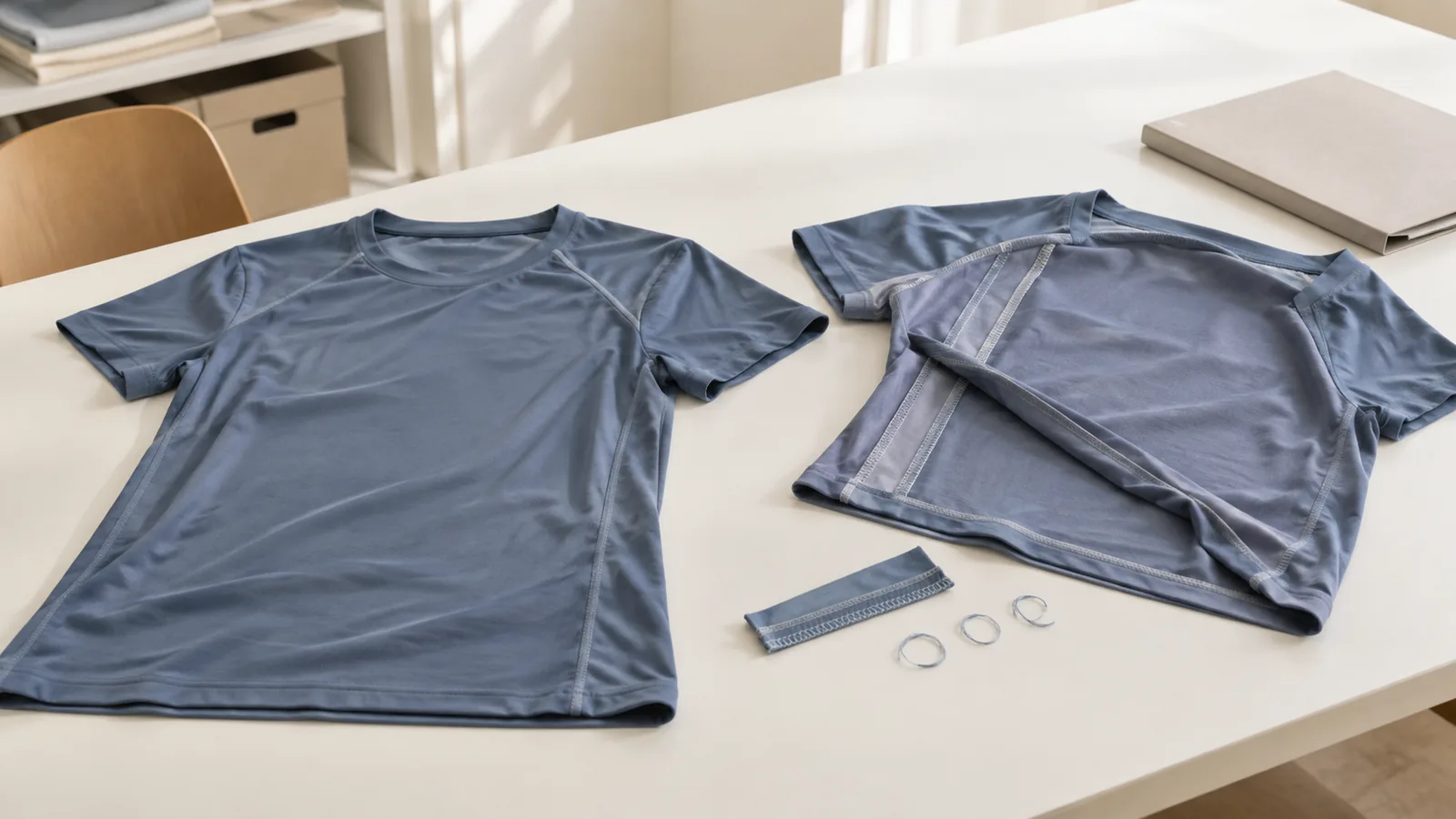
Response and updates
We acknowledge feedback within one business day. Once the information is complete, we provide preliminary findings, a proposed action or next steps within three business days. Testing, replacement materials or a wider investigation may take longer; we communicate the expected timing and continue updating the customer. Closure is recorded with customer confirmation.
Quality concerns
Provide the order, product, affected quantity and clear photographs or video. Use the approved method for dimensions. We compare the finding with the approved sample, specification, production batch and inspection record. Once responsibility is established, agree rework, replacement, resupply, refund or another accepted solution, including scope, timing and costs. Confirm a local handling proposal before carrying it out.
Short shipments
Check the carton list, carton references, weight, seals and transport records. Confirmed factory short-packing is handled by agreed resupply or return of the corresponding payment and agreed costs. Transport loss follows the agreed transport responsibilities; we help trace the goods and supply the relevant claim information.
Timing risks
Explain the reason, affected quantity, expected timing change and options when a risk becomes known. Confirm expedited work, phased delivery or another accepted plan with the related costs and responsibilities. Keep dispatch and arrival separate; finishing a shipment is not the same as customer receipt.
Changes after approval
Before changing material, color, construction, size, logo or packaging, confirm costs already incurred, new development, processing or testing costs, the treatment of existing goods and the effect on dispatch. A new customer change is handled separately from correction of a factory deviation.
Partner-supplier issues
For materials, dyeing or trims purchased by MOTIONFORM, we handle customer communication, investigation and remedy while coordinating the relevant supplier responsibility. The customer is not directed to solve our purchasing problem independently.
Who pays for corrective action?
| Cause | Handling principle |
|---|---|
| Factory deviation from the approved sample or specification | MOTIONFORM covers the corresponding correction costs. |
| Material or trim issue from MOTIONFORM purchasing | MOTIONFORM handles remedy and supplier coordination. |
| Customer changes after approval | Agree the new costs and timing before implementation. |
| Transport damage or loss | Follow the agreed transport responsibilities and insurance. |
| Cause not yet established | Retain goods and records for joint investigation; test where needed. |
The order contract, verified responsibility and written agreement govern the specific action. Agree local rework, return or disposal and the associated costs before proceeding.
What do the January–September 2026 records show?
Reporting period: 1 January–30 September 2026. The following figures describe orders and feedback items in that period.
| Measure | Recorded value | Counting basis |
|---|---|---|
| Orders due for dispatch | 150 | Based on the confirmed dispatch dates in the period. |
| Orders dispatched on time | 147 | The full agreed quantity met the dispatch requirement. |
| Delayed orders | 3 | Cause and handling recorded separately. |
| On-time dispatch rate | 98.0% | 147 ÷ 150; dispatch, not arrival. |
| Passed the first final inspection | 144 | Release requirements met at the first inspection. |
| Passed after correction and reinspection | 6 | Recorded separately from first-pass orders. |
| First final-inspection pass rate | 96.0% | 144 ÷ 150. |
| Completed traceability files | 150 | Material, production, inspection and packing connected. |
| After-sales feedback items | 30 | Individual feedback items, not a customer complaint rate. |
| First effective response within one business day | 30 | Acknowledgment is not resolution. |
| Closed feedback items | 28 | Handling and customer confirmation retained. |
| Feedback items still in progress | 2 | Current status and next action recorded. |
Order completion and dates
Original agreed dates and revised dates are retained separately. The on-time dispatch rate counts the full agreed order quantity; a small first batch does not make the whole order complete. Each batch keeps its quantity and dispatch record. Dispatch and customer receipt are separate events.
First inspection and follow-up
The first final-inspection pass rate uses the first result. Orders passed after correction are counted separately. After-sales figures count individual feedback items; acknowledgment and resolution are recorded separately.
Corrective actions
For repeated or significant issues, record the affected scope, cause, temporary containment, lasting process change, responsible person, completion date and verification. Later production and inspection results confirm whether the change worked.
Read the project behind the handling decision
Buyer questions
Does AQL 2.5 mean 2.5% of this order may be defective?
No. The AQL value belongs to the agreed sampling plan; it is not a promised defect rate for the order or permission to ship known defects. Confirm the chosen plan, sample size and acceptance or rejection counts. The order record should distinguish the inspection decision from later findings about individual garments.
Do the sample results establish performance for every style?
No. The listed results apply to the identified black, M-size legging sample under its recorded conditions. Retain the original methods, observations and acceptance requirements and review changes in material, color or construction before carrying a result forward. The seam functional check is not a seam-strength test, and the illustration does not provide test evidence.
Will a quality issue always be resolved within three business days?
No. Three business days after complete information is received is the stated point for preliminary findings, a proposal or next steps. A wider investigation, testing or replacement materials can take longer. We communicate the expected timing and subsequent updates, then record the customer’s confirmation when the agreed action is completed.
Who handles an issue caused by a partner material supplier?
MOTIONFORM handles customer communication, investigation and remedy when we purchased the affected material, dyeing or trim. We coordinate the supplier responsibility behind that process. The scope, action and costs remain subject to the verified issue, the order agreement and written confirmation; the supplier’s involvement is not a reason to leave the customer without a handling route.
How is phased delivery reflected in dispatch performance?
A small first shipment is not counted as completion of the entire order. We retain original and revised confirmed dates and record each batch’s quantity and dispatch separately. The on-time rate uses the full agreed quantity for the order; arrival is a different event and does not replace the factory dispatch record.
