The short answer
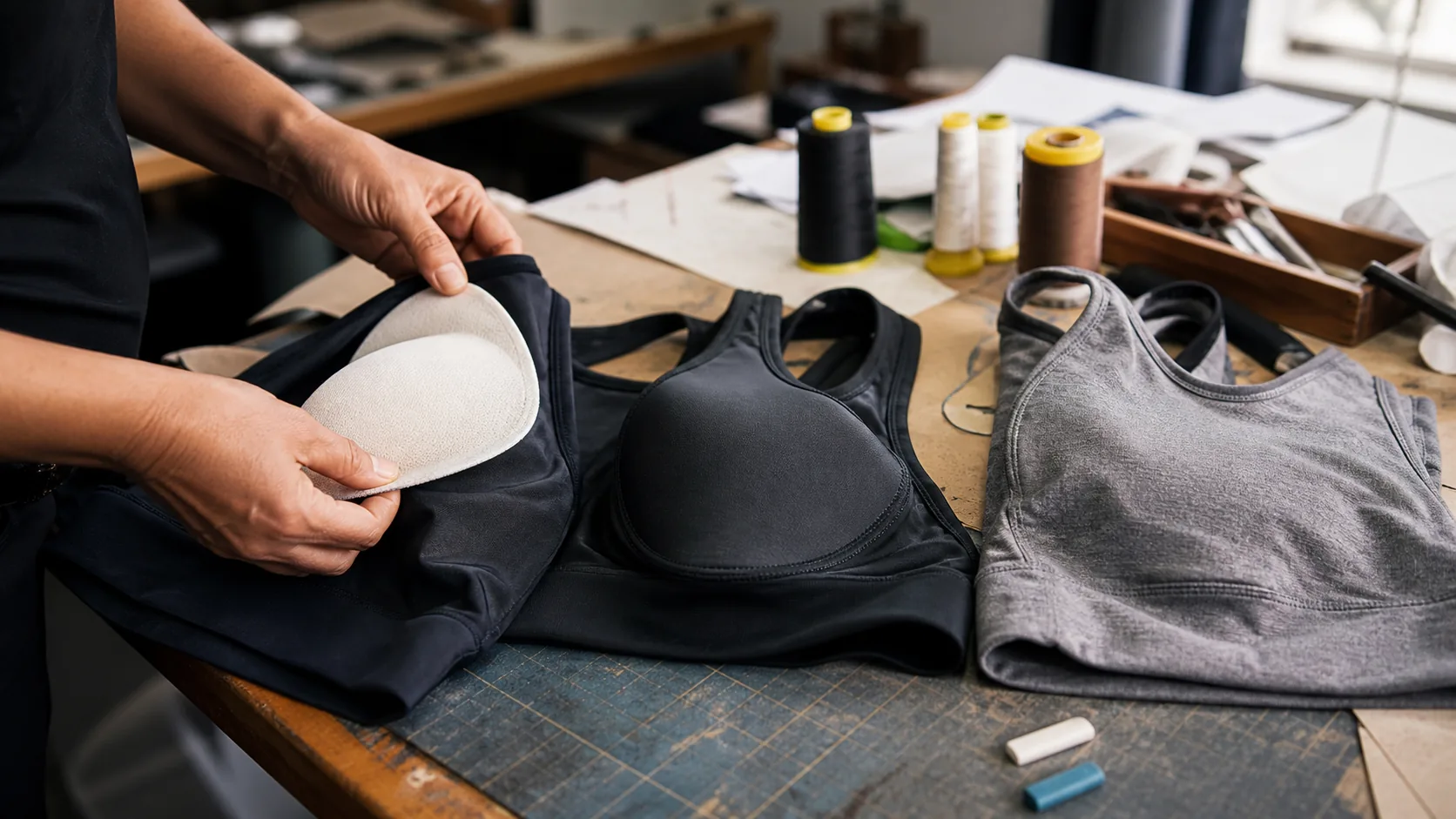
Removable pads offer user adjustment but can shift or fold in washing; fixed cups maintain placement but reduce adjustability and can dry more slowly; bonded or molded structures add process and material dependencies; double-layer no-pad bras prioritize a natural shape. Approve the complete system on body and after care.
Decide cup construction before final pattern approval.
Check pad access, orientation and wash handling.
Review edge visibility and shape across sizes.
Removable pads: flexible but user-dependent
Specify pad shape, size mapping, pocket material, opening location and insertion orientation. Test whether pads shift, fold or become difficult to replace after washing, and whether the opening remains discreet during wear.
Fixed and bonded systems: stable but less adjustable
Control cup position, attachment, edge transition and compatibility with the outer fabric. Heat and adhesive processes can affect hand, shade or wash durability, so approve the actual construction rather than a loose cup sample.
Double-layer construction: simple only on paper
Layer stretch, seam direction and opacity affect coverage and shape. A clean no-pad look may fit the yoga brief, but it should be evaluated across the intended size and color range.
Use the care cycle as part of approval
Check drying time, retained shape, edge visibility and user handling after the proposed care method. The care instruction should have a reasonable basis for all components, not only the body fabric.
Review removable pads and fixed cups through the same on-body and care sequence. Record removable-pad handling separately from fixed-cup placement and attachment so the approval reflects the actual system.
Removable pads and fixed cups: system tradeoffs
| Decision dimension | Removable pads | Fixed cups |
|---|---|---|
| User adjustment | The wearer can remove or reposition the pad. | Cup placement is maintained but adjustment is reduced. |
| Internal construction | Requires a mapped pad, pocket, opening and insertion orientation. | Requires controlled cup position, attachment and edge transition. |
| Care review | Check shifting, folding, replacement handling and pocket appearance after care. | Check drying, retained placement, edge visibility and attachment after care. |
| Approval specimen | Approve the complete pocket-and-pad system on body and after the proposed care method. | Approve the attached cup system with the actual outer fabric on body and after the proposed care method. |
Decision map from this guide
| Decision area | What this guide establishes |
|---|---|
| Removable pads: flexible but user-dependent | Specify pad shape, size mapping, pocket material, opening location and insertion orientation. |
| Fixed and bonded systems: stable but less adjustable | Control cup position, attachment, edge transition and compatibility with the outer fabric. |
| Double-layer construction: simple only on paper | Layer stretch, seam direction and opacity affect coverage and shape. |
| Use the care cycle as part of approval | Check drying time, retained shape, edge visibility and user handling after the proposed care method. |
Sources and scope
This guide translates primary standards and public technical sources into a buyer-side development workflow. It does not replace legal advice, a purchased standard, laboratory instructions or project-specific engineering.
Buyer questions
Are removable pads cheaper?
Cost depends on the pad, pocket and assembly. The product decision should prioritize fit, customer handling and repeatability.
Can the same pad size be used across several garment sizes?
Possibly, but map pad shape and coverage to each size range and verify the result rather than assuming.
More buyer questions
Are seamless bras padded or wireless?
It depends on which seamless bra is meant. Circular-knit seamless sports bras are normally wire-free and use removable pads, lined zones or no padding, while a lingerie-style seamless bra often has molded cups and may include an underwire. Specify the cup system and the wire decision in the brief, then review shape, pad retention and edge visibility after washing.
Do seamless bras show nipples?
They can, depending on knit density, color, lining and cup system. Molded cups or removable pads conceal more than a single knitted layer, while light colors and stretch reduce coverage. Write the coverage requirement into the brief, review it on the wearer in light colors and bright light, and repeat the check after washing, because pads can shift and fold.
What is the difference between a contour and a non-contour bra?
A contour bra has molded, pre-shaped cups, usually foam, that hold their shape on or off the body; a non-contour bra has unlined or soft cups that take the body’s shape. In a sports bra, choosing contour cups means choosing a fixed or molded cup system, with the care, drying and grading implications this guide describes.
Can a seamless bra give real support?
It can for the impact level it was designed and reviewed for. Support comes from the band, straps, coverage, knitted zones and any cups, not from the seamless label. Define the intended activity and support level, sample the sizes most likely to expose weaknesses, and add structure such as a firmer band or cups where the review shows it is needed.
