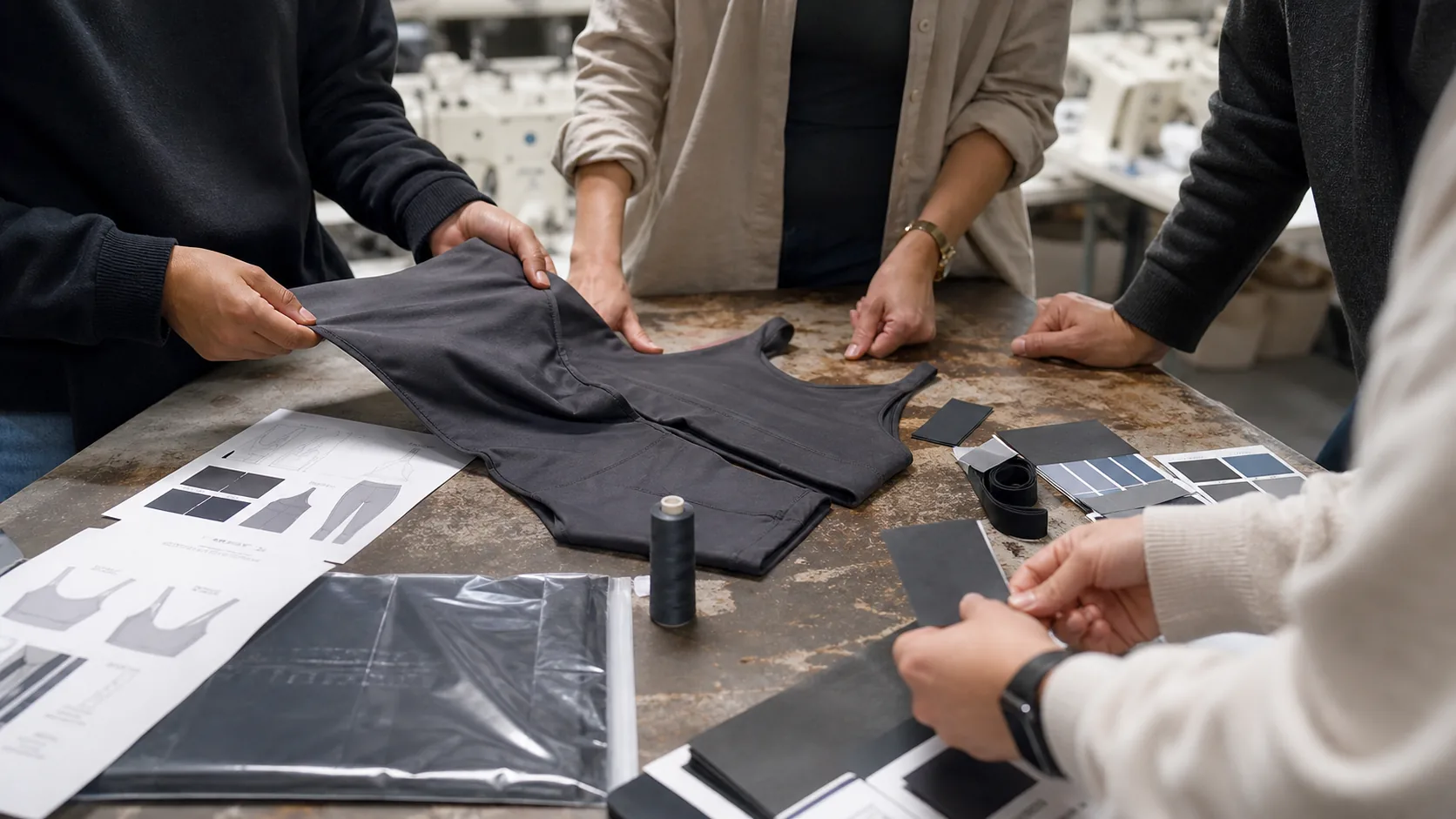
The short answer
Before yoga wear bulk production, align the approved sample identity, current measurement specification, BOM and material references, color standards, artwork, labels, packaging, quantity breakdown, required test records, inspection plan and open deviations. Assign an owner and status to every unresolved item.
Freeze one current production packet.
List declared differences from the approved sample.
Do not release cutting while product-critical questions remain open.
Identify the sealed reference
Record style, size, color, sample stage, date and revision. Photograph or seal the reference as agreed. If any production attribute differs, list it rather than allowing the sample to imply an approval it does not represent.
Reconcile the controlled documents
Check technical drawings, measurements, BOM, artwork and packaging for the same style code and revision. Resolve conflicts before release. A correct file inside an inconsistent packet is still a production risk.
Confirm material and color status
Name body fabric, lining, elastic, cups, thread, labels and packaging references. Connect lab dips or shade standards to the actual substrate and define any bulk-lot approval step before cutting.
Align tests and inspection scope
List required reports, represented material or product, due stage and acceptance owner. Attach the final-inspection plan and defect examples. Decide how nonconformity, rework and deviation approval will be handled.
Decision map from this guide
| Decision area | What this guide establishes |
|---|---|
| Identify the sealed reference | Record style, size, color, sample stage, date and revision. |
| Reconcile the controlled documents | Check technical drawings, measurements, BOM, artwork and packaging for the same style code and revision. |
| Confirm material and color status | Name body fabric, lining, elastic, cups, thread, labels and packaging references. |
| Align tests and inspection scope | List required reports, represented material or product, due stage and acceptance owner. |
Sources and scope
This guide translates primary standards and public technical sources into a buyer-side development workflow. It does not replace legal advice, a purchased standard, laboratory instructions or project-specific engineering.
Buyer questions
Can production start while labels are still open?
Only if the controlled plan prevents irreversible work and the risk is accepted. Product-critical or legal label questions should be resolved before the relevant production step.
Is a signed sample enough?
No. It should be linked to current measurements, materials, color, artwork, packaging and inspection requirements.
