The short answer
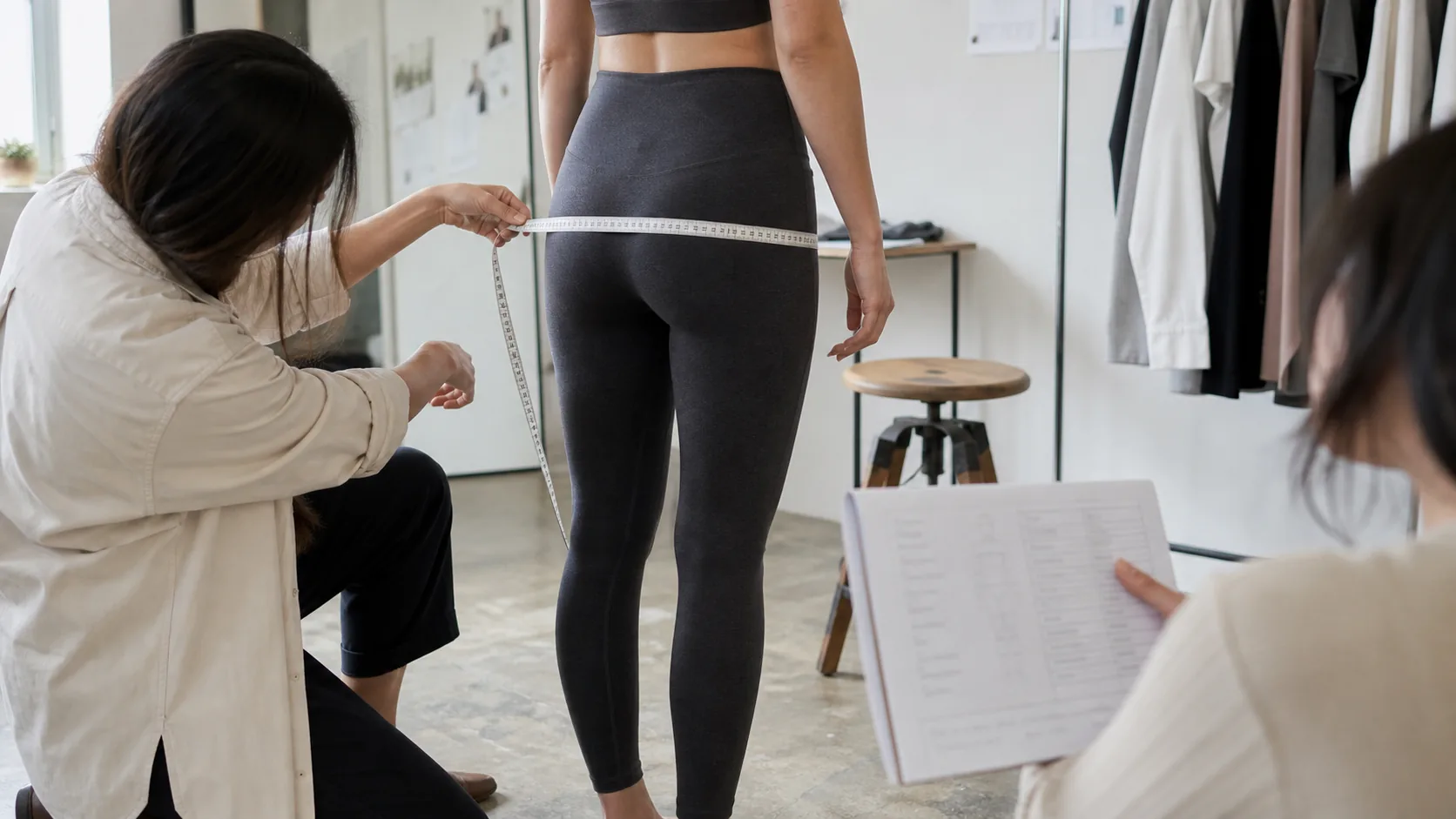
Select a yoga wear fit model whose verified body measurements and shape align with the brand’s intended base-size customer. Record the measurement method, use the same model across relevant rounds and add movement tasks that reflect the garment’s intended activity.
Select against body measurements, not the model’s usual retail size.
Keep the base-size model consistent during development.
Use additional fit evidence when the range serves distinct height or shape groups.
Define the target body before casting
Start with the size chart and intended market. Identify the primary dimensions for the garment and the shape assumptions behind the block. A model can sit inside the bust, waist and hip range yet have a different torso length, rise or posture than the target customer.
Measure using one repeatable method
Record the landmarks and posture used for each body measurement. ISO 8559-1 provides anthropometric definitions that help teams use consistent language. Keep the model’s current measurements with the fit record because bodies and availability change over time.
Use a movement protocol
Standing photographs reveal only one state. For yoga products, include a forward fold, deep bend, seated position, overhead reach and repeated transitions. Review coverage, pressure, sliding, seam position and recovery after movement.
Do not make one model prove the full range
A base-size model supports pattern development; a size set tests whether the grading strategy carries through the range. Extended, petite or tall ranges may require another block and dedicated fit evidence instead of one linear grade.
Decision map from this guide
| Decision area | What this guide establishes |
|---|---|
| Define the target body before casting | Start with the size chart and intended market. |
| Measure using one repeatable method | Record the landmarks and posture used for each body measurement. |
| Use a movement protocol | Standing photographs reveal only one state. |
| Do not make one model prove the full range | A base-size model supports pattern development; a size set tests whether the grading strategy carries through the range. |
Sources and scope
This guide translates primary standards and public technical sources into a buyer-side development workflow. It does not replace legal advice, a purchased standard, laboratory instructions or project-specific engineering.
Buyer questions
Can an employee be the fit model?
Only if their measurements and shape match the target and they can participate consistently. Convenience should not define the customer body.
Should the same model be used for every style?
Use consistency within a product family, while recognizing that different target customers or support categories can require different fit profiles.
More buyer questions
How should leggings fit?
Leggings should hold their intended position and coverage through the planned movements without troublesome pressure or restricted motion. Review waist, rise, seat, knees and openings on a named sample and representative wearer. Record sliding, rolling, transparency and seam strain separately. A tighter size is not automatically a correction; compare the pattern, material recovery and body measurements before changing the specification.
Additional sources
Further buyer answers
Why are leggings and yoga pants tight?
A close-fitting legging is designed to follow the body, but yoga pants can also have straight or flared legs. Tightness is not a quality score. For a close-fitting brief, review the interaction of body measurements, pattern dimensions and fabric stretch. If pressure, restricted movement or loss of coverage occurs, investigate those variables instead of simply accepting a smaller size.
