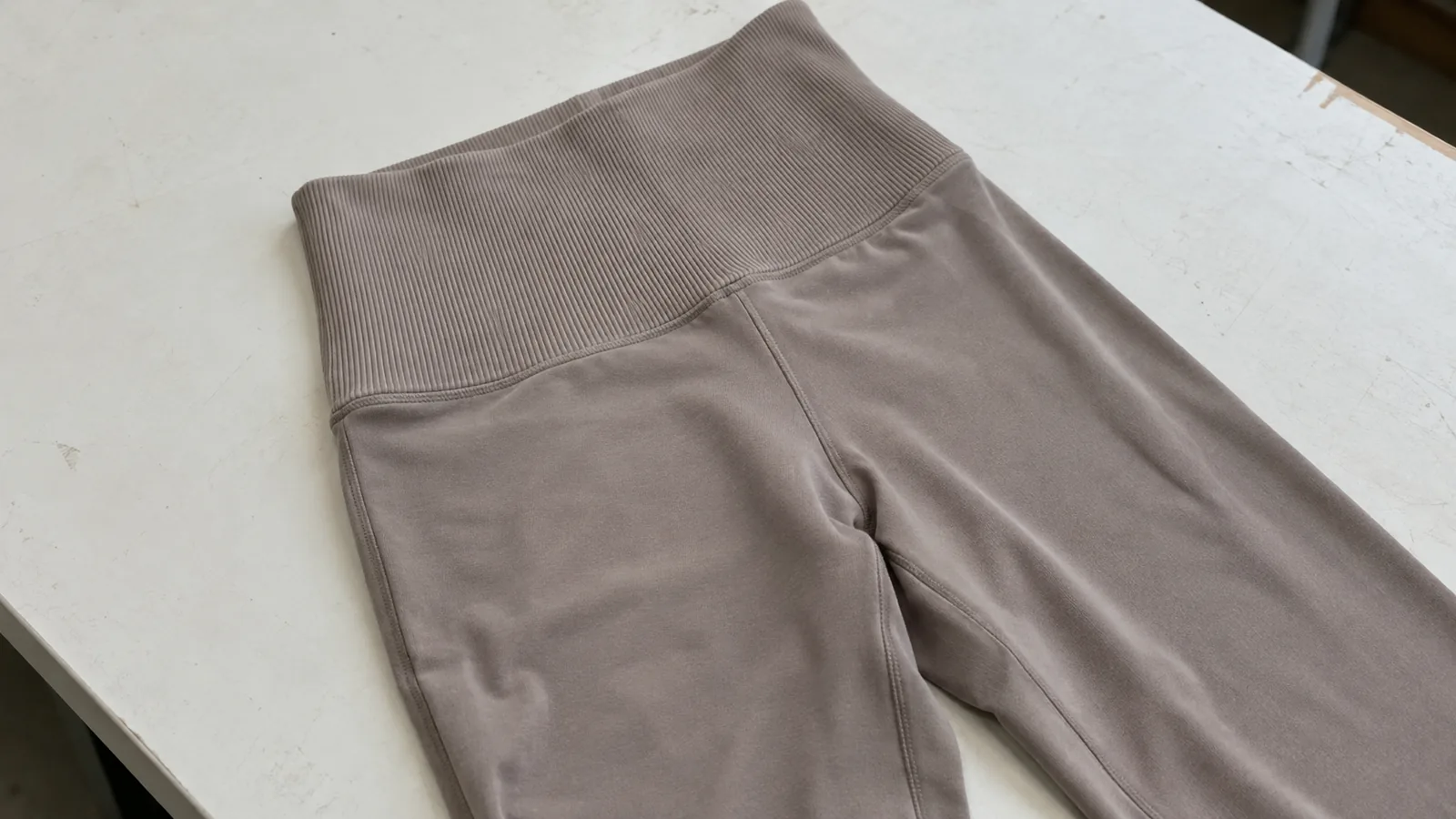
Stable without an excessive pressure mark
Product development lead Sophie Bennett wanted a set for yoga and everyday activity. The waistband needed to remain stable during bending and squatting while keeping a moderate enveloping feel and avoiding obvious pressure marks.
MOTIONFORM translated “stable and comfortable” into sample-review points covering the target sizes, waistband height and movement. The clean knit appearance was reviewed alongside the intended fit, rather than used as a substitute for it.
Why the first waistband folded
The first opening felt tight, but support below the opening was insufficient and the waistband folded during bending. The connection to the body also needed a more natural transition.
The second sample adjusted opening tension, the waistband knit organization and the connecting structure separately. That avoided using overall tightening to compensate for a local construction problem.
Fit and color approvals
The customer reviewed S, M and L samples. Feedback on putting the garment on, squatting and sitting informed adjustments between sizes before the sample was approved.
MOTIONFORM handled development and garment production, with dyeing carried out by a partner facility. Physical color samples were approved and their references and approval date recorded. The top and bottom were reviewed as a coordinated set.
Production against one approved version
The approved sample, size table and key process information were issued together to production and inspection. Checks covered knit defects, waistband dimensions, symmetry and top-to-bottom color.
Measurements were repeated after dyeing and finishing. Wash-related dimensional change and waistband recovery were reviewed. A concentration of dimensional deviations triggered isolation of the relevant batch and investigation of process and finishing effects.
The release decision
The 600 sets passed the final inspection and were delivered. The approved second construction became the production and repeat-order reference.
MOTIONFORM covered rework arising from production deviations. Design changes requested after approval required a separate agreement on cost and timing, rather than being mixed with correction of an existing production problem.
The records retained for this project
- Two sample rounds and fit feedback
- Revision list and dye-batch records
- Post-wash measurements and final report
Project records connect the approved sample, agreed changes and delivered order. Supporting material is shared according to customer authorization and confidentiality arrangements.
Buyer questions
What should a seamless waistband review record?
Record the sample version, size, opening tension, waistband height and the movements that trigger a problem. Separate the waistband organization from its connection to the garment body. In this order, reviewing bending, squatting and sitting across S, M and L helped identify which decisions belonged to structure and which belonged to size proportions.
Should a seamless set be measured again after dyeing?
Yes, the finished garment should be checked against the approved dimensional reference. This project repeated measurements after dyeing and finishing and reviewed wash-related change and recovery. Keep those records connected to the color and batch so a repeated deviation can be investigated instead of assuming that the earlier unfinished sample represents every finished set.
