The old stock was part of the brief
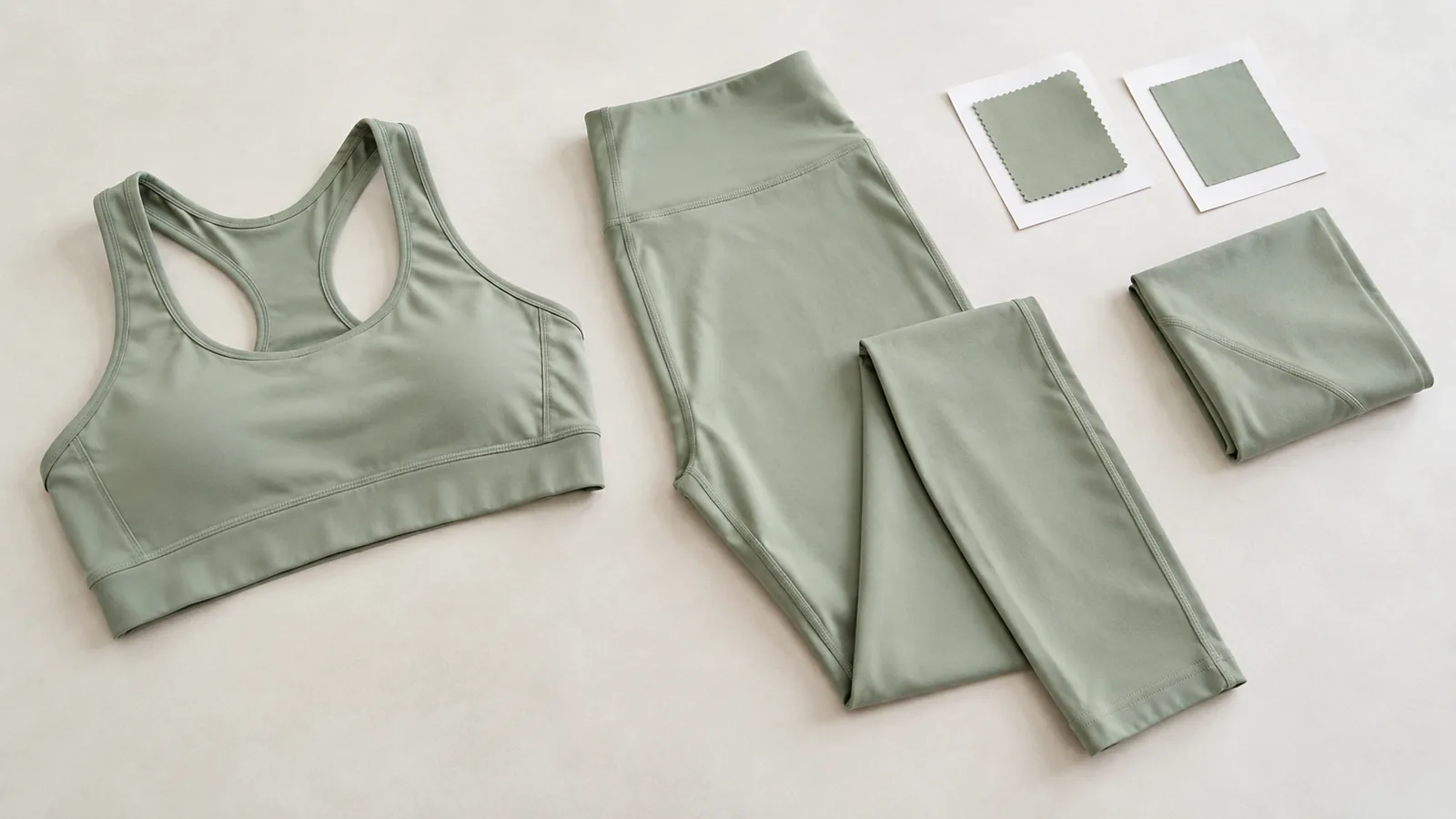
Purchasing manager Isabella Rossi still held stock from the first order. The new pieces needed to work alongside it, with particular attention to the relationship between tops, bottoms and batches.
MOTIONFORM checked retained samples, the earlier order file and unwashed physical pieces supplied by the customer. The parties agreed the comparison lighting and acceptance approach rather than deciding color from screens alone.
A second light exposed the first difference
The first trial looked close in daylight but showed a visible difference under another agreed light source. The partner dyeing facility adjusted the shade and supplied a second physical round.
MOTIONFORM compared it with the standard and sent it to the customer for approval. The final reference and approval were recorded for bulk and later repeats.
Checking within the batch and across the set
Samples from different production positions were compared for within-batch shade and top-to-bottom coordination. Visibly different pieces were identified separately, investigated and handled before release.
Packing used tops and bottoms confirmed as suitable to pair. This prevented the color decision from being lost at the final combination step.
The reorder outcome
The 300 sets were delivered against the approved shade. The customer confirmed that the reorder could be used with the remaining inventory.
MOTIONFORM covered the adjustment required to reach the approved standard and retained the new physical reference for the next repeat. This result belongs to the compared batches and viewing conditions, not an unlimited no-variation promise.
The records retained for this project
- Original retained sample and two color rounds
- Light-source conditions and dye-batch records
- Customer approval
Project records connect the approved sample, agreed changes and delivered order. Supporting material is shared according to customer authorization and confidentiality arrangements.
Buyer questions
Why provide an unwashed piece from the earlier batch?
It helps define the earlier batch reference without adding a washing-related change to the comparison. In this project, retained samples, order records and unwashed customer pieces were reviewed together. Agree the lighting and acceptance approach as well, so the new color is not approved from a screen image or a color name alone.
Can matching tops and bottoms be checked only at dye approval?
No, the coordination should stay connected to bulk checking and packing. This reorder compared pieces from different production positions and separated visible deviations before release. Packing then used approved pairings, preventing a suitable top and bottom from being combined with a visibly different piece at the last step.
