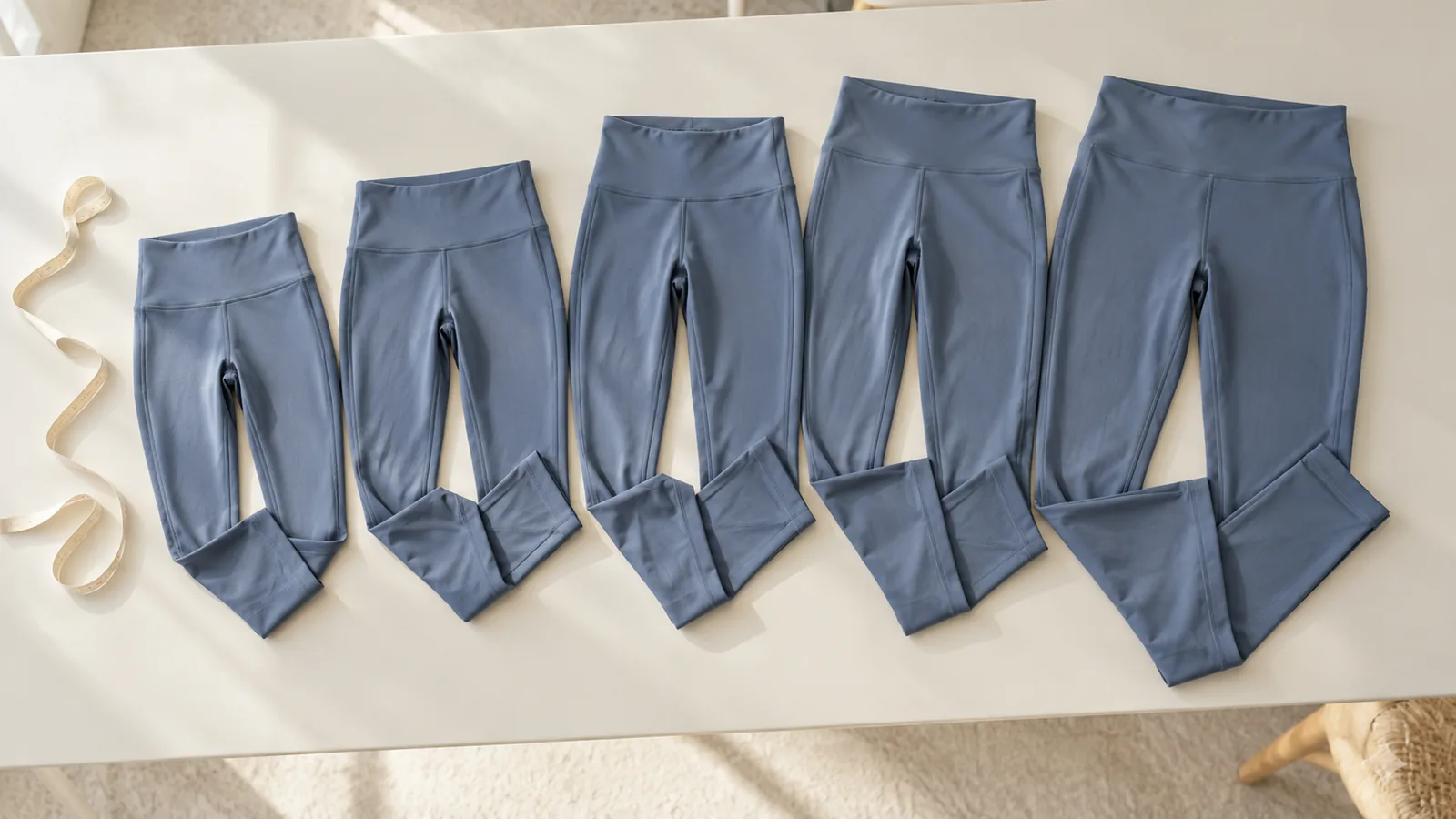
A size standard for the target customer
Buying and merchandising lead Charlotte Evans described previous problems with short leg length, insufficient movement room at the seat and an unsuitable waist-to-hip relationship.
The team collected target body measurements, reference garments, fabric-extension information and customer feedback. Body measurements, garment measurements and the intended enveloping feel were kept distinct.
Agree the measuring method first
MOTIONFORM and Elara Fit agreed the measurement positions and methods before comparing dimensions. That reduced the chance of treating a change in measuring technique as a pattern fault.
The middle size was sampled first. Waist-to-hip proportions, rise and leg length were revised before the complete size set was made.
What the endpoint samples revealed
The customer reviewed XS, M and XL. The endpoint sizes needed further changes, so the team revised the grading rules and returned physical samples for confirmation.
The approval therefore covered more than a spreadsheet of increasing dimensions. It connected the selected proportions and construction to the actual garments at relevant points in the range.
One table for production and inspection
The final size table included the allowed deviations at the agreed positions. Development, production and inspection used the same revision.
Checks covered sizes and colors. When a deviation was concentrated in one size, the review expanded and examined cutting, sewing or finishing rather than assuming the entire range had the same cause.
The delivered reference
The 1,000 leggings were delivered against the approved size set, with measurement-sampling records supplied for the order.
Elara Fit received a size baseline for future development. A reduction in returns was not claimed from the sample approval; that outcome requires the brand’s actual sales-period data.
The records retained for this project
- Size-table revisions and grading rules
- Physical size set and customer approvals
- Bulk measurements
Project records connect the approved sample, agreed changes and delivered order. Supporting material is shared according to customer authorization and confidentiality arrangements.
Buyer questions
What is the difference between body and garment measurements?
Body measurements describe the intended wearer; garment measurements describe the finished piece using an agreed method. The fabric and intended fit connect the two, but they are not interchangeable numbers. This project recorded both and reviewed physical samples before the final size table was issued to development, production and inspection.
Can a corrected size set be described as reducing returns?
Not without actual sales and return data. A corrected size set establishes an approved product baseline, not a measured consumer return-rate improvement. Elara Fit received the approved XS–XL reference and bulk measurement records; whether that changed returns must be evaluated using the brand’s later sales period and consistent reporting.
