The short answer
A tech pack alone is a starting point only if the selected supplier agrees to develop the missing pattern and technical details. Ask who creates the base pattern, chooses or validates materials, makes the first sample, records fit changes and grades the approved size. If the supplier offers sewing only, arrange pattern development separately. Agree sample outputs, revision scope and file-use rights before paying; neither “OEM” nor “ODM” settles those responsibilities.
A specification describes intent; confirm who creates the production-ready files.
An existing pattern still needs compatibility and revision review.
Sample ownership and editable-file rights are separate questions.
A tech pack and a pattern answer different questions
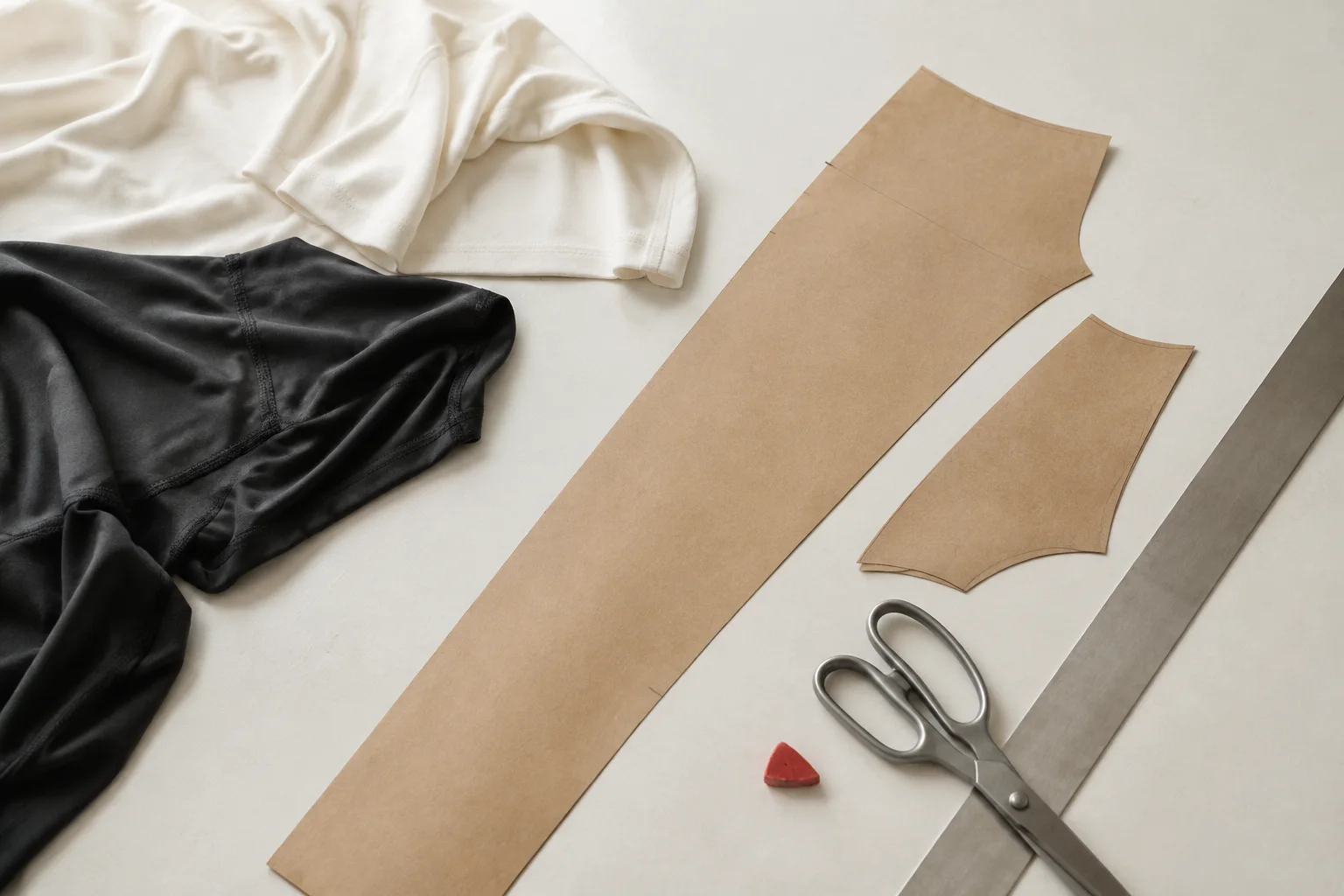
A technical pack communicates product requirements: drawings, measurements, materials, components, construction notes, artwork and approval information. A cutting pattern defines pieces used to create a cut-and-sew garment. Do not treat the presence of one file as evidence that every other production input exists. The practical question is whether the supplier’s proposal includes creating, interpreting and validating those inputs.
A founder discussion about approaching different factories with a technical pack but no pattern illustrates this ambiguity. The thread is not evidence that all factories in one country provide development while all factories elsewhere require finished patterns. Qualify the actual service and responsible team, not a country stereotype.
Ask the supplier to identify the first missing input that prevents a sample. That answer is more useful than a general statement that it accepts technical packs.
Choose the route that matches what you already have
If you have only a concept, start with development: clarify intended use, silhouette, sizing direction and the material characteristics that matter. Commission the missing drawings or pattern work explicitly. If you have a detailed pack without patterns, ask for a pattern-and-sample quotation rather than assuming it is included in a sample fee.
If you already own patterns, send an inventory before files: format, size, revision, measurement convention, seam allowance information and the material used when they were developed. Ask the recipient to confirm it can open and interpret them. A successful import is not proof that the resulting garment meets the intended fit.
For a stock-style private-label route, identify permitted changes. Adding a logo, changing a fabric and altering the fit are not equivalent requests. Ask which change invalidates the existing reference. For seamless activewear, clarify who handles knitting-program development and garment assembly; the word pattern may not describe the entire technical deliverable.
Turn “sample included” into a deliverable list
Request a written description of what will be supplied at each stage. Does the proposal include a physical sample only, or also a pattern, updated measurement sheet and comment record? Which size is being developed? Is the sample made in the intended material or a declared substitute? Which logo, lining, pad or elastic decisions are intentionally deferred?
Separate the price of creating the first pattern from making another physical sample and from grading additional sizes. Ask how revisions are classified: correction against an agreed instruction, interpretation of an incomplete requirement, or a new buyer request. Agree how the cost and timing of each will be confirmed. This guide does not prescribe a universal free-revision allowance.
A useful sample order ends with an approval question. “Review waistband position and comfort in the intended movement” gives the sample a purpose. “Make premium quality” does not define the evidence needed to accept it.
Check file rights before the files become important
WIPO’s supplier guidance recommends addressing intellectual-property arrangements, confidentiality and what happens when a supplier relationship ends. Applied here, ask which pre-existing files remain the supplier’s, which project files will be delivered, what use is permitted and what transfer restrictions apply. The guidance does not decide your ownership automatically.
Paying for a physical garment is not a substitute for agreeing rights to editable patterns, grading rules, artwork setup or a knitting program. Request the actual deliverable format and handover point. If another specialist created part of the work, establish whether the proposed rights cover that contribution. Obtain qualified legal advice where ownership, licensing or exclusivity matters commercially.
Keep the working discussion practical: can you reopen the file, revise it with an authorized developer and use it for the intended production route? A PDF picture of pattern pieces and a usable editable pattern are different deliverables.
Worked example: a custom yoga legging
This is a teaching example, not a customer case. A buyer has front and back drawings, a base-size measurement sheet and a lawful reference garment, but no pattern. The first question is whether the factory will develop the pattern for the nominated material or expects a buyer-supplied pattern. Next clarify how the waistband and gusset will be interpreted where the pack is incomplete.
Before making the sample, list what it can establish. If the intended fabric is available, fit and material interaction can be reviewed together. If a substitute is used, record which conclusions remain provisional. Do not approve the eventual production fabric merely because the substitute sample looks acceptable in photographs.
After the first fit review, the responsible developer updates the pattern and relevant specifications to the same revision. The buyer identifies the changes that require another physical review. Size grading is then scoped as its own decision; one approved size does not demonstrate fit across the proposed range. See the size-set and pre-production sample comparison.
A handoff checklist for the next supplier conversation
- List the files you have and their current revisions.
- Identify the intended garment, material direction and sample size.
- Name the missing development work and ask who performs it.
- Agree the sample purpose, declared substitutions and acceptance questions.
- Separate revisions, grading and production preparation in the quotation.
- Record file delivery and permitted use in the relevant agreement.
- Name who can approve changes and release the next stage.
Do not let the technical pack become a folder that everyone interprets differently. Keep one current index showing which drawing, pattern, material reference and comment sheet belong together. Superseded versions should remain identifiable as history, not accidentally re-enter production.
MOTIONFORM’s OEM/ODM responsibility matrix provides the broader work-allocation questions. If the first garment is disappointing, use the sample-revision decision guide before paying for an undefined repeat. These are planning aids, not a claim that every requested development service has already been quoted or accepted.
Decision map from this guide
| Decision area | What this guide establishes |
|---|---|
| Sketch or inspiration only | Request a development scope before asking for a production quotation. |
| Tech pack, no pattern | Confirm the pattern-development owner, output, revisions and cost basis. |
| Pattern and tech pack | Check file compatibility, revision alignment and material assumptions. |
| Approved base-size sample | Decide grading and size-set validation separately from base-size approval. |
| Seamless route | Ask what programming and construction work replaces or accompanies conventional pattern work. |
Sources and scope
Public founder discussions informed the questions, not supplier rankings or manufacturing facts. The checklists and worked examples are MOTIONFORM editorial recommendations, not customer cases, contractual terms or promised outcomes. Official sources support only the specific record-control or intellectual-property boundaries discussed. Sources reviewed 23 September 2026.
Buyer questions
Do I need a complete technical pack before contacting a factory?
Not for an initial capability discussion. State what exists and what development you need. Before authorizing a sample, agree enough detail to identify its purpose and what remains unresolved.
Does OEM mean pattern making is included?
No. Ask for a task-by-task scope. Pattern work, grading, sampling and bulk sewing may be provided together or separately under the actual proposal.
Can a factory use my existing pattern?
Ask it to confirm the format, revision, size, seam allowance and material assumptions. Then agree how the first sample will validate the interpreted file.
Who owns the pattern after I pay for a sample?
Do not infer this from the payment alone. Rights and handover depend on the applicable agreement and law; identify pre-existing and newly developed files and obtain appropriate advice.
Is one approved sample enough for all sizes?
It establishes only the decisions that were reviewed on that sample. Agree grading and size-range validation separately, followed by the relevant production approvals.
