The short answer
Do not approve bulk production or reject the supplier on appearance alone. Compare the sample with the exact brief and revision used, then classify each issue as a specification mismatch, an unresolved design decision, a declared material substitution or a fit problem requiring investigation. Ask for a written correction plan with evidence for the next review. Continue only if the supplier can explain and control the changes; consider another candidate when key requirements or traceability remain unresolved.
The first sample needs a defined purpose before it can pass or fail.
A correction and a new design request should not be mixed together.
An accepted revision is not automatically a bulk-production release.
Retrieve what the sample was actually commissioned to prove
A recent founder question describes disappointment after receiving first samples and asks whether anyone gets the first attempt right. That question is useful; an assumed industry failure rate is not. There is no verified universal number of sample rounds that proves a supplier is good or bad.
Retrieve the sample order, technical pack revision, material references and any agreed exclusions. Was the garment a concept prototype, a fit sample, a size-set piece or a pre-production submission? Was it made in the intended material? Were logo application, final color or packaging within the scope? If these decisions were never written down, acknowledge that uncertainty before assigning responsibility.
Photograph the sample before alterations, give it an identifier and retain the packaging and accompanying notes. Do not replace the evidence with a long chat message saying it feels wrong. Keep the comparison anchored to the item and the instructions the recipient actually had.
Classify issues before arguing about the remake
A missing pocket that appears on the agreed drawing is different from deciding you now want a pocket. An unapproved fabric substitution is different from a substitute disclosed and accepted for an early shape review. A measurement outside the agreed tolerance is different from a body-fit concern that cannot be diagnosed from a flat measurement alone.
Use one row per issue: sample ID, location, observed result, expected reference, evidence, proposed next action and approval owner. Where the cause is unknown, write “investigate” instead of presenting a guess as an instruction. For example, waistband movement may involve the selected size, pattern balance, material behavior or construction. Do not automatically request a tighter waist without checking the wearer and movement conditions.
Separate blocking issues from cosmetic preferences. Both can matter, but they need different conversations. A sample that cannot support the intended fit review may need to be remade before artwork placement is worth debating.
Worked comment: a waistband that moves during wear
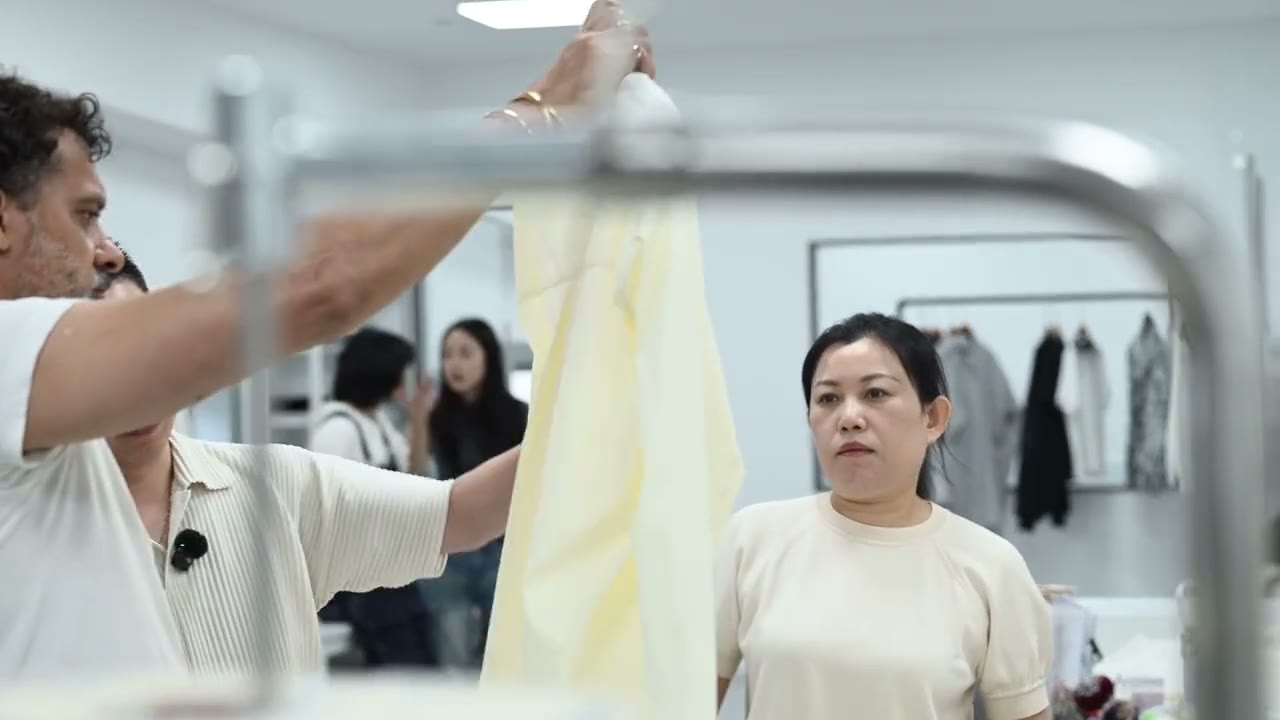
This teaching example does not describe a MOTIONFORM customer. The buyer observes a waistband folding during a movement review. An unhelpful comment is “make it premium and tighter.” A more useful record states the sample revision, nominated size, fit participant or form reference, movement performed, where the fold starts, and which photographs or video show it.
The buyer then asks the developer to investigate the relationship between the observed behavior and the current pattern, waistband construction and material. The response should identify the proposed change and the evidence needed to assess it. If several variables change together, ask how the next review will distinguish their effects.
The acceptance condition should describe the agreed review rather than a universal performance promise: repeat the relevant movement and measurement checks under the nominated conditions, record the result and decide whether the issue is resolved. Do not invent force values, stretch percentages or pass thresholds without a suitable project method. The waistband investigation guide gives related questions.
Evaluate the supplier’s correction plan
A useful plan acknowledges which instruction was used, names the proposed correction, identifies whether a component or pattern will change, and states what the buyer needs to decide. It does not have to promise perfection. It does need to make the next sample more informative than the previous one.
Ask the supplier to respond against the numbered comments rather than sending disconnected assurances. An annotated photo may close a placement question, but it will not establish feel or fit in movement. Where physical evidence is needed, agree another sample or component submission. Where a document correction is enough, identify who checks that the same correction reaches production.
Clarify charges and scheduling before another authorization. The commercial treatment of a missed specification, an unclear original brief and a new design request may differ. This article does not create refund rights or decide who is liable; use the actual agreement and appropriate advice for disputes.
When to continue, pause or qualify another supplier
Continue when the product route still fits and both parties can turn the issue list into controlled changes. Pause when the material, revision or approval owner cannot be identified. Consider another supplier when essential requirements remain outside the offered service, unexplained substitutions recur, or no one can state what the next sample will establish.
Do not transfer a confused pack unchanged to a new factory. The new recipient needs the current specification, the physical reference where permitted, the unresolved-issue register and clarity about which files you are authorized to share. Otherwise the supplier change merely restarts the same ambiguity.
Price alone cannot settle this decision. Compare the cost and uncertainty of the proposed correction with the development work a new supplier would need to repeat. Keep the reasoning recorded, but do not manufacture numerical success probabilities or a supplier score that the evidence cannot support.
Close the revision without accidentally releasing bulk
For each resolved issue, record the accepted evidence and update the affected documents together. If a new pattern revision is approved but the measurement sheet still describes the old garment, the record is not ready for the next handoff. ISO 10007’s published scope concerns configuration management; the practical checklist here is an editorial application, not a quotation of its licensed requirements or a certification claim.
State what the approval does and does not authorize. Acceptance of base-size fit does not automatically approve all sizes, final materials, color or production quantity. Follow the sample-to-bulk control guide and identify the pre-production baseline before a bulk release.
Keep the previous sample and comment record identifiable. A later disagreement is easier to examine when the sequence is clear: original instruction, observed sample, change decision, updated revision and review result. The objective is not to collect paperwork for its own sake; it is to stop an obsolete instruction from becoming the next production instruction.
If you bring a sample question to MOTIONFORM, provide the current brief, sample identity, intended activity and specific unresolved issues. A proposed review can then be scoped around a decision. This does not imply a guaranteed diagnosis, sample acceptance or manufacturing commitment before the project is assessed.
Decision map from this guide
| Decision area | What this guide establishes |
|---|---|
| Missed agreed instruction | Identify the revision and mismatch; ask for a correction and verification method. |
| Undefined preference | Convert the preference into an agreed reference or review condition before remaking. |
| Declared substitute material | Keep conclusions provisional where the substituted property matters. |
| Movement or fit issue | Record wearer, size, condition and observed behavior; avoid guessing one cause. |
| Repeated unexplained changes | Pause the next authorization and reassess whether the process is controllable. |
Sources and scope
Public founder discussions informed the questions, not supplier rankings or manufacturing facts. The checklists and worked examples are MOTIONFORM editorial recommendations, not customer cases, contractual terms or promised outcomes. Official sources support only the specific record-control or intellectual-property boundaries discussed. Sources reviewed 23 September 2026.
Buyer questions
Is a bad first sample proof that the factory is bad?
No. First identify the agreed sample purpose, information supplied and actual mismatch. The supplier’s ability to explain and control a correction matters; repeated unresolved problems still justify reassessing the route.
How many sample rounds should activewear take?
There is no universal number established here. Scope the unresolved decisions and decide what each round must prove instead of accepting unlimited revisions or promising first-round success.
Should I approve bulk if only small details are wrong?
Only release the scope supported by the approved baseline. Record unresolved details and their required evidence; do not let an informal fit approval become approval of unreviewed materials or construction.
Can I request a free remake?
Ask how the signed sample scope treats an agreed-specification mismatch versus a new request. Cost allocation and remedies depend on the actual agreement and applicable law, not a universal sampling rule.
What should I send with a sample complaint?
Sample identity, specification revision, numbered issue list, photographs or measurements, the expected reference and the decision you need. Label suspected causes as unconfirmed.
