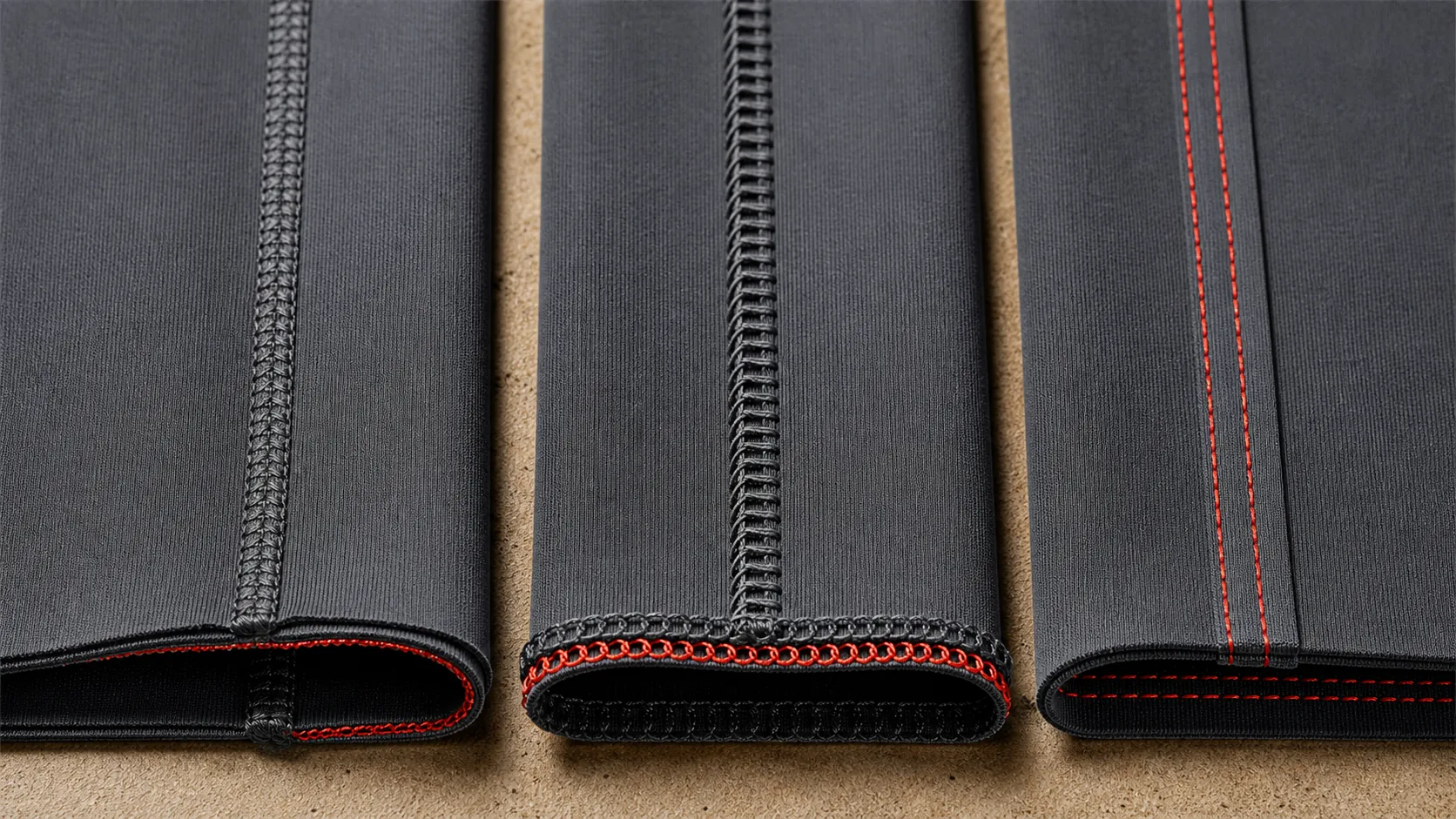
The short answer
Flatlock can reduce a raised seam profile in high-contact zones, while overlock is an efficient joining method and coverstitch commonly finishes hems or secures layers. The best choice depends on fabric, seam location, required stretch, skin contact, visual intent and available machinery.
Name stitch class and seam construction separately.
Test the seam at garment strain, not flat on a table.
Use a zone map instead of specifying one stitch for the whole garment.
Do not use stitch names as complete specifications
“Flatlock” can describe different appearances and machines. Show a cross-section or approved reference, name the seam location, allowance, thread and required face and inside appearance. This reduces interpretation between technical design and the sewing line.
Map skin-contact and stretch zones
Inner thighs, gussets, underbands and armholes can experience friction and repeated extension. A low-profile seam may help, but bulk, thread texture and tension still matter. Areas with pockets or elastic can need a different construction.
Compare flatlock and overlock at each named zone rather than assigning one stitch across the garment. The decision should follow skin contact, required stretch, seam bulk, visual intent and the approved construction reference.
Test extension, recovery and laundering
Extend the assembled seam with the garment and inspect for popping, tunneling, skipped stitches and restricted stretch. Repeat after the agreed wash condition. A fabric can pass stretch review while the seam becomes the limiting element.
Write visible defect examples
Include approved appearance and unacceptable examples for wavy seams, uneven width, raw edges, broken thread and distorted panels. Inspection should compare with the current sample and construction callout, not a generic workmanship phrase.
Flatlock and overlock: compare by seam zone
| Decision dimension | Flatlock direction | Overlock direction |
|---|---|---|
| Primary role | Reduce a raised seam profile where low bulk is part of the brief. | Join garment panels through an approved stretch-seam construction. |
| Where to assess it | High-contact zones such as inner thighs, gussets, underbands or armholes. | Each joining zone, especially where pockets, elastic or garment strain change the construction. |
| Risk to screen | Thread texture, tension, allowance and seam bulk can still affect comfort. | Thread and tension must preserve the required extension without popping or restriction. |
| Approval evidence | Approved cross-section or reference, location, face and inside appearance, plus assembled-seam testing. | Approved construction callout, location, appearance and assembled-seam testing. |
Decision map from this guide
| Decision area | What this guide establishes |
|---|---|
| Do not use stitch names as complete specifications | “Flatlock” can describe different appearances and machines. |
| Map skin-contact and stretch zones | Inner thighs, gussets, underbands and armholes can experience friction and repeated extension. |
| Test extension, recovery and laundering | Extend the assembled seam with the garment and inspect for popping, tunneling, skipped stitches and restricted stretch. |
| Write visible defect examples | Include approved appearance and unacceptable examples for wavy seams, uneven width, raw edges, broken thread and distorted panels. |
Sources and scope
This guide translates primary standards and public technical sources into a buyer-side development workflow. It does not replace legal advice, a purchased standard, laboratory instructions or project-specific engineering.
Buyer questions
Is flatlock always more comfortable?
No. Comfort also depends on thread, tension, seam location, allowance, fabric and wearer movement.
Can overlock seams stretch enough for yoga wear?
They can when the seam, thread and tension are engineered for the fabric and garment strain. Validate the assembled seam.
More buyer questions
What is a flatseam or flatlock seam used for?
In its usual form, it joins fabric edges butted together or slightly overlapped under a wide covering stitch, so the seam lies flat without the folded ridge of a standard overlock seam. Activewear uses it in contact zones such as inner thighs, underarms and underbands, and sometimes as a visible design line. Where comfort is the reason for choosing it, confirm the seam also survives the stretch it will see on the body.
Can compression shorts cause chafing?
They can, like any close-fitting garment, wherever seams, edges or the fabric surface move against skin, especially when damp. Design reduces the risk: keep seams away from the inner-thigh contact line, use flat seams and soft leg openings, and size the shorts so they stay in place instead of sliding. Confirm the result in a wear review that includes long sessions and sweat.
Does seamless or anti-chafe construction prevent chafing?
It can remove seams from some contact zones, but it cannot remove friction from fabric surfaces, edges or a garment that shifts. Anti-chafe is a product claim, not a test result, so define the features behind it, including seam placement, seam type, edge finish, fabric surface and fit, and the wear review that supports it. Compare brands that advertise chafe-free construction on those features.
