The short answer
Approve yoga legging opacity on the finished garment in the intended color and representative sizes, under a defined lighting and movement protocol. Record garment strain, undergarment or backing condition and pass/fail evidence. A swatch, GSM value or one black sample cannot prove every color and size.
Test the garment, not only the fabric swatch.
Include light colors and high-strain sizes in the sample plan.
Separate coverage approval from marketing language.
Identify the variables that change opacity
Fiber content and GSM are incomplete proxies. Knit density, yarn, dye, finish, color, pattern strain, garment size and lighting all influence coverage. Seams, gussets and pockets can create local changes by adding layers or pulling the body fabric.
Write the movement and viewing protocol
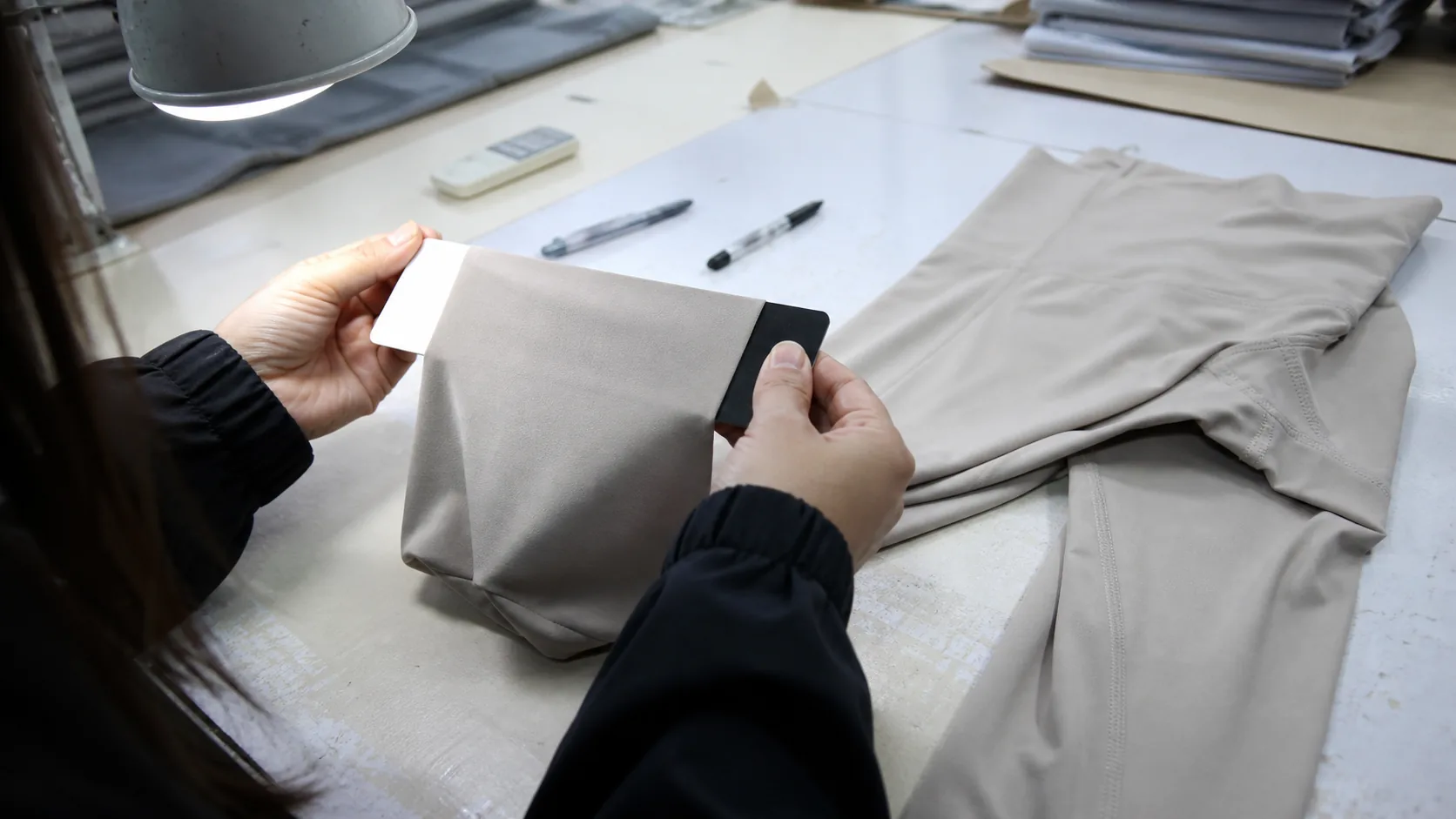
Name the movements, viewing distance, light source, background and garment condition. Use the same protocol for comparison samples. Record whether the check is visual, photographic or supported by an agreed instrumental method.
Choose the risk samples
Include the lightest or most revealing colorways and sizes expected to create high strain. If a size uses a different block or panel, include it. A pass on the base-size black garment should remain exactly that: one result for one represented condition.
Turn the result into an approval record
Store the sample identity, color, size, fabric lot or reference, protocol and decision. If the marketing team wants to use “squat-proof,” align the intended claim with the evidence and target-market review instead of treating the phrase as a test standard.
Decision map from this guide
| Decision area | What this guide establishes |
|---|---|
| Identify the variables that change opacity | Fiber content and GSM are incomplete proxies. |
| Write the movement and viewing protocol | Name the movements, viewing distance, light source, background and garment condition. |
| Choose the risk samples | Include the lightest or most revealing colorways and sizes expected to create high strain. |
| Turn the result into an approval record | Store the sample identity, color, size, fabric lot or reference, protocol and decision. |
Sources and scope
This guide translates primary standards and public technical sources into a buyer-side development workflow. It does not replace legal advice, a purchased standard, laboratory instructions or project-specific engineering.
Buyer questions
Does higher GSM guarantee opacity?
No. Weight can contribute, but construction, color, strain, yarn and finishing also affect coverage.
Can opacity be approved from a fabric swatch?
A swatch helps screen directions; the finished garment should be checked because pattern and garment strain change the result.
More buyer questions
What does squat-proof mean?
It is a marketing claim that leggings stay opaque when the wearer squats, not a named test or certification. The phrase means only what the brand checked, wherever the product is sold. Before using it, define the colors, sizes, pose, lighting and viewing distance you checked, keep that record with the sample, and have the wording reviewed for each market where the leggings will be sold.
Why do leggings and yoga pants become see-through?
Stretch opens the gaps between knit loops, so coverage drops where the fabric is pulled hardest, usually over the seat and knees. Light colors, thinner or more open knits, a size that is too small and surface wear all make it worse, and bright light behind the wearer exposes it. Choose the fix from the cause: construction, color, size or pattern.
Are seamless leggings see-through?
They can be, like any knit, and seamless styles add a specific risk: the program may knit mesh, eyelet or thinner textured zones on purpose. Check opacity zone by zone in the stretched garment, especially where a textured or ribbed area crosses the seat, and in the lightest colorways. Approve the knitting program and color together rather than assuming one sample represents all.
Which leggings are not see-through?
The ones whose finished garment passed a defined opacity check in the colors and sizes being sold. Denser knits, darker or patterned colors, correct sizing and a well-balanced pattern all help, but none is a guarantee on its own. For your own range, ask the supplier which construction change would improve coverage and recheck the comfort and fit that change might alter.
