The direct answer
A cut-and-sew activewear manufacturer should map pattern and grading ownership, fabric identity and grain or stretch direction, marker and cutting controls, seam and machine route, trims and decoration, off-site processes, sample-room-to-line transfer, in-process checks and the final release record.
Map the route from pattern to packed garment
List where pattern, grading, marker planning, spreading, cutting, fusing or bonding, sewing, printing or embroidery, washing, finishing, inspection and packing occur. Name the entity and facility responsible at each stage. A supplier may coordinate several sites; that can be workable when the route, handoff records and accountability are visible.
Control material direction before the first cut
Stretch activewear materials may behave differently by course, wale or chosen direction. Record the approved article, face, shade, lot, finish and orientation for every panel. Marker efficiency cannot quietly override grain, print placement, nap, engineered pattern or stretch direction. If the factory proposes a different layout, the product and consumption effects should be reviewed before production.
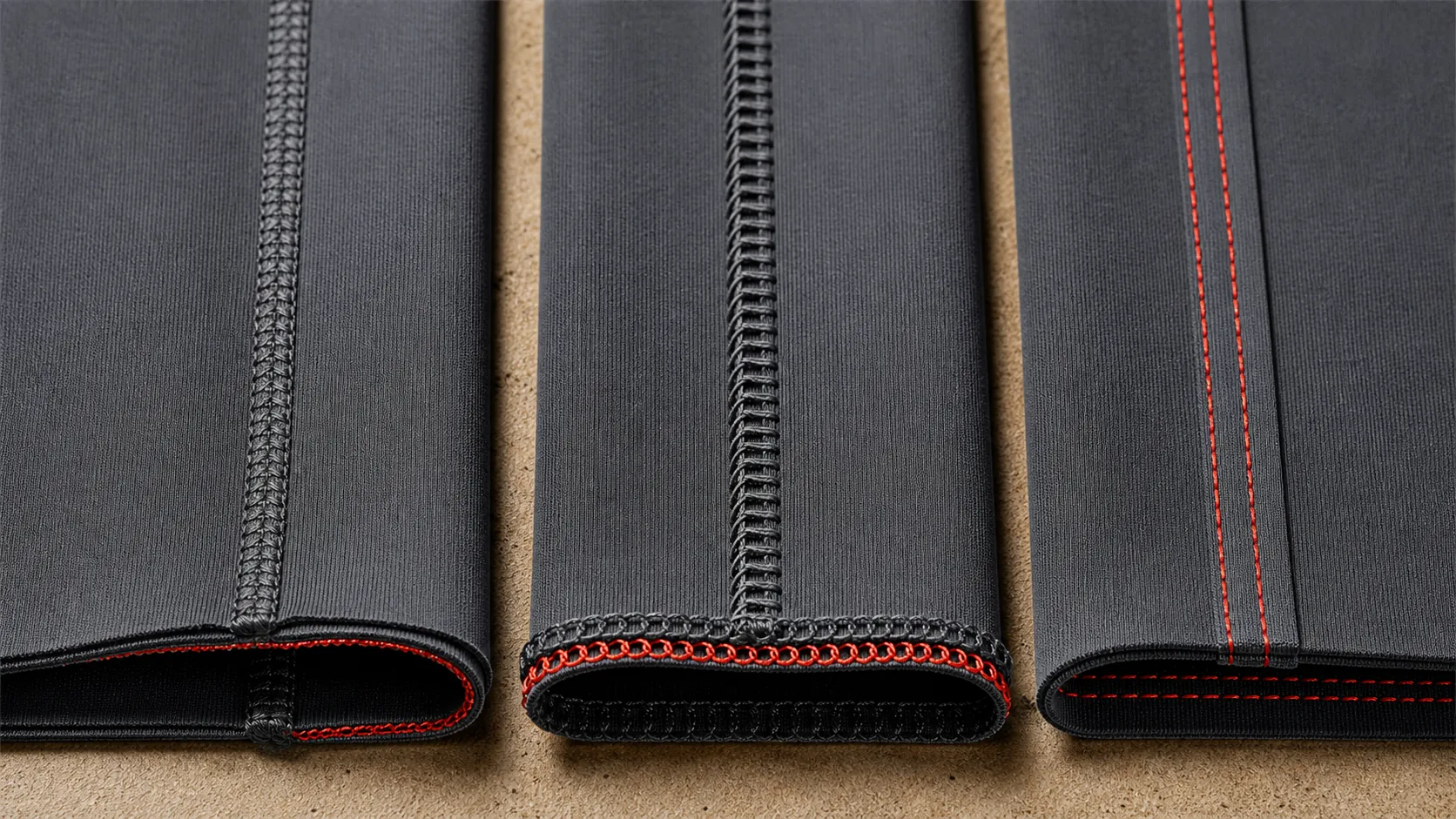
Turn seam names into construction instructions
| Record | Must identify | Why it matters | Approval point |
|---|---|---|---|
| Pattern and cut part | Revision, size, piece name, orientation and notches. | Prevents old or mirrored parts entering the line. | Released pattern set. |
| Operation bulletin | Seam, stitch, thread, machine, allowance and sequence. | Makes the approved construction transferable. | Construction sample and pilot. |
| BOM | Fabric, lining, elastic, trim, label, artwork and packaging. | Controls components that visual approval can miss. | Current component and supplier references. |
| Quality instruction | Measurements, tolerance, workmanship and critical defects. | Connects production checks to the product requirement. | Pre-production meeting and inspection plan. |
| Change log | What changed, why, owner, evidence and approval. | Stops chat decisions disappearing between teams. | Before the changed input is used. |
Audit the sample-room-to-line transfer
The person who solved the prototype may not sew bulk. Ask how the approved pattern, operation notes, machine settings, folders or attachments, seam samples and difficult points reach production. A pilot or pre-production meeting should close differences while they are still local. Record the line and facility planned for the order; transfer to another site is a change.
Treat specialist processing as part of the product
Bonding, laser cutting, molding, printing, embroidery, washing or packaging may occur off-site. Identify the subcontractor, process, incoming and outgoing checks, material custody and approval trigger. The contracting supplier remains responsible according to the agreement; the buyer should not have to discover the production route after a defect.
What to inspect during a cut-and-sew factory review
- 01
Current work control. Look for readable style, size, bundle and revision identification rather than staging.
- 02
Stretch-material handling. Observe spreading tension, relaxation, orientation, cutting and part control relevant to the proposed fabric.
- 03
Operation consistency. Compare the approved seam and component route with line instructions and in-process checks.
- 04
Nonconformance route. Ask how defects are isolated, recorded, corrected and prevented from re-entering the lot.
- 05
Release authority. Confirm who can approve changes, bulk start, final inspection disposition and shipment.
Preserve a baseline the next line can reproduce
Bulk release should connect the approved sample, pattern, grading, measurements, material and component BOM, artwork, operation bulletin, quality instruction and packaging. Keep dated copies with clear owners. When a reorder changes fabric, finish, construction, pattern, component, subcontractor or facility, compare the new route against that baseline and set the needed reapproval level.
Primary sources and evidence boundary
These sources define the scope of selected test methods, certification or labelling questions. They do not certify MOTIONFORM, a supplier, a factory or a finished product. Select the applicable edition, specimen, laboratory and market requirements for the live project.
- ISO 20932-1:2018 — determination of fabric elasticity by strip testsOfficial source · reviewed 2026-09-04
- ASTM textile standards — current abrasion, stretch and fabric test catalogueOfficial source · reviewed 2026-09-04
- ISO 6330:2021 — domestic washing and drying procedures for textile testingOfficial source · reviewed 2026-09-04
Use the relevant development route
Continue with a buyer decision guide
Continue through the manufacturing topic network
Buyer questions
What is cut-and-sew activewear manufacturing?
It is a production route in which fabric is cut into pattern pieces and assembled through specified sewing or related construction operations, with possible off-site specialist processes.
How is cut-and-sew different from seamless activewear?
Cut-and-sew relies on cut panels and assembly; seamless or engineered knitting forms much of the garment architecture in knitting. Some seamless garments still require cut, sewn or attached operations.
What proves that a factory can sew stretch activewear?
Relevant process evidence, controlled samples, current line records and a successful transfer of the proposed material and construction are stronger than a generic machine list.
Who should own the activewear pattern?
Ownership and permitted use should be agreed in writing for the specific development route. Payment for sampling alone should not be assumed to settle every file right.
Does final inspection replace in-line control?
No. Final inspection samples finished output; it cannot reliably recover hidden or systemic problems that should have been controlled earlier.
More buyer questions
Are seamless leggings better than seamed leggings?
Neither is better in general; each suits a different product job. Seamless knitting can build texture or compression zones without side seams, while cut-and-sew allows wider fabric choice, precise panel shaping and easier pattern changes, including a shaped front seam. Fewer seams can mean fewer contact points in long wear, but seam type and placement matter too, so confirm comfort in a wear review.
Is seamless the opposite of woven?
No. Woven and knitted describe how a fabric is built, while seamless describes knitting a garment close to its final shape. Stretch activewear is mostly knit-based whether it is cut-and-sew or seamless; wovens appear in shorts, jackets and trousers, sometimes with added stretch. Specify the fabric construction and the garment route separately so that one answer is not taken for the other.
What is cut-and-sew fabric?
There is no special cut-and-sew fabric; the phrase names the method, not the material. For activewear the roll goods are usually knits, and what matters is their identity: article reference, composition, weight, finish, shade and stretch direction. Ask the supplier to name the approved fabric reference rather than accepting “cut-and-sew fabric” as a specification.
How does cut-and-sew knitwear differ from fully fashioned knitwear?
Cut-and-sew knitwear starts as knitted fabric that is cut to shape, so its edges are finished by sewing. Fully fashioned panels are knitted to shape on the machine and then linked or joined, which reduces cutting waste but depends on knitting programs and machine capability. Whole-garment or seamless knitting goes further by forming most of the garment on the machine.
What is a cut-and-sew bra, and how does it differ from molded cups?
A cut-and-sew bra builds its cups or front panels from separate cut pieces joined by seams, whereas molded cups are heat-formed into a smooth curve. Foam can take either route: cut into shaped pieces and sewn, or molded. Seamed cups shape through panel lines; molded cups give a smooth outline. Choose by support, shape and appearance, and review both in the finished bra.
